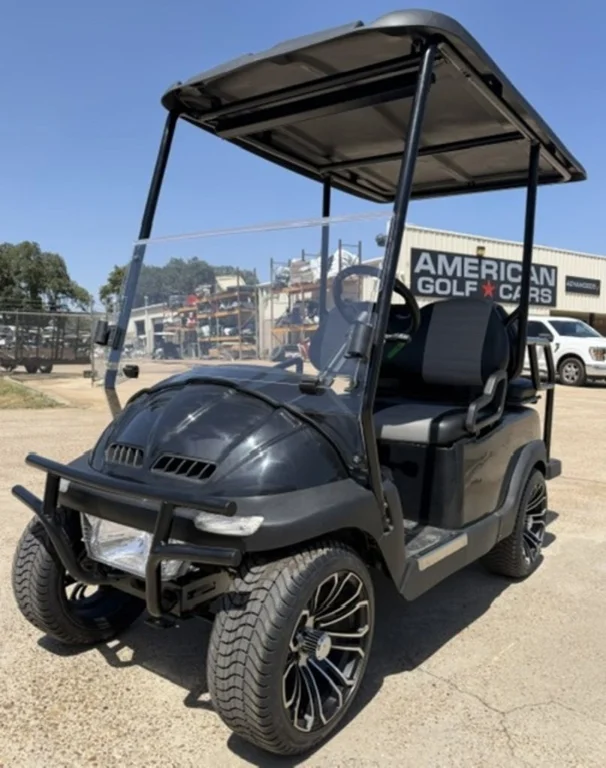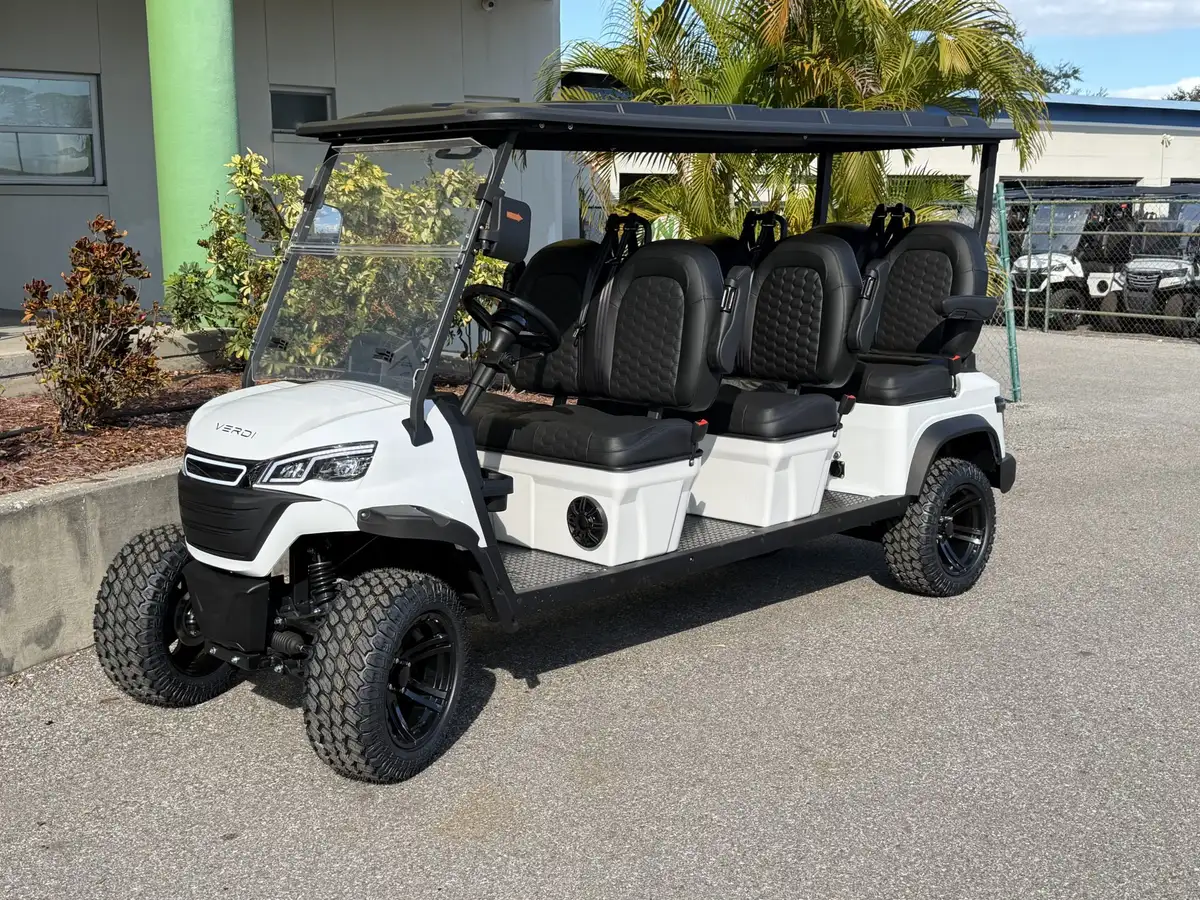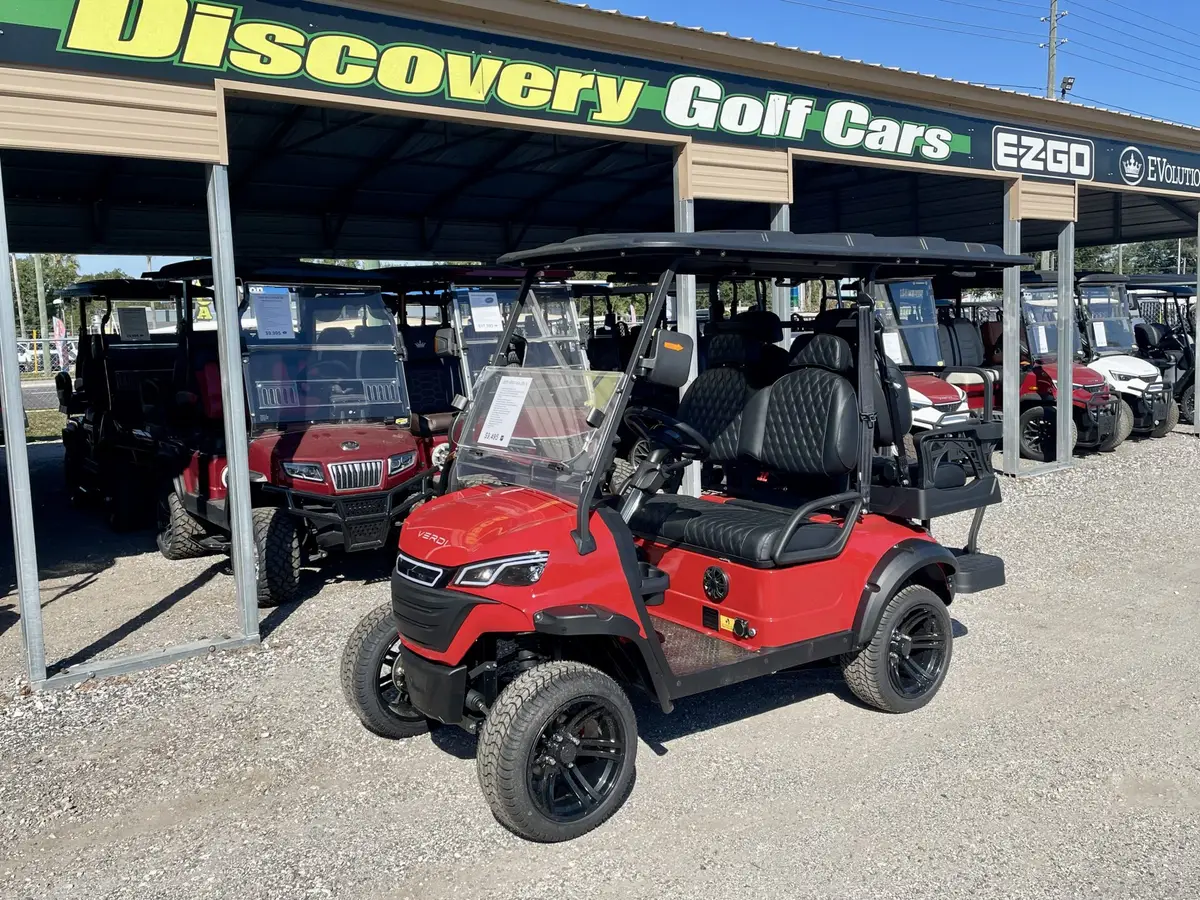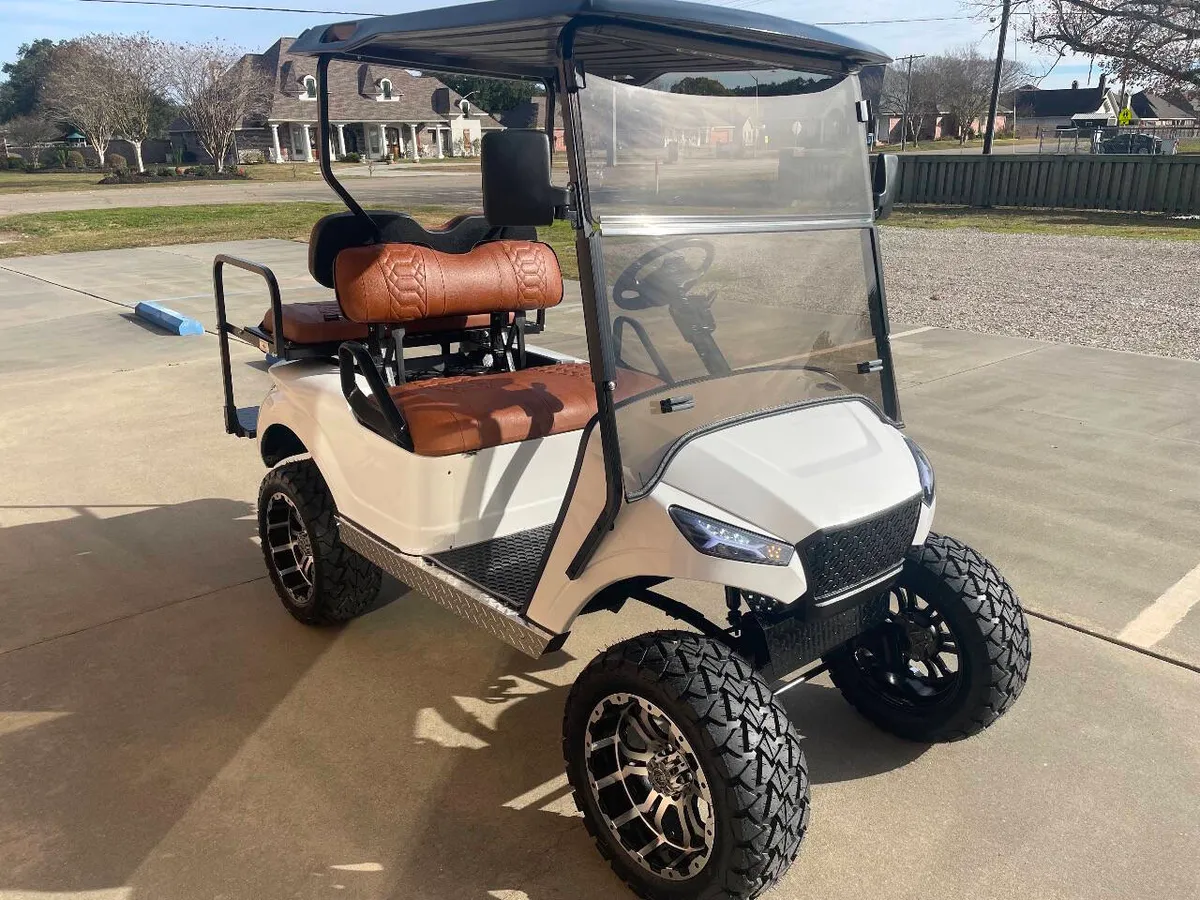
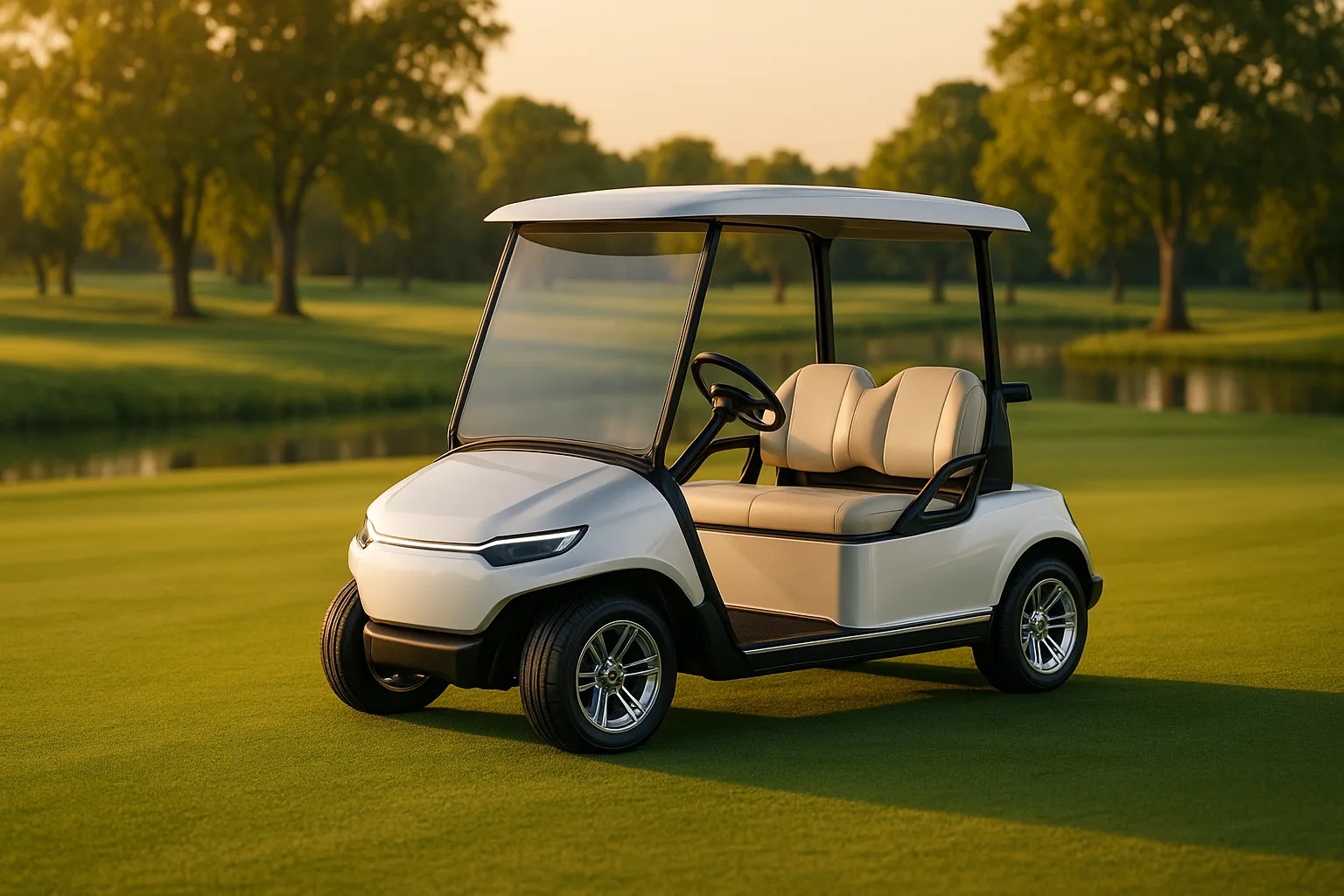
The best electric golf carts combine lithium battery technology, real-world range, and the features that match how you actually use the cart, whether that's cruising a golf course, driving through a neighborhood, or hauling the family around a resort community. New models from brands like Denago, Dach, and Evolution are now competing directly with legacy names like Club Car and E-Z-GO, giving buyers more choices than ever across every price tier.
New electric golf carts start at around $9,889 for entry-level models and climb past $15,000 for premium LSV-ready configurations. Used carts in good condition are available from $4,000 to $7,000. If you want a broader sense of what to expect across cart types and configurations, see our guide on how much a golf cart costs. Below is a side-by-side comparison of today's top models to help you identify the right fit before diving into the details.
Best electric golf carts for 2025
The best electric golf carts combine lithium battery technology, real-world range, and the features that match how you actually use the cart, whether that's cruising a golf course, driving through a neighborhood, or hauling the family around a resort community. New models from brands like Denago, Dach, and Evolution are now competing directly with legacy names like Club Car and E-Z-GO, giving buyers more choices than ever across every price tier.
New electric golf carts start at around $9,889 for entry-level models and climb past $15,000 for premium LSV-ready configurations. Used carts in good condition are available from $4,000 to $7,000. Below is a side-by-side comparison of today's top models to help you identify the right fit before diving into the details.
| Model | Starting price | Battery | Top speed | Range | Seats | Best for |
|---|---|---|---|---|---|---|
| E-Z-GO RXV 4 | $9,889 | ELiTE lithium / 48V lead-acid | 19–25 mph | 20–30 mi | 4 | Budget buyers, reliability |
| Denago Rover XL | $10,995 | 51.2V LiFePO4 | 25 mph | ~40 mi | 4 | Value, range |
| Epic Carts E40FX | $12,995 | 51V / 105Ah ECO lithium | 25 mph | 30–35 mi | 4 | Tech features, style |
| Dach Apollo | $12,995 | 73.6V / 105Ah LiFePO4 | 25 mph | 40–50 mi | 4 | Range, hill performance |
| Evolution D-Max GT4 | $13,595 | 48V lithium-ion | 25 mph | 25–40 mi | 4 | Luxury features |
| Club Car Onward 4 LSV | $14,299 | Lithium (extended range available) | 25 mph | 30–55 mi | 4 | Reliability, street-legal use |
| E-Z-GO RXV Summit XTL | $15,000+ | ELiTE lithium | 25 mph | 20–30 mi | 4 | Premium buyers |
Full-size carts vs. electric push carts
Before comparing specific models, it helps to confirm you're shopping in the right category. "Electric golf cart" covers two very different products that serve completely different needs.
| Type | What it is | Typical price | Who it's for |
|---|---|---|---|
| Full-size electric golf cart / LSV | Ride-on vehicle, 2–6 passengers | $9,889 – $15,000+ | Neighborhood, course, and resort transport |
| Electric push cart (caddie cart) | Motorized 3- or 4-wheel cart you walk behind | $749 – $1,600 | Walking golfers who want to carry their bag without effort |
Full-size electric golf carts, sometimes called LSVs (Low Speed Vehicles) when equipped for road use, are the ride-on vehicles most people picture. Brands like Club Car, E-Z-GO, Yamaha, Evolution, and Denago compete in this space.
Electric push carts are compact, motorized bag carriers that follow or are guided by a walking golfer. Popular options include the MGI Zip Navigator (around $1,600), the Alphard Cybercart ($1,229), and the Alphard Club Booster V2Pro ($749), which converts an existing push cart to motorized. These are a separate purchase decision and are not covered in the model comparisons below.
The rest of this article focuses on full-size electric golf carts and LSVs.
Top electric golf cart models reviewed
E-Z-GO RXV 4 — best entry-level electric golf cart
The E-Z-GO RXV 4 starts at $9,889, making it the most accessible new lithium option from a major legacy brand. It's available with either a 48V lead-acid or ELiTE lithium battery, and the lithium version brings it to 25 mph with a range of around 20 to 30 miles per charge.
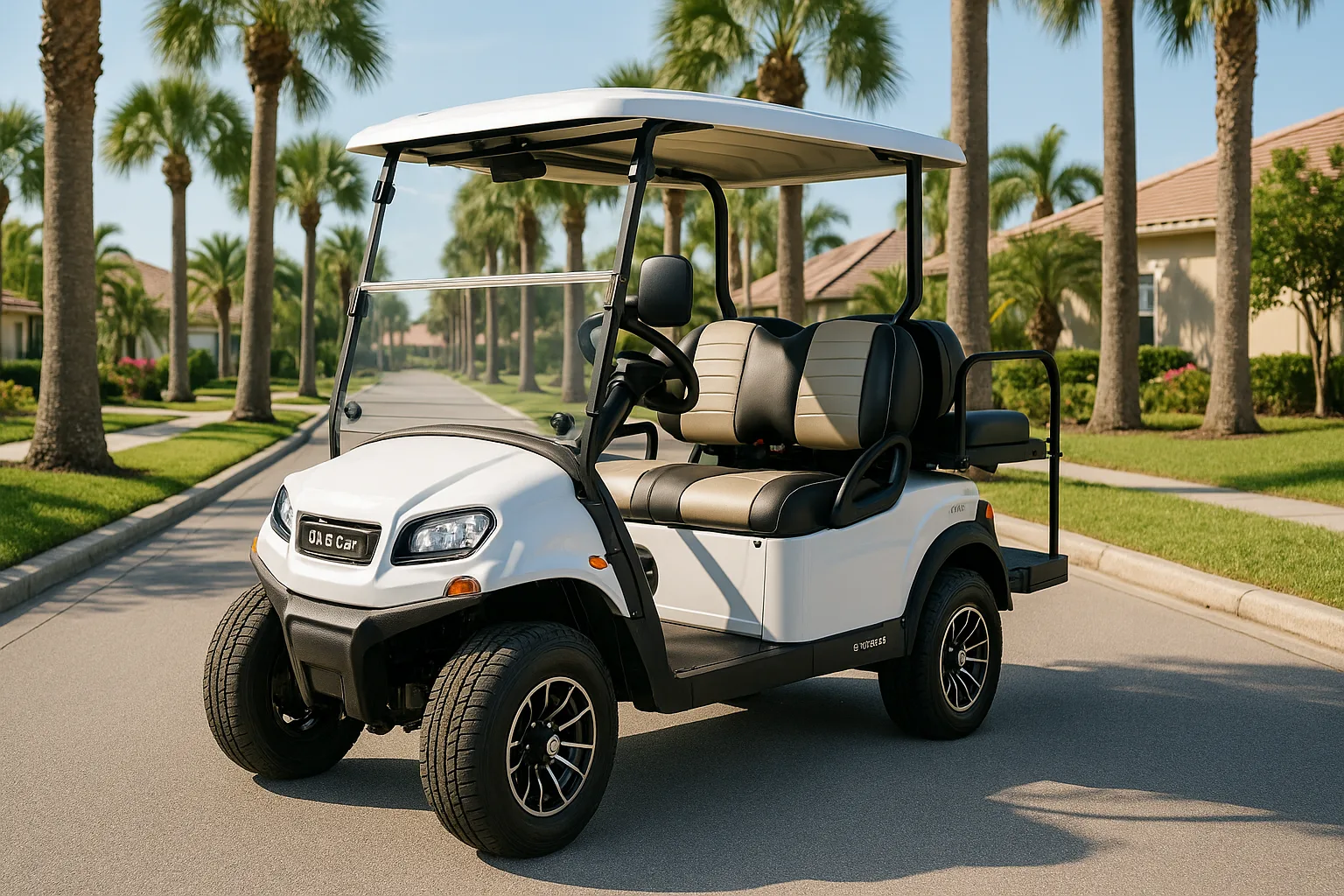
E-Z-GO's dealer and service network is one of the strongest in the industry, which matters for long-term ownership. The brand also offers a 360 Extended Warranty program covering up to 72 months, a meaningful advantage for buyers concerned about out-of-warranty repair costs.
The RXV 4 doesn't match the tech or range specs of newer competitors at this price, but for buyers who prioritize brand reliability and service access, it's hard to beat at under $10,000.
Denago Rover XL — best value electric golf cart
The Denago Rover XL ($10,995) delivers strong specs for its price: a 51.2V LiFePO4 lithium battery, 25 mph top speed, and a real-world range of around 40 miles. LiFePO4 (lithium iron phosphate) chemistry is worth noting because it offers better thermal stability and a longer cycle life compared to standard lithium-ion, which translates to more charge cycles before capacity degrades.
At this price point, Denago punches above its weight on range and battery quality. The tradeoff is a smaller dealer network than Club Car or E-Z-GO, so buyers in rural areas should confirm local service availability before purchasing.
Epic Carts E40FX — best for tech and style
The Epic Carts E40FX lists at $12,995 and comes loaded with features that appeal to buyers who want a premium in-cab experience. It runs a 51V / 105Ah ECO lithium battery with a 25 mph top speed and an estimated range of 30 to 35 miles.
The E40FX stands out for its 10-inch touchscreen, modern interior design, and overall aesthetic, which leans closer to a luxury compact vehicle than a traditional golf cart. For buyers in the mid-range segment who want more personality and technology, this is a strong contender.
Dach Apollo — best for range and hill performance
The Dach Apollo ($12,995) runs on a high-voltage 73.6V / 105Ah LiFePO4 battery system, the most powerful voltage spec in this comparison. That translates directly to a real-world range of 40 to 50 miles per charge and stronger hill-climbing capability.
Higher voltage also means more torque at lower speeds, which is the key factor for hilly terrain. If your property or course has significant elevation changes, the Apollo's powertrain is a meaningful advantage over 48V systems.
The 12.3-inch display is the largest in this comparison, and the overall fit and finish reflects serious attention to design. Like Denago, Dach is a newer brand with a growing but not yet nationwide dealer footprint, so confirm service coverage in your area before purchasing.
For hilly terrain, focus on two specs: lithium battery chemistry and AC motor type. An AC motor combined with LiFePO4 battery chemistry (as in the Dach Apollo) provides the strongest hill-climbing performance and regenerative braking capability.
Evolution D-Max GT4 — best for luxury features
The Evolution D-Max GT4 ($13,595) is designed around comfort and technology. It comes with a 48V lithium-ion battery, 25 mph top speed, and a range of 25 to 40 miles. Interior features include a 10.1-inch touchscreen, premium seating, and a refined cabin environment that sets it apart from more utilitarian competitors.
Evolution has built a reputation for bringing consumer-grade tech features to the golf cart market ahead of legacy brands. For buyers who spend a lot of time in the cart and want the experience to reflect that, the D-Max GT4 delivers.
Club Car Onward 4 LSV — most reliable electric golf cart
The Club Car Onward 4 LSV starts at $14,299 and is consistently cited as the most reliable option in the market. Its aircraft-grade aluminum frame is corrosion-resistant, making it especially well-suited to coastal and humid environments where steel frames can deteriorate quickly.
The standard lithium battery provides around 30 miles of range, but the extended-range battery option pushes that to approximately 55 miles, the highest figure in this comparison. Club Car's nationwide dealer network and long brand history are additional reliability signals that justify the higher price for many buyers.
The 7-inch touchscreen is smaller than competitors in this price range, but the Onward's reputation, frame quality, and service infrastructure make it the top pick for buyers prioritizing long-term dependability.
E-Z-GO RXV Summit XTL — best premium trim
The E-Z-GO RXV Summit XTL comes in above $15,000 and represents E-Z-GO's fully loaded configuration. It uses the ELiTE lithium battery and tops out at 25 mph with a range similar to the base RXV 4 (20 to 30 miles), but adds premium trim, a 10-inch touchscreen, and upgraded comfort features.
Buyers who want E-Z-GO's service network and brand trust with a more refined experience will find the Summit XTL is the natural step up. Those focused primarily on range should weigh it against the Club Car Onward's extended-range option at a comparable price point.
How to choose the right electric golf cart
With prices ranging from under $10,000 to well over $15,000, the right cart depends on how you'll use it, where you'll drive it, and which features matter most. The table below outlines the key decision factors to evaluate before purchasing.
| Factor | What to look for |
|---|---|
| Battery type | LiFePO4 lithium for best cycle life and safety; standard lithium-ion as a solid mid-tier option |
| Range | 30+ miles for daily neighborhood use; 40+ miles if range anxiety is a concern |
| Street-legal (LSV) | Required if you plan to drive on public roads posted 35 mph or under |
| Voltage | 48V for standard use; 51V–73.6V for better hill performance and longer range |
| Frame material | Aluminum for coastal or humid climates; steel is fine for dry inland areas |
| Seating | 2-passenger for golf course use only; 4- or 6-passenger for family and neighborhood use |
| Dealer network | Legacy brands (Club Car, E-Z-GO) have wider service coverage; newer brands vary by region |
| Warranty | Look for 2+ years standard; E-Z-GO offers up to 72-month extended coverage |
Lithium vs. lead-acid batteries
All of the top models in this comparison use lithium batteries, and for good reason. Lithium batteries are lighter, charge faster, maintain consistent power output throughout the charge cycle, and last significantly longer than lead-acid alternatives. A lithium pack typically delivers 2,000 or more charge cycles versus 500 to 700 for lead-acid.
Lead-acid batteries cost less upfront but require regular maintenance (checking water levels in flooded versions) and degrade faster. When comparing total cost of ownership over 5 to 7 years, lithium almost always comes out ahead despite the higher purchase price.
Street-legal LSV requirements
If you plan to drive on public roads, your cart must qualify as a Low Speed Vehicle (LSV). LSVs are federally regulated under FMVSS 500 and must include the following equipment:
- DOT-approved safety glass windshield
- Headlights, tail lights, and turn signals
- Seat belts for all passengers
- Rearview mirrors
- Horn
- VIN and registration capability
LSVs are legally permitted on roads posted at 35 mph or under in most states, though local regulations vary. Models like the Club Car Onward 4 LSV come LSV-ready from the factory. Others may require an upgrade package to meet requirements, so confirm this before purchasing if street-legal use is part of your plan.
Charging at home
Most electric golf carts charge from a standard 110V household outlet, which makes home charging simple without any electrical upgrades. A full charge typically takes 8 to 10 hours overnight, similar to plugging in a smartphone at the end of the day.
Some higher-capacity battery systems (particularly 73.6V configurations like the Dach Apollo) may support or benefit from a 240V setup for faster charging. Check the manufacturer's charging specifications before assuming a standard outlet is sufficient for your model.
Most electric golf carts cost roughly $0.02 to $0.04 per mile to operate on electricity, significantly less than a gas-powered cart, which typically costs $0.10 to $0.15 per mile factoring in fuel and maintenance.
Electric golf cart pricing by tier
Electric golf cart pricing breaks into four clear tiers. The right tier depends on how often you'll use the cart, whether you need street-legal capability, and how important long-term reliability and warranty coverage are to you.
| Tier | Price range | What you get | Example models |
|---|---|---|---|
| Used / budget | $4,000 – $7,000 | Pre-owned carts; vary widely in battery condition and features | Used Club Car, E-Z-GO, Yamaha |
| Entry-level new | $9,889 – $10,995 | Lithium battery, 25 mph, basic tech features | E-Z-GO RXV 4, Denago Rover XL |
| Mid-range | $11,000 – $13,000 | Higher-capacity batteries, better range, upgraded screens | Epic E40FX, Dach Apollo |
| Premium | $13,000 – $15,000 | LSV-ready, luxury interiors, extended range options | Evolution D-Max GT4, Club Car Onward 4 LSV |
| Ultra-luxury | $15,000+ | Top trim packages, European brands (Garia), full luxury finish | E-Z-GO Summit XTL, Garia |
For buyers considering the used market, the $4,000 to $7,000 range can yield strong value, particularly for refurbished carts from major brands with battery replacements. Inspect the battery age and cycle count carefully, as a battery replacement alone can cost $1,500 to $3,000 depending on chemistry and capacity.
Frequently asked questions
What is the most reliable electric golf cart?
The Club Car Onward 4 LSV is widely considered the most reliable electric golf cart for most buyers. Its aircraft-grade aluminum frame resists corrosion better than steel alternatives, and Club Car's dealer network and brand longevity mean parts and service are available nearly everywhere. The E-Z-GO RXV 4 is a reliable alternative at a lower starting price, backed by E-Z-GO's 72-month extended warranty option.
What is the best electric golf cart for hills?
For hilly terrain, the most important specs are battery voltage and motor type, not necessarily brand. High-voltage systems (51V and above) combined with an AC motor deliver more torque and better regenerative braking on descents. The Dach Apollo, with its 73.6V LiFePO4 battery, is the strongest performer in this comparison for elevation-heavy environments.
Are electric golf carts worth buying?
For most buyers, yes. Electric carts have lower operating costs than gas, roughly $0.02 to $0.04 per mile on electricity versus $0.10 to $0.15 per mile for gas, factoring in fuel and maintenance. Lithium battery packs also require virtually no maintenance compared to gas engines or lead-acid batteries. Owners frequently report that switching to electric reduces fatigue while preserving the benefits of an active ride.
What is the best budget electric golf cart?
On the new market, the E-Z-GO RXV 4 at $9,889 is the lowest-cost entry point from a major brand with lithium battery options and a strong service network. For buyers open to the used market, quality pre-owned carts from Club Car, E-Z-GO, and Yamaha are available from $4,000 to $7,000, though battery condition should be carefully verified before purchase.
What's the difference between an electric golf cart and an LSV?
A golf cart is a general-purpose low-speed vehicle not necessarily designed for road use. An LSV (Low Speed Vehicle) meets federal safety standards (FMVSS 500) that allow it to be registered and driven on public roads posted at 35 mph or under. LSV-ready carts include DOT glass, seat belts, turn signals, mirrors, and a horn. If you plan to drive on public roads, confirm the model is LSV-certified or available with an LSV upgrade package before purchasing.
How long does it take to charge an electric golf cart?
Most electric golf carts charge fully overnight from a standard 110V household outlet, typically in 8 to 10 hours. Higher-capacity battery systems may take longer or support optional 240V charging for faster turnaround. Daily neighborhood use rarely depletes a lithium battery fully, so overnight charging is usually sufficient to keep the cart at full capacity for the next day.