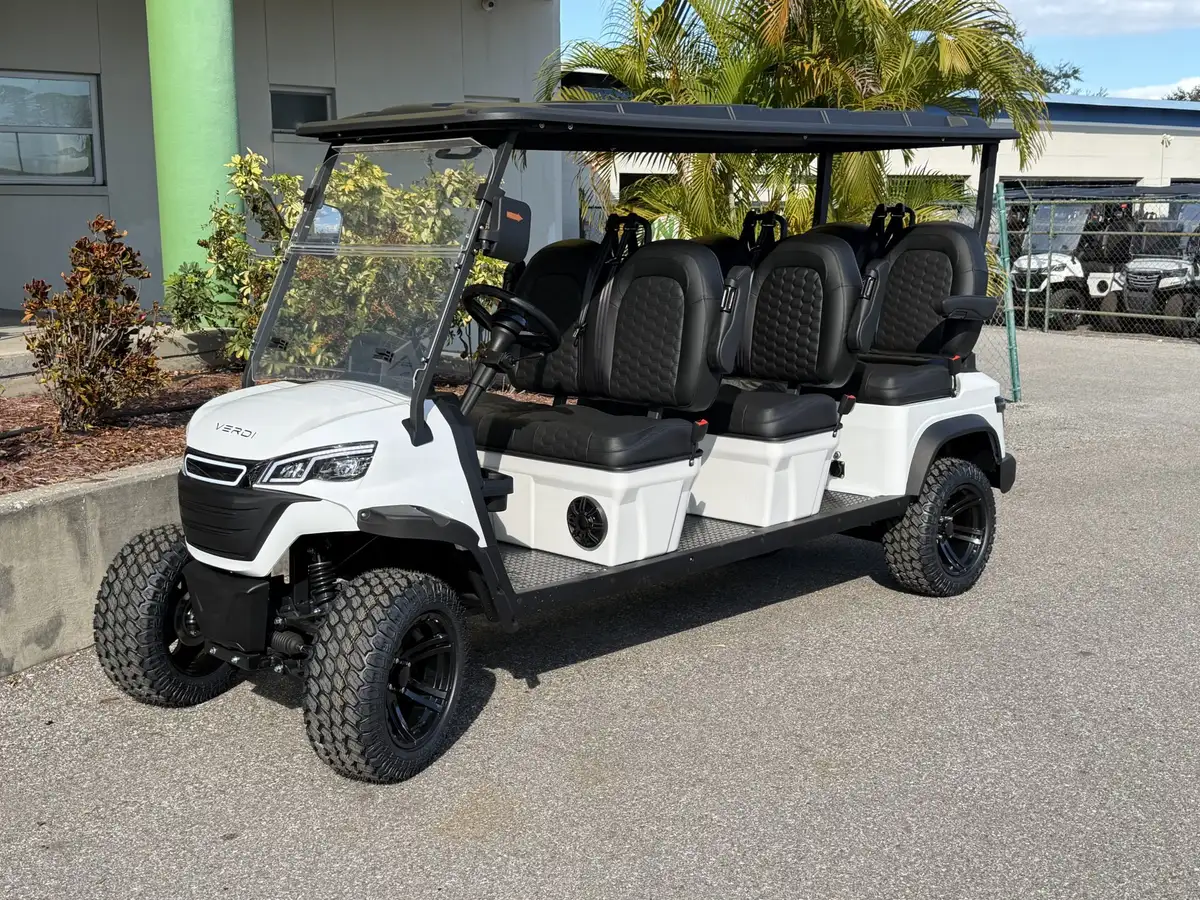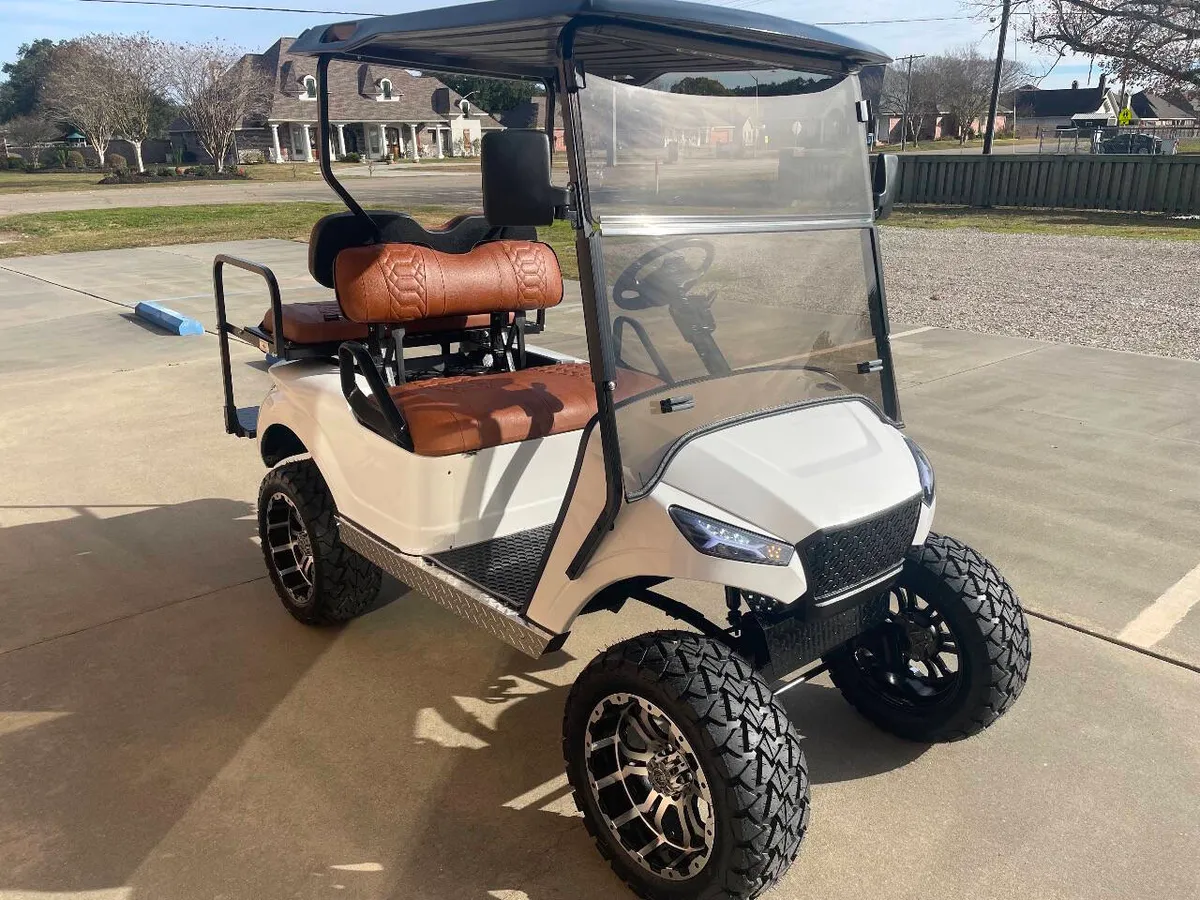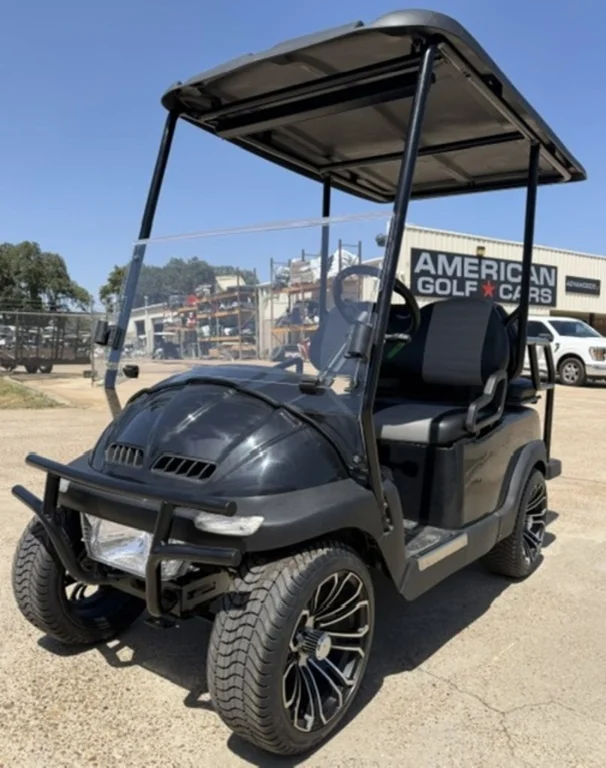
Are golf carts street legal in Minnesota?
Golf carts are street legal in Minnesota only in communities that have passed a local ordinance permitting them on public roads. There is no statewide green light. Under Minnesota Statute 169.045, individual counties, cities, and townships can choose to allow golf carts on designated roads. If your community has not passed such an ordinance, driving a golf cart on any public road is illegal regardless of your equipment or insurance status.
This local-option system means the answer to "can I drive my golf cart in Minnesota?" depends entirely on where you live or plan to ride. The sections below break down exactly what the state requires, what local governments can add, and how golf carts differ from low-speed vehicles (LSVs), which follow a separate set of rules entirely.
Laws and local ordinances change. Always verify current rules with your city, county, or township clerk and consult official sources at revisor.mn.gov and dps.mn.gov before operating a golf cart on public roads. This article was last reviewed in 2025.
How Minnesota defines golf carts vs. low-speed vehicles
Minnesota treats golf carts and low-speed vehicles (LSVs) as two distinct vehicle types with completely different legal frameworks. Understanding the difference is critical before you buy, modify, or attempt to register any cart-style vehicle for road use.
| Feature | Golf cart | Low-speed vehicle (LSV) |
|---|---|---|
| Top speed | Typically under 20 mph | 20 – 25 mph |
| VIN | None | 17-digit, manufacturer-assigned |
| State registration | Not required | Required through MN DVS |
| Title | Not required | Required |
| Federal safety standard | None | 49 CFR 571.500 |
| GVWR | Not specified | Under 3,000 lbs |
| Road access | Only on locally designated roads | Any public road posted 35 mph or less |
| Governing law | MN Statute 169.045 + local ordinance | MN DVS registration + federal standards |
| Insurance required | Yes, under Section 65B.48, subd. 5 | Yes, standard MN auto minimum |
A golf cart is a low-powered vehicle with no manufacturer-assigned VIN and no state registration requirement. It is governed by local ordinance under Statute 169.045 and may only operate on roads that a local government has specifically designated.
An LSV is a four-wheeled motor vehicle capable of reaching at least 20 mph but no more than 25 mph. It must carry a 17-digit manufacturer VIN, meet federal safety standards under 49 CFR 571.500, weigh under 3,000 pounds, and be titled and registered through the Minnesota Driver and Vehicle Services (DVS). LSVs have far broader road access and far more equipment requirements than standard golf carts.
Where you can and cannot drive in Minnesota
Road access rules differ sharply between golf carts and LSVs. Operating either vehicle outside its permitted zones carries legal consequences.
| Vehicle type | Permitted roads | Key restrictions |
|---|---|---|
| Golf cart | Only roads designated by local ordinance | Daylight only (unless equipped with lights); no inclement weather; visibility must reach 500 feet |
| LSV | Any public road posted 35 mph or less | Cannot travel on roads exceeding 35 mph speed limit |
Golf carts
Golf carts may only be driven on roads that the local government has specifically designated through ordinance. Even within an authorizing community, not every road is automatically open. Driving on a road that is not designated, or in a community without an ordinance, violates state law.
Additional restrictions under Statute 169.045 include:
- Daylight hours only (sunrise to sunset) unless the cart is equipped with functioning headlights, taillights, and rear-facing brake lights
- No operation in inclement weather or when visibility is less than 500 feet
- Local ordinances may add further restrictions, such as speed limits or road classifications
Golf carts are not subject to these road rules on private property or on golf courses. Statute 169.045 applies only to public roads.
Low-speed vehicles
LSVs have statewide road access on any public road with a posted speed limit of 35 mph or less. No local ordinance is needed. However, they cannot legally travel on roads exceeding that speed limit and must comply with all standard traffic laws that apply to motor vehicles.
Required equipment
Equipment requirements differ significantly between golf carts and LSVs. Failing to meet the minimum standard for your vehicle type can result in a permit denial, a fine, or removal from the road.
| Equipment | Golf cart | LSV |
|---|---|---|
| Slow-moving vehicle (SMV) emblem | Required statewide | Not required |
| Headlights | Required only for night driving | Required |
| Taillights | Required only for night driving | Required |
| Brake lights (rear-facing) | Required only for night driving | Required |
| Turn signals | Not required by state; local ordinance may vary | Required |
| Reflectors | Not required by state; local ordinance may vary | Required |
| Windshield | Not required by state | Required |
| Rearview mirrors | Not required by state | Required |
| Safety belts | Not required by state | Required |
| Parking brake | Not required by state | Required |
| 17-digit VIN | Not applicable | Required (manufacturer-assigned) |
Golf cart equipment
The only equipment required statewide for all golf carts operating on designated public roads is a slow-moving vehicle (SMV) emblem: a bright orange-red triangular reflector mounted on the rear of the vehicle. SMV emblems are inexpensive and widely available at farm supply and auto parts stores for roughly $5 to $15.
Headlights, taillights, and rear-facing brake lights are required only if you plan to drive outside daylight hours. Local ordinances may require additional equipment beyond the state minimum, so always check with your local government before hitting the road.
LSV equipment
LSVs must meet the full federal safety equipment standard under 49 CFR 571.500. That list includes headlights, taillights, brake lights, turn signals, reflectors, a windshield, rearview mirrors, safety belts, a parking brake, and a 17-digit manufacturer-assigned VIN. These are not optional; they are required for DVS registration and legal road use.
Permits, registration, and titling
Golf carts require a local permit only. LSVs require full state registration and titling through Minnesota DVS. The table below summarizes the key differences.
| Requirement | Golf cart | LSV |
|---|---|---|
| Local permit | Yes, required where ordinance exists | Not applicable |
| State registration | Not required | Required through MN DVS |
| License plates | Not required | Required |
| Title | Not required | Required |
| Permit duration | Up to three years, renewable | Annual registration renewal |
Golf cart permits
If your community has passed an ordinance under Statute 169.045, you must obtain a local permit before operating your golf cart on designated roads. Permits are valid for up to three years and are renewable. The application process, required documents, and fees are set by each local government.
A typical permit application may ask for:
- Proof of liability insurance (see requirements below)
- A valid driver's license
- A description of the golf cart
- Payment of the permit fee
Permit fees vary by municipality but are generally modest. Contact your city, county, or township clerk for the exact amount and application form. There are no state-issued license plates for golf carts.
LSV registration
To register an LSV through Minnesota DVS, you will need:
- A manufacturer's certificate of origin or a valid title
- Proof of liability insurance meeting Minnesota's minimum auto coverage requirements
- A valid Minnesota driver's license
- Payment of applicable registration and title fees
LSV registration follows the same process as registering any standard motor vehicle in the state.
Insurance requirements
Both golf carts and LSVs require liability insurance to operate legally on Minnesota public roads.
| Vehicle type | Insurance requirement | Governing statute |
|---|---|---|
| Golf cart | Liability insurance required as part of permit | Section 65B.48, subdivision 5 |
| LSV | Standard MN auto minimum liability coverage | Standard MN motor vehicle insurance law |
For golf carts, liability insurance is mandated under Section 65B.48, subdivision 5 as a condition of the local permit. Your local ordinance may specify additional coverage requirements beyond the state minimum, so confirm the details with your municipality before applying for a permit.
For LSVs, standard Minnesota auto insurance at state minimum liability levels is required for DVS registration. Because LSVs are registered like any other motor vehicle, insuring one is straightforward through most auto insurance providers.
A standard homeowner's or renter's insurance policy typically does not cover golf cart liability on public roads. Contact your insurance agent to confirm you have appropriate coverage before applying for a local permit. Learn more about golf cart insurance coverage options and costs before choosing a policy.
Age and license requirements
Minnesota Statute 169.045 does not set a statewide minimum age for golf cart operators. That decision is left to local ordinances.
| Vehicle type | Minimum age | License required |
|---|---|---|
| Golf cart (state baseline) | Not specified; set by local ordinance | Set by local ordinance |
| Golf cart (most common local rule) | 16 (some cities require 18) | Valid driver's license typically required |
| LSV | 16 | Valid Minnesota driver's license required |
Most communities that have passed golf cart ordinances require operators to hold a valid driver's license, effectively setting the minimum age at 16. Some cities set the minimum at 18. Because these requirements vary by jurisdiction, you must check your specific local ordinance before allowing a younger driver behind the wheel.
LSVs are registered motor vehicles and always require a valid Minnesota driver's license to operate on public roads.
DUI laws and golf carts
Minnesota's DUI laws apply to golf carts operated on public roads. If you are impaired by alcohol or drugs and driving a golf cart on a street designated for golf cart use, you can be charged with a DUI under the same laws that apply to drivers of standard motor vehicles.
Operating a golf cart on a public road while intoxicated is a criminal offense in Minnesota. A DUI conviction on a golf cart can carry the same legal consequences as one in a car, including fines, license suspension, and jail time.
The fact that a golf cart is slow, open-air, or used in a recreational setting does not exempt it from impaired driving laws when operated on public roads. This applies to LSVs as well.
Converting a golf cart to an LSV
Converting a standard golf cart into a legally registered LSV in Minnesota is not a straightforward process, and in most cases it is not practical.
| Consideration | Detail |
|---|---|
| VIN requirement | Must be manufacturer-assigned; cannot be added after the fact |
| DVS conversion process | No confirmed process for assigning a VIN to a modified golf cart |
| Federal safety standards | Full 49 CFR 571.500 compliance required for LSV classification |
| Practical recommendation | Purchase a manufacturer-built LSV if 35 mph road access is the goal |
| Cost comparison | Standard golf carts: $3,000 – $10,000 new; LSVs: $8,000 – $15,000+ new |
The core obstacle is the VIN. Minnesota DVS requires a 17-digit manufacturer-assigned VIN for LSV registration. There is no confirmed DVS process for assigning a VIN to a modified or converted golf cart. Without a valid VIN, the vehicle cannot be titled or registered as an LSV regardless of how extensively it has been modified.
If you want access to roads posted up to 35 mph, the practical path is purchasing a purpose-built LSV from a manufacturer. Manufacturer-built LSVs typically start around $8,000 and can exceed $15,000 new, while standard golf carts run roughly $3,000 to $10,000 depending on condition and features. If you're still deciding what type of cart fits your needs, our golf cart buying guide covers prices, value, and what to inspect before purchasing.
If you believe your vehicle may qualify for LSV classification or want to ask about a specific situation, contact Minnesota DVS directly at dps.mn.gov/divisions/dvs.
How to find out if your community allows golf carts
The fastest way to find out if your community has passed a golf cart ordinance is to contact the city, county, or township clerk's office directly. Ask these three questions:
- Has the community passed an ordinance under Minnesota Statute 169.045 allowing golf carts on public roads?
- Which roads are designated for golf cart use?
- How do I apply for a golf cart permit, and what does it cost?
Many Minnesota lake communities, resort towns, and rural counties have adopted golf cart ordinances, particularly in recreational areas where golf cart use is common during the summer months. Examples include lake resort towns in northern Minnesota and communities surrounding popular golf courses and resort corridors.
You can also search your city or county's official website for local ordinance codes or contact the clerk by phone or email. If no ordinance exists, golf carts are not permitted on public roads in that jurisdiction.
Penalties for violations
Operating a golf cart on public roads without a valid permit, without required insurance, or on roads not designated by local ordinance can result in legal consequences under both state and local law.
| Violation | Potential consequence |
|---|---|
| No local permit | Citation or fine under local ordinance or state traffic law |
| Operating without insurance | Criminal penalty under MN no-fault insurance law; permit revocation |
| Driving on non-designated roads | Citation; potential impoundment |
| Operating at night without lights | Traffic violation citation |
| DUI on a golf cart | Criminal DUI charge; same penalties as a standard vehicle DUI |
| No SMV emblem | Equipment violation citation |
Specific fine amounts vary by jurisdiction, as local ordinances set their own penalty structures within the bounds of state law. If a golf cart is involved in an accident while operating illegally, the absence of required insurance or a valid permit can create serious civil liability exposure for the operator.
Passengers and speed limits
Minnesota Statute 169.045 does not set a statewide rule on passengers or speed limits for golf carts on designated roads. Both topics are typically addressed at the local level.
Most local ordinances restrict golf cart use to the number of passengers the vehicle was designed to carry. Overloading a cart beyond its seat capacity is generally prohibited. Some communities have also addressed child passenger rules, so check your local ordinance if you plan to carry children as passengers.
Speed limits for golf carts on designated roads are set by local ordinance and vary by community. Even where no local limit is specified, golf carts are typically incapable of exceeding 20 mph, which keeps them naturally within a safe range for low-speed residential or resort roads. Reckless or unsafe operation, regardless of speed, can still result in a citation.
Private property and golf courses
Minnesota Statute 169.045 applies only to public roads. Golf carts operated entirely on private property or on an actual golf course are not subject to the permit, equipment, or insurance requirements described in this article.
If you use your cart exclusively on your own land or within a private community, you are operating outside the scope of the statute. However, the moment the cart crosses onto a public road, even briefly, all requirements under 169.045 and any applicable local ordinance take effect.
Frequently asked questions
Can you get a DUI on a golf cart in Minnesota?
Yes. Minnesota DUI laws apply to any vehicle operated on a public road, including golf carts. If you are driving a golf cart on a designated public street while impaired, you can be charged with a DUI with the same criminal consequences as if you were driving a car.
Can I drive my golf cart at night in Minnesota?
Only if your golf cart is equipped with functioning headlights, taillights, and rear-facing brake lights. Without those lights, golf cart use is restricted to daylight hours (sunrise to sunset) under Statute 169.045.
Do I need a slow-moving vehicle emblem?
Yes. All golf carts operating on designated public roads in Minnesota must display a slow-moving vehicle (SMV) emblem on the rear of the cart. This is a statewide requirement under Statute 169.045 and is not waivable by local ordinance. SMV emblems cost roughly $5 to $15 at most farm supply or auto parts stores.
Can I drive my golf cart on any road in my city?
No. Even in communities that have passed an ordinance, golf carts are only permitted on roads that the local government has specifically designated. Not every street in a participating community is automatically open to golf cart traffic.
What insurance do I need for a golf cart in Minnesota?
Liability insurance is required under Section 65B.48, subdivision 5 as a condition of the local permit. Your local ordinance may specify minimum coverage levels. Contact your insurance agent to get a policy that meets local requirements before applying for your permit.
What is the age requirement to drive a golf cart in Minnesota?
There is no statewide minimum age. Most communities require a valid driver's license (minimum age 16), and some cities set the minimum at 18. Check your specific local ordinance for the rule that applies to you.
Can I convert my golf cart to an LSV in Minnesota?
Not practically. LSV registration requires a 17-digit manufacturer-assigned VIN, and there is no confirmed Minnesota DVS process for assigning a VIN to a modified golf cart. If you need access to roads posted up to 35 mph, purchase a manufacturer-built LSV.
Can visitors or out-of-state residents bring their golf carts to Minnesota?
Local ordinances govern permit eligibility, and requirements vary by community. Some jurisdictions may issue permits to non-residents or seasonal residents, while others may not. Contact the clerk's office in the specific community where you plan to operate to ask about non-resident permit eligibility.
What happens if I drive a golf cart in a community without an ordinance?
It is illegal. Without a local ordinance passed under Statute 169.045, no golf cart may legally operate on any public road in that jurisdiction. You can be cited and face fines, and any accident occurring in that context would involve significant legal and financial exposure.
What is the difference between a golf cart and a low-speed vehicle in Minnesota?
The core differences are speed, VIN, and registration. A golf cart typically tops out under 20 mph, has no VIN, and requires only a local permit. An LSV is capable of 20 to 25 mph, carries a 17-digit manufacturer VIN, meets federal safety standards, and must be titled and registered through Minnesota DVS. LSVs have statewide access to roads posted 35 mph or less; golf carts are limited to locally designated roads.
Official resources
- Minnesota Statute 169.045 - revisor.mn.gov
- Minnesota Driver and Vehicle Services (DVS) - dps.mn.gov
- Minnesota House Research: Golf Carts on Public Roads - house.mn.gov
- Your local city, county, or township clerk's office for ordinance text and permit applications
- For comparison with neighboring states, see Wisconsin golf cart laws and Iowa golf cart laws