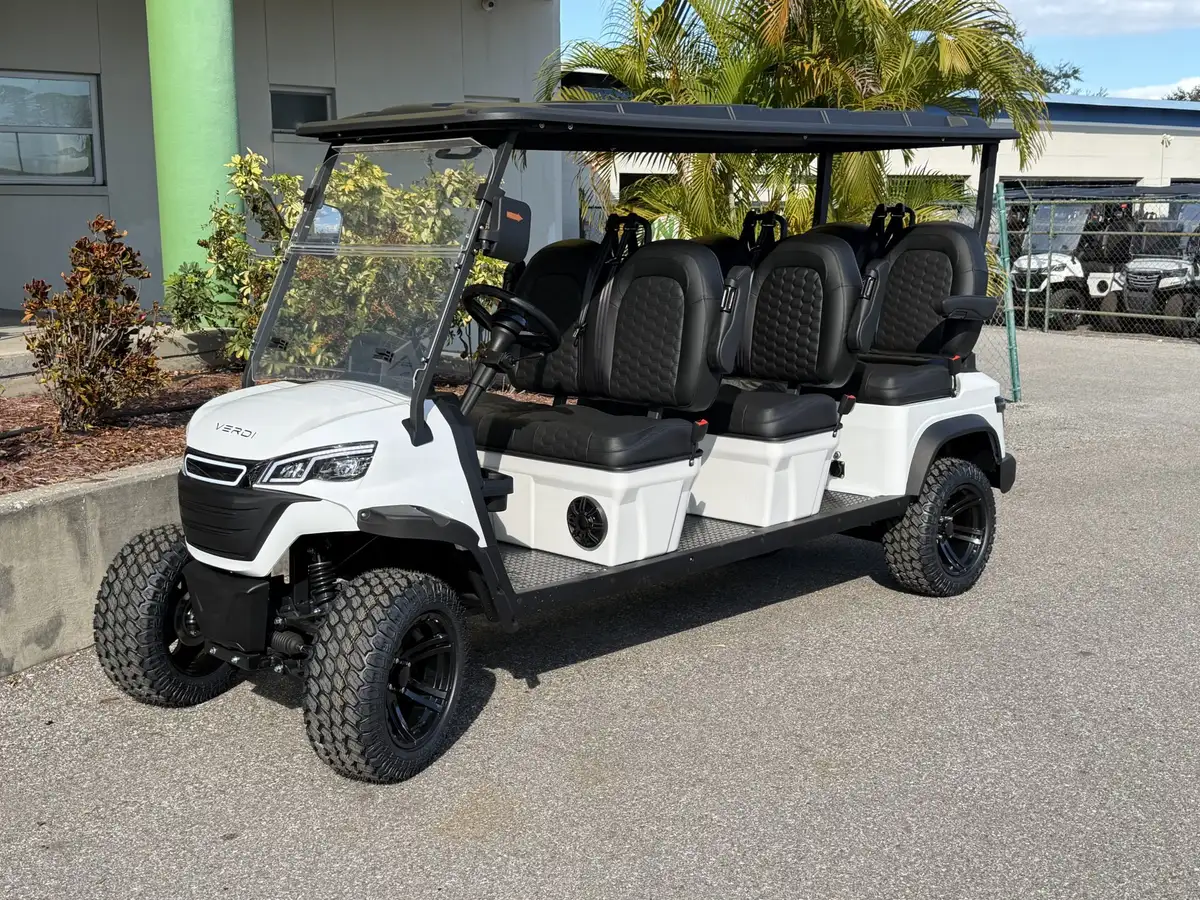
Evolution golf carts: are they worth buying?
Evolution Electric Vehicles has sold over 500,000 carts worldwide and positioned itself as a direct value challenger to the Big Three: Club Car, E-Z-GO, and Yamaha. The brand offers fully loaded lithium-powered carts at prices that undercut what legacy brands charge for base models with upgrades. If you are shopping for a golf cart and want a lot of cart for the money, Evolution is hard to ignore.
That said, value is not the whole story. Parts availability, dealer quality, and long-term durability are legitimate considerations that belong in any honest review. This guide covers the full Evolution lineup, real ownership pros and cons, and everything you need to know before buying.
| Series | Models available | Starting MSRP |
|---|---|---|
| D5 Series | Ranger 2+2, Ranger 4, Ranger 6, Maverick 2+2, Maverick 4, Maverick 6 | $8,695 |
| D-Max Series | GT4, GT6, XT4, XT6 | $13,595 |
Who makes Evolution golf carts?
Evolution Electric Vehicles is headquartered in Chino, California, and has been operating for roughly 20 years. The company runs distribution centers in Grand Prairie, Texas and Orlando, Florida, serving dealers across North America. Manufacturing takes place across six factories, supporting eight product lines.
The brand's strategy from the start has been disruption: offer premium features as standard equipment rather than costly add-ons, and price the result below what established brands charge for comparable configurations. That approach has worked well enough to move half a million units globally and force the wider industry to rethink its feature-to-price assumptions.
Where Evolution still lags the Big Three is dealer network depth and parts infrastructure. Club Car, E-Z-GO, and Yamaha have decades of dealer relationships and established parts pipelines. Evolution's network is growing but is not yet at that level, which matters more in some markets than others.
Full model lineup and pricing
Evolution offers two main series. The D5 is the entry-level line with six configurations across two trims. The D-Max is the premium tier with four models and significantly more technology. Within each series, the key distinctions are seating capacity, stance height, and drivetrain.
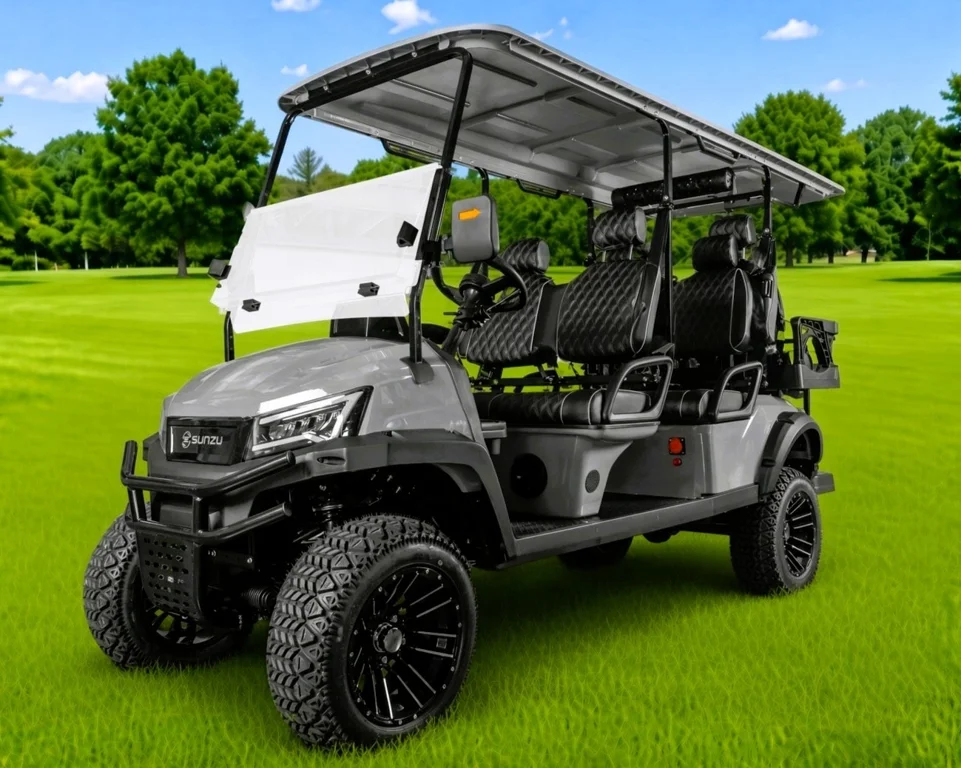
D5 Series
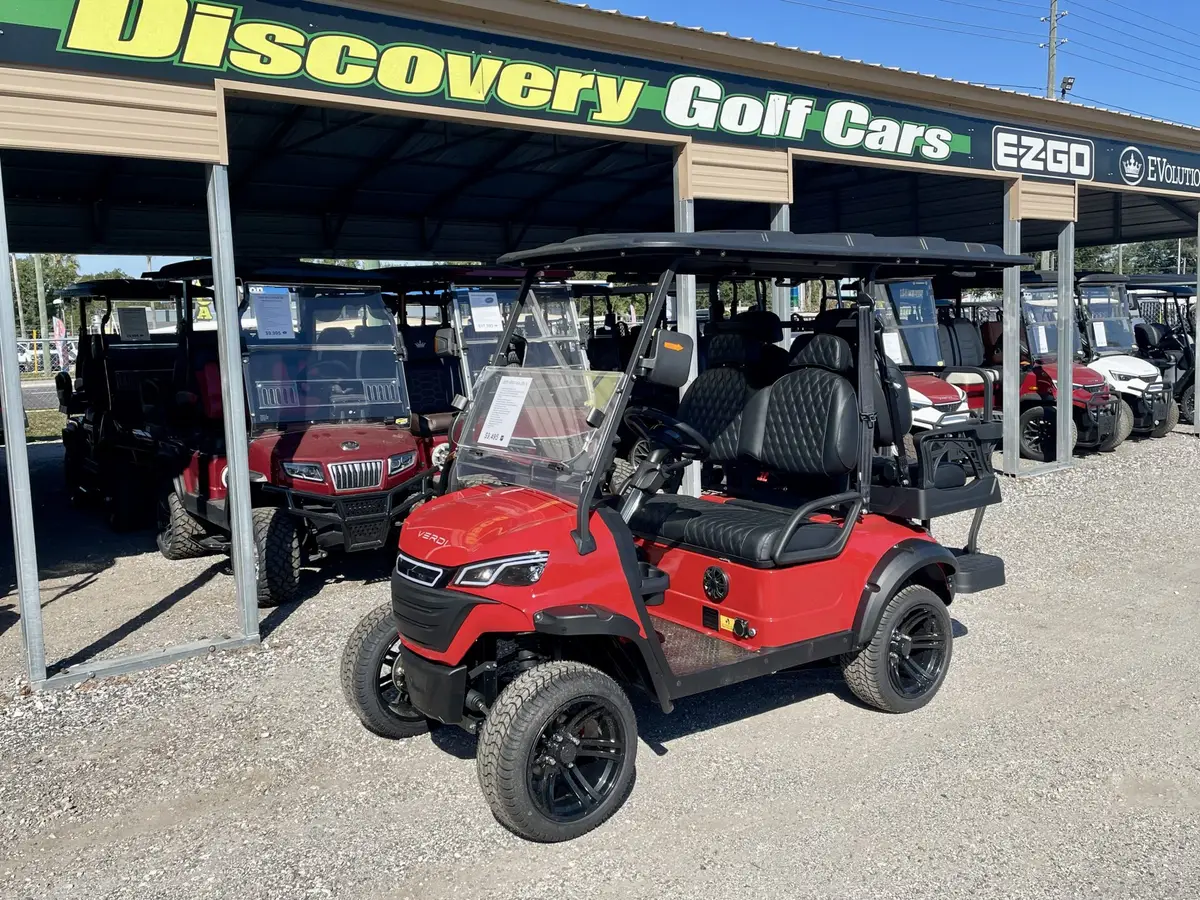
The D5 comes in Ranger and Maverick trims across 4-seat, 6-seat, and 2+2 configurations. The Ranger and Maverick share the same powertrain and specs. The Maverick adds a lifted stance, off-road tires, brush guard, fender flares, and running boards for buyers who want a more aggressive look or need to handle rougher terrain.
The 2+2 configurations feature a flip-flop rear seat that converts between forward-facing passenger seating and a rear-facing utility setup, with under-seat storage, a footrest, and an optional tow hitch. These are practical for buyers who need occasional cargo flexibility without giving up a full rear seat.
| Model | Seats | MSRP |
|---|---|---|
| D5 Ranger 4 | 4 | $8,695 |
| D5 Maverick 4 | 4 (lifted) | $8,995 |
| D5 Ranger 6 | 6 | $10,595 |
| D5 Maverick 6 | 6 (lifted) | $10,995 |
D-Max Series
The D-Max is Evolution's premium line, carrying noticeably more technology, a larger battery, and a truck-inspired front-end aesthetic. The key distinction within this series is GT versus XT. GT models are standard height with a single rear motor. XT models add on-demand 4-wheel drive via dual independent AC motors (a 6.3 kW rear motor plus a 4 kW front motor), a lifted stance, Electric Power Steering, and all-terrain tires.
The 6-seat GT6 and XT6 also include rear multicolor LED tower speakers with a subwoofer, giving them a noticeably different audio experience compared to the 4-seat variants.
| Model | Seats | Drivetrain | MSRP |
|---|---|---|---|
| D-Max GT4 | 4 | Rear-wheel drive | $13,595 |
| D-Max GT6 | 6 | Rear-wheel drive | $15,595 |
| D-Max XT4 | 4 | On-demand 4WD | $15,595 |
| D-Max XT6 | 6 | On-demand 4WD | $17,595 |
Battery and powertrain
Every current Evolution model comes standard with a fully sealed, maintenance-free lithium battery. This is significant because many competitors still offer lead-acid as the base option and charge a premium for lithium upgrades.
| Spec | D5 Series | D-Max Series |
|---|---|---|
| Battery | 48V lithium | 48V 160Ah lithium |
| Rear motor | 6.3 kW AC | 6.3 kW AC |
| Front motor (XT only) | N/A | 4 kW AC |
| Charger | 25A on-board | 25A on-board |
| Top speed | 19 mph | 19 mph (25 mph LSV) |
| Charge time | 4 to 6 hours | 4 to 6 hours |
| Battery warranty | 8 years | 8 years |
The AC motor delivers clean, consistent acceleration with no hesitation. Unlike lead-acid setups, which lose power as the battery drains, lithium chemistry maintains consistent output across the full charge cycle. Hill-climbing performance is noticeably better than on comparable lead-acid carts.
A smart battery management system is included on all models, with a mobile and PC monitoring app. The 8-year battery warranty is one of the strongest in this category and meaningfully reduces long-term ownership risk.
The D-Max uses a larger 160Ah battery pack compared to the D5, which contributes to its longer effective range and supports the additional power demands of the XT's front motor.
Features and technology
Feature content is where Evolution most visibly separates itself from legacy brands at comparable price points. Both series come loaded with technology that buyers would typically pay extra for elsewhere.
| Feature | D5 Series | D-Max Series |
|---|---|---|
| Touchscreen | 9-inch multi-functional | 10.1-inch with CarPlay and Android Auto |
| Audio | Light-up soundbar | 24-speaker surround sound |
| Rear speakers (6-seat) | Standard soundbar | Multicolor LED tower speakers with subwoofer |
| Phone charging | USB ports at every seat | Dual wireless chargers plus USB ports |
| Refrigerator | No | Built-in, center console |
| Backup camera | Yes | Yes |
| Lighting | Full LED package | Full LED package, illuminated logo |
| Rearview mirrors | Powered, integrated turn signals | Panoramic 180-degree (XT models) |
The D5's 9-inch touchscreen controls speed display, gear selection, lights, odometer, radio, Bluetooth, and backup camera from a single interface. The D-Max steps that up with a 10.1-inch screen, Apple CarPlay and Android Auto integration, and steering wheel controls for media and calls.
Both series include adjustable steering columns, dial gear selectors, speech control microphones, foldable windshields with slideable air vents, full LED lighting packages (high beams, low beams, DRL, turn signals, and brake lights), and cupholders at every seat.
The D-Max rear compartment offers three configurable options: a foldable storage basket with collapsible utility box, a sliding tray with a portable 74-QT cooler, or a detachable dual golf bag holder for up to four bags. This kind of versatility is uncommon at any price point in the golf cart market.
Design and build quality
Evolution leans into automotive styling in a way that most golf cart brands do not. The D5 draws clear visual inspiration from the Jeep Wrangler, with a boxy, rugged silhouette. The D-Max goes in a more truck-influenced direction, with a prominent front end and an illuminated Evolution logo.
D5 paint options include Flamenco Red, Black Sapphire, Portimao Blue, Mediterranean Blue, Mineral White, and Arctic Gray. The D-Max adds Sky Blue and offers four seat color choices, giving buyers more room to personalize.
The structural backbone is a powder-coated steel frame, which is solid. The body panels and interior trim are plastic, a cost-efficiency trade-off that most buyers accept at this price point but is worth noting compared to the higher-grade materials found on premium legacy models.
Plastic trim and interior finishes are the most common build quality criticisms from Evolution owners. They are functional and not unusual for the price category, but buyers expecting Club Car Onward-level material quality may notice the difference.
Ride quality and handling
On paved surfaces, Evolution carts ride smoothly. Steering is light and responsive, braking is confident, and the AC motor's instant torque makes acceleration feel quick and clean with no hesitation off the line.
Non-lifted Ranger and GT models ride firmer on rough terrain, as expected for their suspension setup. Maverick and XT models handle off-road conditions better given their lifted stance and off-road or all-terrain tires. XT models also include Electric Power Steering as standard, which improves handling feel and reduces steering effort at low speeds.
Hill-climbing performance is one of the areas where Evolution's AC motor and lithium battery combination consistently outperforms older lead-acid setups. Buyers coming from flooded lead-acid carts typically notice a significant difference in pull and consistency on grades.
What owners actually say
Owner sentiment across forums, owner Facebook groups, and communities like r/golfcarts is generally positive. Buyers frequently highlight the feature-to-price value, the quality of the infotainment system, and strong battery performance over time. Owners with 1,200-plus miles and multiple years of use report reliable operation without significant issues.
The recurring concerns worth taking seriously:
- Parts availability: Lead times for replacement parts can be longer than with legacy brands. This is the single most consistent complaint in long-term ownership discussions.
- Dealer variability: Ownership experience varies significantly depending on the dealer. A good dealer makes parts sourcing and service manageable; a poor one makes it genuinely frustrating. Researching the specific dealer before purchase is consistently cited as critical.
- Plastic trim durability: Interior and body trim holds up adequately under normal use but shows wear more readily than premium alternatives.
Before buying, research the specific Evolution dealer in your area. Read Google and Facebook reviews, ask about their parts inventory and service turnaround times, and confirm they have a service department with Evolution-certified technicians. Your dealer matters as much as the cart itself.
Evolution vs. Club Car, E-Z-GO, and Yamaha
The honest comparison depends on what you prioritize. Evolution wins clearly on features per dollar at the point of sale. The Big Three win on parts infrastructure, long-term parts availability, resale value, and at their upper tiers, material and build quality.
| Category | Evolution | Club Car / E-Z-GO / Yamaha |
|---|---|---|
| Upfront value | Strong advantage | More expensive for equivalent features |
| Standard lithium battery | Yes, all models | Often an upgrade cost |
| Infotainment technology | Best in class at price point | Varies; typically less standard tech |
| Parts availability | Growing but limited in some markets | Strong advantage |
| Dealer network depth | Expanding | Established and wide |
| Long-term durability data | Limited (newer brand) | Decades of track record |
| Resale value | Uncertain; fewer comps | More predictable |
| Battery warranty | 8 years | Varies by model and brand |
For buyers who want the most cart for their budget and are in a market with a solid Evolution dealer, Evolution is a genuinely compelling choice. For buyers who prioritize long-term parts support, resale value predictability, or who are in a rural market without a nearby dealer, a legacy brand may still be the safer long-term decision. For a detailed side-by-side breakdown, see our Evolution vs. E-Z-GO golf cart comparison.
Street legality and LSV compliance
Evolution carts come standard with the equipment that most states require for Low Speed Vehicle classification: full LED lighting (high beams, low beams, DRL), turn signals, brake lights, side mirrors, seat belts, and a backup camera. These features are not add-ons; they are included across the lineup.
That said, LSV registration requirements vary by state. Having the right equipment is the starting point, but you will also need to confirm your specific model meets your state's speed minimums (typically 20 to 25 mph for LSV designation), title and registration processes, and any insurance requirements. LSV-configured Evolution models are rated to 25 mph, which meets the federal definition and most state thresholds.
Check your state's DMV requirements before purchasing with street-legal use in mind. Equipment compliance is only one part of LSV registration; speed ratings, VIN requirements, and insurance minimums vary by state and are worth confirming with your dealer before you buy.
Who should buy an Evolution golf cart?
Evolution carts are best suited for:
- Neighborhood and golf community families who want a stylish, well-equipped cart for daily use without paying premium-brand upgrade pricing
- First-time cart buyers comparing a fully loaded option at a lower price against base-model legacy alternatives — if you are still deciding on budget, our overview of how much a golf cart costs is a useful starting point
- Budget-conscious buyers who want a lithium battery, touchscreen technology, and modern safety features included at purchase
- Off-road and utility users who want genuine 4WD capability at a realistic price point, available through the XT models
- Businesses and fleets that need low-maintenance electric vehicles and can centralize service through a reliable local dealer
Evolution is a harder fit for buyers in markets without a strong local dealer, buyers who plan to resell in a few years and need predictable residual value, or buyers who place a premium on premium materials and long-term parts support over upfront value. If you need golf cart insurance, confirm coverage options before finalizing your purchase, as policy availability for newer brands can vary.
Frequently asked questions
| Question | Answer |
|---|---|
| Are Evolution golf carts good? | Yes, particularly for value. The quality edge for long-term durability still goes to the Big Three, but Evolution delivers more standard features per dollar than any legacy brand at comparable price points. |
| Where are Evolution golf carts made? | Manufacturing is handled across six factories abroad. U.S. distribution runs through centers in Grand Prairie, Texas and Orlando, Florida. |
| What is the top speed? | 19 mph on D5 and standard D-Max models. LSV-configured models reach 25 mph. |
| How long does charging take? | 4 to 6 hours with the standard 25A on-board charger. |
| What battery warranty do they offer? | 8 years across all current models. |
| Do they come with lithium batteries standard? | Yes. All current Evolution models include a sealed, maintenance-free lithium battery as standard equipment. |
| What is the difference between Ranger and Maverick? | Same powertrain and specs. The Maverick adds a lifted stance, off-road tires, brush guard, fender flares, and running boards. |
| What is the difference between GT and XT on the D-Max? | The GT is standard height with rear-wheel drive. The XT adds on-demand 4WD via a front motor, a lifted stance, Electric Power Steering, and all-terrain tires. |
| Are Evolution carts street legal? | They come equipped for LSV compliance (full LED lighting, turn signals, mirrors, seat belts, backup camera). State registration requirements vary, so confirm local rules before purchase. |
| How do they compare to Club Car or E-Z-GO? | More features per dollar at launch. Legacy brands still have stronger parts networks, longer durability track records, and more predictable resale values. See the full Club Car model history for context on what decades of development looks like. |