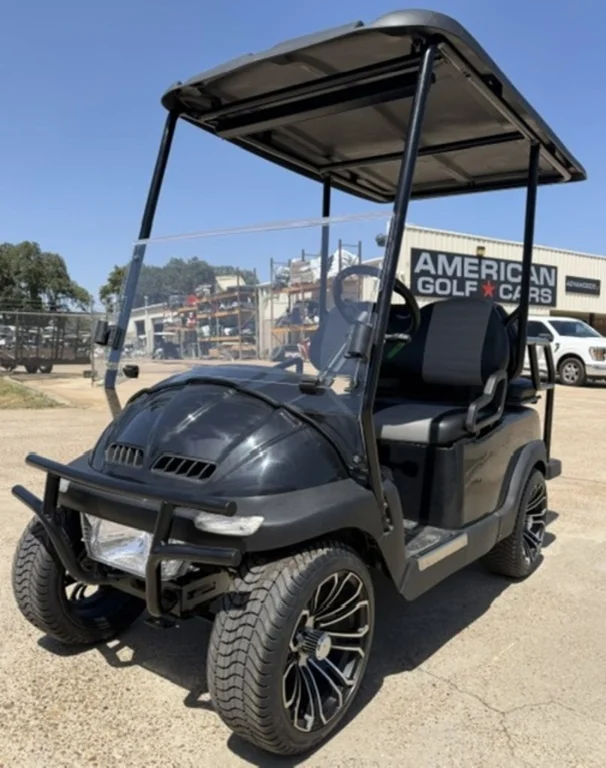
Are golf carts street legal in Delaware?
Standard golf carts are not street legal in Delaware. Under Delaware Code Title 21, Section 2113A, golf carts are classified as off-road recreational vehicles and cannot be registered, titled, or operated on public roads. Only factory-built Low-Speed Vehicles (LSVs) that meet federal safety standards qualify for road use in the state. There is no conversion or retrofitting pathway that makes a standard golf cart street legal in Delaware.
| Vehicle type | Street legal in Delaware? | Registration required? |
|---|---|---|
| Standard golf cart | No | No (private property use only) |
| Retrofitted/converted golf cart | No | Not eligible |
| Factory-built LSV (FMVSS-certified) | Yes | Yes, through Delaware DMV |
If you only use your golf cart on private property, a golf course, or within a gated community, no state registration, insurance, or equipment requirements apply. The restrictions only come into effect when operating on public roads.
Golf carts vs. low-speed vehicles in Delaware
Delaware law draws a firm line between a golf cart and a Low-Speed Vehicle. Understanding this distinction is essential before you attempt to register or operate any small vehicle on public roads.
| Feature | Golf cart | Low-Speed Vehicle (LSV) |
|---|---|---|
| Top speed | Typically under 20 mph | More than 20 mph, no more than 25 mph |
| Gross vehicle weight rating | Varies | 3,000 lbs or less |
| Federal safety certification | Not required | Required (FMVSS 571.500) |
| Manufacturer-issued VIN | No | Yes (17-digit) |
| Road use permitted | No | Yes, on roads posted 35 mph or under |
An LSV is a four-wheeled motor vehicle with a top speed of more than 20 mph but no more than 25 mph on a paved, level surface, and a gross vehicle weight rating of 3,000 lbs or less. These vehicles must be factory-built to comply with 49 C.F.R. Section 571.500 (FMVSS 571.500). Well-known LSV models that qualify include the Polaris GEM, Club Car Carryall LSV, and Yamaha Drive2 LSV. The Delaware DMV will not issue a VIN to a homemade or retrofitted vehicle, regardless of what equipment it carries.
If a dealer or private seller claims a modified golf cart is "street legal" in Delaware, ask to see the Manufacturer's Certificate of Origin (MCO) explicitly identifying it as an LSV. Without it, the vehicle cannot be legally registered.
Where LSVs can and cannot operate
Even a properly registered LSV has limits on where it can travel in Delaware. The governing rule is the posted speed limit of the road.
| Road type | LSV permitted? |
|---|---|
| Roads with posted speed limit of 35 mph or less | Yes |
| Crossing intersections on roads above 35 mph | Yes (crossing only, not travel) |
| Roads with posted speed limit above 35 mph | No |
| Highways, freeways, and interstates | No |
LSVs are permitted to cross intersections on roads posted above 35 mph, but they cannot travel along those roads. This is an important distinction for riders who need to cross a busy road to access a neighborhood or commercial area.
Required safety equipment for LSVs
To qualify for registration and legal road use in Delaware, an LSV must meet all federal safety equipment standards under FMVSS 571.500. These requirements must be factory-installed, not added aftermarket to a standard golf cart.
| Required equipment | Standard |
|---|---|
| Headlights | FMVSS 571.500 |
| Taillights | FMVSS 571.500 |
| Brake lights / stop lamps | FMVSS 571.500 |
| Turn signals | FMVSS 571.500 |
| Reflectors | FMVSS 571.500 |
| Windshield | FMVSS 571.500 |
| Exterior mirrors | FMVSS 571.500 |
| Seat belts for all occupants | FMVSS 571.500 |
| Parking brake | FMVSS 571.500 |
| 17-digit manufacturer-issued VIN | FMVSS 571.500 |
The 17-digit VIN is particularly important. The Delaware DMV uses it to title and register the vehicle. Without a factory-issued VIN, there is no path to legal registration.
Registering an LSV with the Delaware DMV
To legally operate an LSV on Delaware public roads, you must title and register the vehicle through the Delaware Division of Motor Vehicles. Once registered, the vehicle receives a standard Delaware license plate displayed on the rear.
| Required document | Details |
|---|---|
| Manufacturer's Certificate of Origin (MCO) or title | Must explicitly identify the vehicle as an LSV |
| Proof of Delaware liability insurance | Must meet state minimum coverage requirements |
| Valid Delaware driver's license | Minimum age 16 |
| Title and registration fee payment | Standard DMV fee schedule applies |
The MCO or title is a critical document. It must explicitly describe the vehicle as an LSV. A title that simply lists a golf cart brand or model will not be accepted, even if the vehicle has been modified.
Insurance requirements for LSVs
Delaware requires liability insurance for all registered motor vehicles, including LSVs. You must carry a valid insurance ID card in the vehicle at all times when operating on public roads. When shopping for coverage, it helps to understand your golf cart insurance options, as policies and pricing for LSVs can vary significantly between insurers.
| Coverage type | Minimum required |
|---|---|
| Bodily injury per person | $25,000 |
| Bodily injury per accident | $50,000 |
| Property damage per accident | $10,000 |
| PIP (personal injury protection) per person | $15,000 |
| PIP per accident | $30,000 |
The penalties for operating without insurance are steep. A first offense carries a fine of $1,500, while subsequent offenses rise to $3,000, plus registration suspension. These fines apply to LSVs just as they do to any other registered vehicle in Delaware.
Age and license requirements
To operate an LSV on Delaware public roads, you must hold a valid Delaware driver's license. The minimum age is 16. No separate LSV permit or special license class exists in Delaware; a standard driver's license is sufficient.
Unlicensed minors cannot legally operate an LSV on public roads, even in beach communities or areas with slower traffic. Private property and designated golf course use are the only exceptions.
Local ordinances and beach town rules
Several Delaware municipalities have passed their own golf cart and LSV ordinances that go beyond or differ from state law. Beach communities and small towns are the most common places to find these local rules. Always check with your local town hall before assuming state law is the only standard that applies.
| Municipality | Ordinance / status | Key details |
|---|---|---|
| Delaware City | Ordinance No. 21-0920-01 | Permits both LSVs and golf carts within city limits; local registration required |
| Rehoboth Beach | Contact city hall | Beach tourism hub; verify current ordinance status locally |
| Dewey Beach | Contact town office | Small resort community; local rules may apply |
| Bethany Beach | Contact town hall | Seasonal community; check for seasonal ordinances |
| Fenwick Island | Contact town hall | Small beach town; local ordinance status varies |
| Ocean View | Contact town hall | Inland beach community; verify directly with town |
Delaware City local ordinance details
Delaware City's Ordinance No. 21-0920-01 is one of the most specific examples of a local golf cart rule in the state. Unlike state law, the ordinance permits both registered LSVs and standard golf carts to operate within city limits under a local registration system.
| Fee or penalty | Amount |
|---|---|
| Initial local registration fee | $150 |
| Annual renewal fee | $100 |
| First offense violation penalty | $50 – $100 |
| Subsequent offense violation penalty | $100 – $200 |
Beach communities and seasonal visitors
Delaware's coastal economy draws significant seasonal tourism, and many visitors and seasonal residents want to use golf carts to get around beach areas. Because beach towns often have narrow streets, low traffic speeds, and short travel distances, some communities have created local frameworks that are more permissive than state law.
If you are renting a property, buying a seasonal home, or visiting a Delaware beach town, contact the local municipality directly before bringing or renting a golf cart. Rules can change year to year, and operating without proper local registration can result in fines even on roads that appear low-traffic.
HOA communities and planned retirement developments in Delaware sometimes have their own internal golf cart rules that allow use on private roads within the development. These rules apply independently of state law and do not grant access to public roads.
Penalties for illegal operation
Operating a standard golf cart or an unregistered vehicle on a Delaware public road can result in several penalties beyond the insurance fines already noted. While Delaware Code focuses on the registration and insurance framework, violations can trigger the following consequences.
| Violation | Potential penalty |
|---|---|
| Operating an unregistered motor vehicle | Citation and possible vehicle impoundment |
| Operating without a valid driver's license | Fines; applies if driver is underage or unlicensed |
| No insurance (first offense) | $1,500 fine |
| No insurance (subsequent offenses) | $3,000 fine |
| Continued non-compliance | Registration suspension |
Because golf carts are not eligible for registration under Delaware law, they cannot be made compliant after the fact. If you are stopped while driving a golf cart on a public road, there is no paperwork or fee that will resolve the underlying issue: the vehicle itself is not legal for road use.
Estimated cost of LSV ownership and compliance in Delaware
Beyond the purchase price of an LSV, there are several recurring costs to plan for if you want to operate legally on Delaware public roads. If you are still evaluating whether an LSV fits your needs and budget, our golf cart buying guide covers what to inspect and compare before committing to a purchase.
| Cost item | Estimated cost |
|---|---|
| Factory-built LSV purchase price | $8,000 – $20,000+ |
| Delaware DMV title and registration fees | Varies by DMV schedule |
| Annual liability and PIP insurance | $300 – $800+ per year (varies by insurer) |
| Delaware City local registration (if applicable) | $150 initial, $100 annually |
| No-insurance penalty (first offense) | $1,500 |
These costs represent the minimum investment to stay fully compliant. For seasonal riders or those in beach communities with local ordinances, local registration fees add to the total. Shopping for LSV-specific insurance quotes is advisable, as not all insurers price these vehicles the same way.
Frequently asked questions
Can I make my golf cart street legal in Delaware?
No. Delaware law does not provide any pathway to convert or retrofit a standard golf cart for road use. The Delaware DMV will not issue a VIN to a homemade or converted vehicle. Only factory-built, FMVSS-certified LSVs with a manufacturer-issued 17-digit VIN can be registered for road use.
Do I need to register my golf cart if I only use it on private property?
No. State registration, insurance, and equipment requirements do not apply to golf carts used exclusively on private property, golf courses, or within gated communities. The restrictions apply only when operating on public roads.
Can I cross a road with a speed limit higher than 35 mph in an LSV?
Yes, but only at intersections. An LSV may cross an intersection on a road posted above 35 mph, but it cannot travel along that road. Crossing and traveling along are treated differently under Delaware law.
What is the minimum age to drive an LSV in Delaware?
The minimum age is 16, and the operator must hold a valid Delaware driver's license. No special LSV permit or separate license class is required.
What insurance do I need for an LSV in Delaware?
You need liability insurance meeting Delaware's state minimums: $25,000 per person bodily injury, $50,000 per accident bodily injury, and $10,000 property damage per accident. Personal injury protection (PIP) is also required at $15,000 per person and $30,000 per accident.
Does Delaware allow local golf cart ordinances?
Yes. Some municipalities, including Delaware City, have passed ordinances that permit golf carts within city limits under a local registration system. Beach towns and small communities are the most likely places to find these ordinances. Always verify with your local town hall.
What is an LSV compared to a golf cart?
An LSV is a factory-built, four-wheeled motor vehicle with a certified top speed of more than 20 mph but no more than 25 mph, a gross vehicle weight rating of 3,000 lbs or less, and full federal safety equipment certification under FMVSS 571.500. A standard golf cart does not meet these requirements and is classified as an off-road vehicle under Delaware law.
Can tourists and seasonal visitors use golf carts in Delaware beach towns?
It depends on the specific municipality. Some beach communities may have local ordinances that allow golf cart use under local registration. Visitors should contact the local town office before renting or bringing a golf cart. State law alone does not permit golf cart use on public roads.