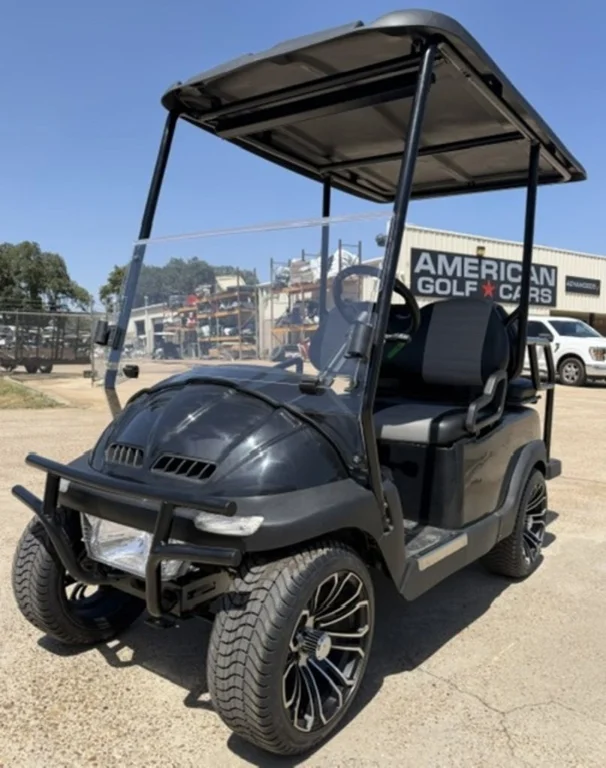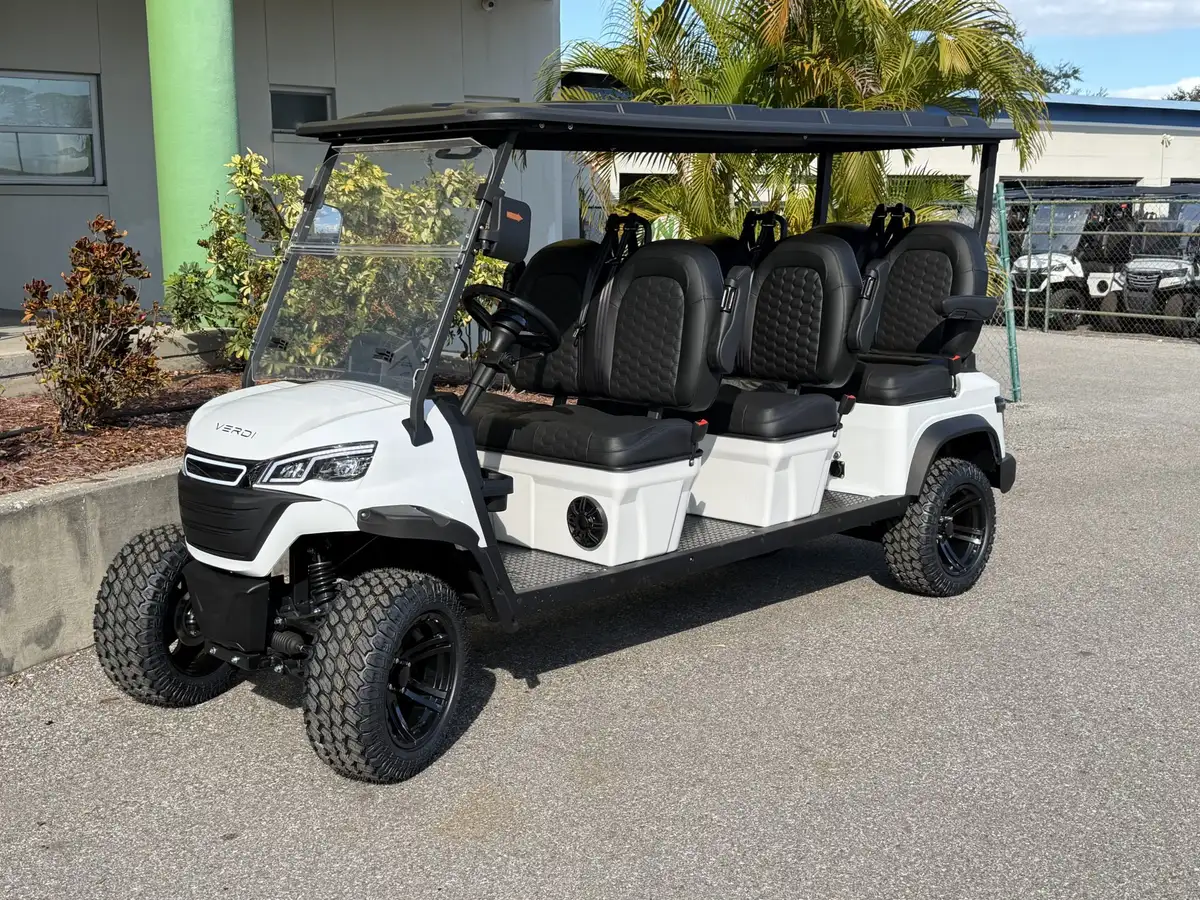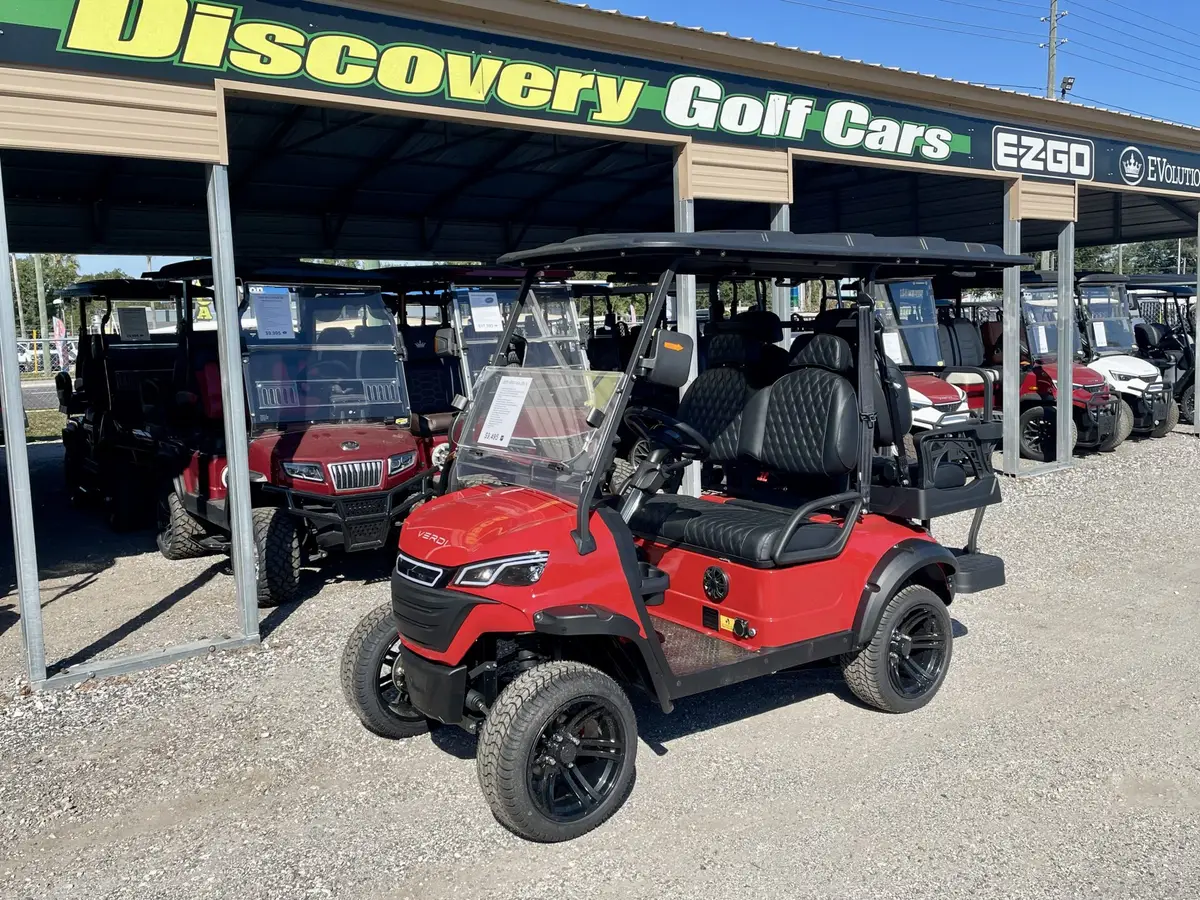
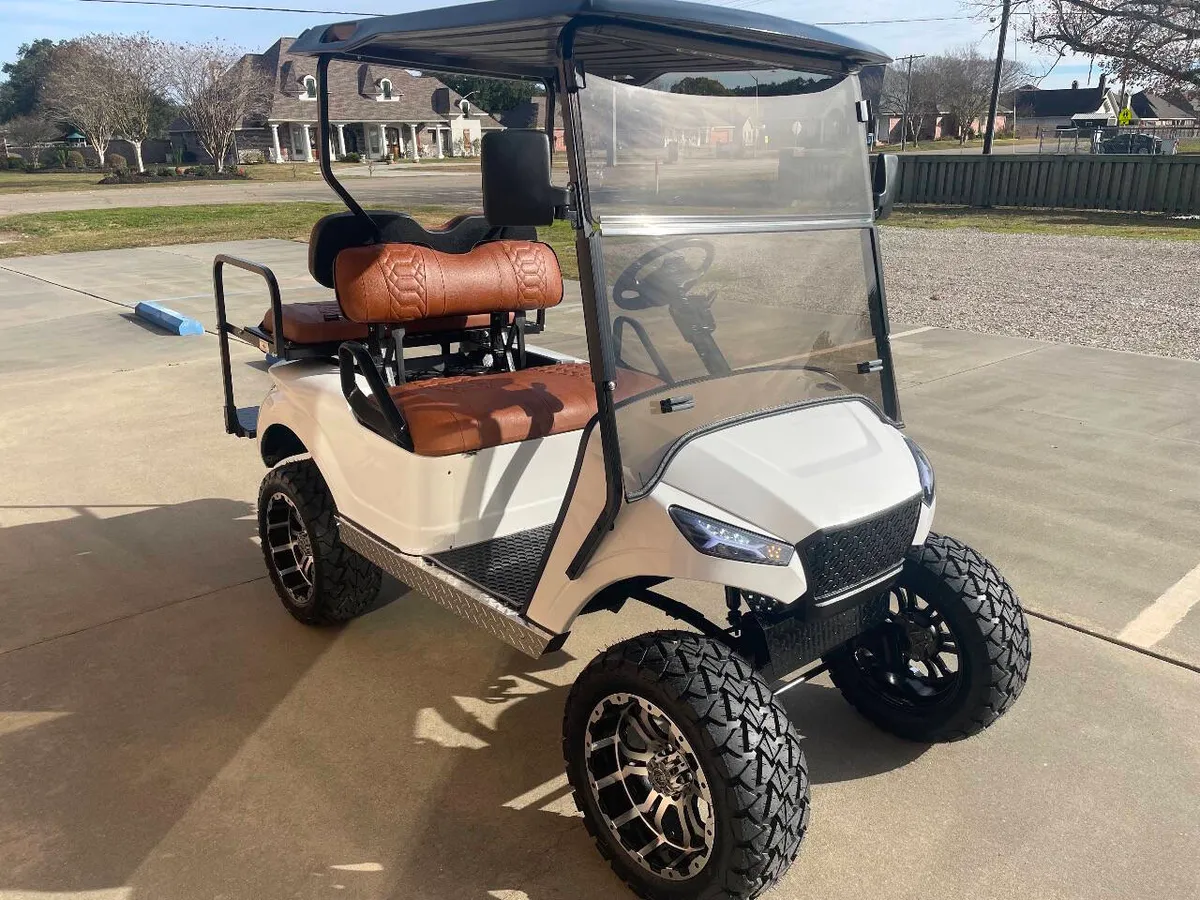
Golf cart vs. LSV: the distinction that defines everything
Whether your golf cart is street legal in California depends almost entirely on one question: is it a standard golf cart or a Low-Speed Vehicle (LSV)? These two categories follow completely different rules under California law, and confusing them is the most common mistake owners make.
| Feature | Standard golf cart | Low-Speed Vehicle (LSV/NEV) |
|---|---|---|
| Max speed | 15 mph | More than 20 mph, up to 25 mph |
| Unladen weight | Under 1,300 lbs | Under 3,000 lbs (GVWR) |
| Road speed limit access | 25 mph posted limit or less | 35 mph posted limit or less |
| Local ordinance required? | Yes | No |
| DMV registration required? | Generally exempt (near golf courses) | Yes, mandatory |
| Insurance required? | Not under state law for private use | Yes, liability insurance required |
| FMVSS compliance required? | No | Yes |
| 17-digit VIN required? | No | Yes |
| Governing CVC sections | 345, 21115, 21115.1 | 385.5, 21250–21266 |
California Vehicle Code (CVC) Section 345 defines a golf cart as a vehicle with four wheels, an unladen weight under 1,300 lbs, and a maximum speed of 15 mph. CVC Section 385.5 defines an LSV as a vehicle capable of exceeding 20 mph but not more than 25 mph, with a gross vehicle weight rating under 3,000 lbs.
LSVs must meet Federal Motor Vehicle Safety Standards (FMVSS) and carry a 17-digit VIN, the same kind stamped on a standard passenger car. If your vehicle meets these LSV thresholds, it is treated more like a car under California law, with broader road access but stricter equipment and registration requirements.
Street legality rules by vehicle type
California allows both standard golf carts and LSVs on public roads under specific conditions. Those conditions differ significantly depending on which vehicle you have.
Standard golf carts
Standard golf carts have the most restricted street access. Under CVC Sections 21115 and 21115.1, a golf cart may only operate on public roads if all of the following are true:
- The local city or county has passed a specific ordinance or resolution authorizing golf cart use on designated roads
- The road has a posted speed limit of 25 mph or less
- The golf cart is operated within one mile of a golf course
- Operation occurs during daylight hours when crossing roads with speed limits up to 45 mph at designated crossing zones (CVC 21115.1)
No local ordinance means no street use. If your city or county has not passed an authorizing ordinance, your standard golf cart cannot legally travel on any public road, regardless of how slow the street is or how close you are to a golf course.
Golf carts are prohibited on highways and freeways under all circumstances. The crossing zone provision under CVC 21115.1 allows carts to cross roads posted up to 45 mph, but only at designated crossing points and only during daylight hours.
LSVs and Neighborhood Electric Vehicles (NEVs)
LSVs have meaningfully broader street access. Once registered with the California DMV and properly insured, an LSV can operate on any public road with a posted speed limit of 35 mph or less without requiring a local ordinance. This is the key advantage of an LSV classification over a standard golf cart.
Like golf carts, LSVs are prohibited on highways and freeways and are not permitted on roads posted above 35 mph.
Local ordinances and city-specific rules
For standard golf cart owners, local ordinances are everything. California grants cities and counties the authority to designate specific roads for golf cart use, and many communities with active golf cart cultures have done exactly that.
| Community | Golf cart street use status | Notes |
|---|---|---|
| Carmel-by-the-Sea | Check locally | Frequently searched; confirm current ordinance with city |
| Palm Springs | Permitted in designated areas | Active golf cart community; verify current designated routes |
| Catalina Island | Heavily regulated | Vehicle permits strictly limited; golf carts common but controlled |
| Rancho Mirage | Permitted on designated roads | Golf cart-friendly Coachella Valley community |
| Other communities | Varies | Contact your city or county transportation office directly |
Because ordinances can change and enforcement varies, always verify current rules with your city or county before putting your cart on public roads. The California Legislative Information site at leginfo.legislature.ca.gov is a reliable starting point for reviewing the relevant CVC sections yourself.
Equipment requirements
What your vehicle must be equipped with depends on its classification. The requirements for LSVs are far more detailed and closely mirror those for passenger cars.
Standard golf carts
California does not publish a comprehensive state-mandated equipment list for standard golf carts operating on designated local roads. Local ordinances may impose their own requirements, so check with your city or county. In practice, most jurisdictions expect at minimum that your cart is mechanically sound and does not create a hazard.
LSVs and NEVs
Because LSVs must meet FMVSS, their equipment requirements are specific and non-negotiable. A street-legal LSV in California must be factory-equipped or properly retrofitted with:
- Headlights
- Taillights and brake lights
- Turn signals (front and rear)
- Windshield with wipers
- Interior and exterior rearview mirrors
- Seat belts for all occupants
- Reflectors
- Parking brake
- 17-digit VIN plate
Modifying a standard golf cart to exceed 15 mph changes its legal classification. A cart modified to travel faster than 15 mph is no longer a golf cart under CVC Section 345. Depending on its top speed, it may need to meet LSV standards or could fall into an unclassified gray area that makes it illegal for any road use. Before modifying, understand the classification consequences.
DMV registration
Registration requirements split cleanly between the two vehicle types.
| Vehicle type | Registration required? | Documents needed |
|---|---|---|
| Standard golf cart (near golf course, local ordinance roads) | Generally exempt | None required for exempt operation |
| LSV/NEV (any public road up to 35 mph) | Yes, mandatory | Title or Manufacturer's Certificate of Origin, proof of insurance, valid California driver's license |
Standard golf carts operating within one mile of a golf course on locally designated roads are exempt from DMV registration under California law. Operating outside those conditions increases registration and compliance requirements significantly.
For LSV registration, bring the following to your local DMV office:
- Vehicle title or Manufacturer's Certificate of Origin (MCO) if the vehicle is new
- Proof of California liability insurance meeting current minimums
- A valid California driver's license
- Payment for applicable registration fees
The DMV will verify the 17-digit VIN before issuing registration. New LSV owners should expect the same registration process as any other motor vehicle. Visit dmv.ca.gov for current fee schedules and any updated form requirements before your appointment.
Insurance requirements
California updated its minimum auto liability insurance requirements in 2025. LSVs registered for public road use must carry at least the following coverage:
| Coverage type | 2025 minimum (updated) | Previous minimum (pre-2025) |
|---|---|---|
| Bodily injury per person | $30,000 | $15,000 |
| Bodily injury per accident | $60,000 | $30,000 |
| Property damage per accident | $15,000 | $5,000 |
The previous minimums had been in place since 1967. The 2025 update doubled the bodily injury limits and tripled the property damage minimum. Confirm the current requirements at dmv.ca.gov or with a licensed California insurance agent, as these figures apply to LSVs registered as motor vehicles.
Standard golf carts used on private property or golf courses do not require insurance under California state law. However, carrying liability coverage is still advisable given the potential for accidents involving other people or property.
Age and license requirements
Any person operating a golf cart or LSV on a California public road must hold a valid California driver's license. Since the minimum licensing age in California is 16, that is effectively the minimum age for public road operation of either vehicle type.
| Setting | License required? | Minimum age |
|---|---|---|
| Public road (golf cart or LSV) | Yes, valid California driver's license | 16 |
| Private property or golf course | No state requirement | No state minimum |
There is no special golf cart permit or separate license classification in California. A standard Class C driver's license is sufficient. Private property and golf course use carry no state-mandated age or license requirement, though property owners and golf courses may set their own rules.
HOA and private community rules
California state law governs public roads, but if you live in a master-planned community, gated neighborhood, or HOA-managed development, an entirely separate layer of rules may apply to your golf cart use.
Many private communities in California actively encourage golf cart use on internal roads and pathways. Because these internal roads are typically private property, state vehicle codes governing public roads do not automatically apply. Your HOA or community management may, however, impose its own equipment standards, speed limits, age restrictions, or designated route requirements.
Before operating a cart in a private community, review your HOA's CC&Rs (Covenants, Conditions, and Restrictions) and any community transportation rules. If your community roads connect to public streets, the public road rules apply the moment your cart crosses onto them.
DUI laws and enforcement
Golf carts and LSVs are classified as motor vehicles when operated on public roads in California. That means DUI laws apply fully. If you are caught operating a golf cart or LSV on a public road while impaired, you face the same legal consequences as a driver caught impaired in a passenger car.
DUI on a golf cart is not a lesser offense. California law treats impaired operation of any motor vehicle on a public road the same way. In resort towns, beach communities, and golf-centric areas where carts are common, law enforcement is aware of this issue and does enforce it.
Penalties for operating a golf cart or LSV without proper registration, on unauthorized roads, or while impaired can include citations, vehicle impoundment, and increased civil liability in the event of an accident. Enforcement patterns vary by jurisdiction, but the legal exposure is real.
Gas vs. electric golf carts
Fuel type alone does not determine street legality in California. A gas-powered golf cart and an electric golf cart are subject to the same CVC classifications based on speed and weight, not on what powers them.
A gas cart that meets LSV speed and weight thresholds can legally be registered as an LSV. A gas cart that maxes out at 15 mph is still a standard golf cart under CVC Section 345, regardless of its engine. What matters is performance and weight, not propulsion type.
That said, some local jurisdictions in California, particularly those with zero-emission goals or air quality management requirements, may impose additional restrictions on gas-powered vehicles in certain zones. Catalina Island, for example, strictly limits internal combustion vehicles. Always check local environmental and transportation rules alongside state vehicle code requirements.
Frequently asked questions
Are golf carts street legal in California?
Yes, under specific conditions. Standard golf carts require a local city or county ordinance, a posted speed limit of 25 mph or less, and operation within one mile of a golf course. LSVs can operate on any public road posted at 35 mph or less once properly registered and insured.
Do I need to register my golf cart with the California DMV?
Standard golf carts operating near a golf course on locally designated roads are generally exempt from DMV registration. LSVs must be registered before any public road use. Operating an unregistered LSV on a public road can result in citations and impoundment.
Can you get a DUI on a golf cart in California?
Yes. Any motor vehicle on a public road is subject to California DUI laws. If you are impaired while driving a golf cart or LSV on a public road, you can be arrested and charged the same as any other impaired driver.
Can a gas golf cart be driven on California streets?
Yes, if it meets the same speed and weight criteria as an electric cart. Fuel type is not a disqualifying factor. A gas cart classified as an LSV can be registered and driven on roads posted at 35 mph or less. A gas cart that only reaches 15 mph is a standard golf cart and subject to the same local ordinance requirements.
What happens if I drive an unregistered golf cart on a public road?
If your cart is classified as an LSV and you operate it unregistered, you can receive a citation, have the vehicle impounded, and face increased civil liability if an accident occurs. Standard golf carts operating outside their permitted conditions face similar enforcement risk.
Are golf carts street legal in Carmel, California?
Carmel-by-the-Sea is a frequently searched community on this topic. Street legality for standard golf carts in Carmel depends on whether the city has adopted an authorizing ordinance under CVC Section 21115. Contact the City of Carmel-by-the-Sea directly or check the current municipal code to confirm the active status of any such ordinance.
What insurance do I need for a golf cart in California?
LSVs registered for public road use must carry California liability insurance at the 2025 minimums: $30,000 per person bodily injury, $60,000 per accident bodily injury, and $15,000 property damage per accident. Standard golf carts on private property or golf courses have no state-mandated insurance requirement, though coverage is advisable.
What age do you need to be to drive a golf cart in California?
On public roads, you must hold a valid California driver's license, which sets the effective minimum age at 16. There is no state-imposed age minimum for golf cart use on private property or golf courses, though property rules may differ.