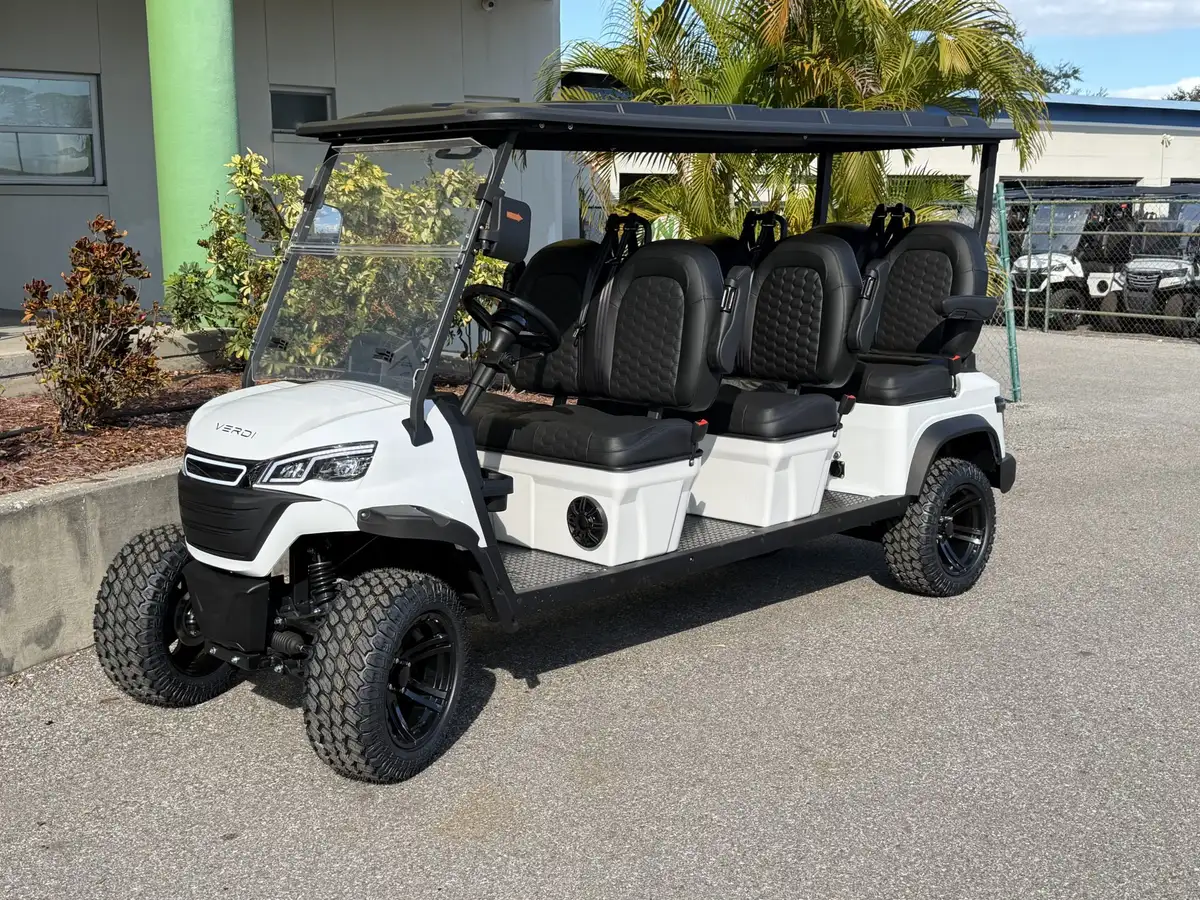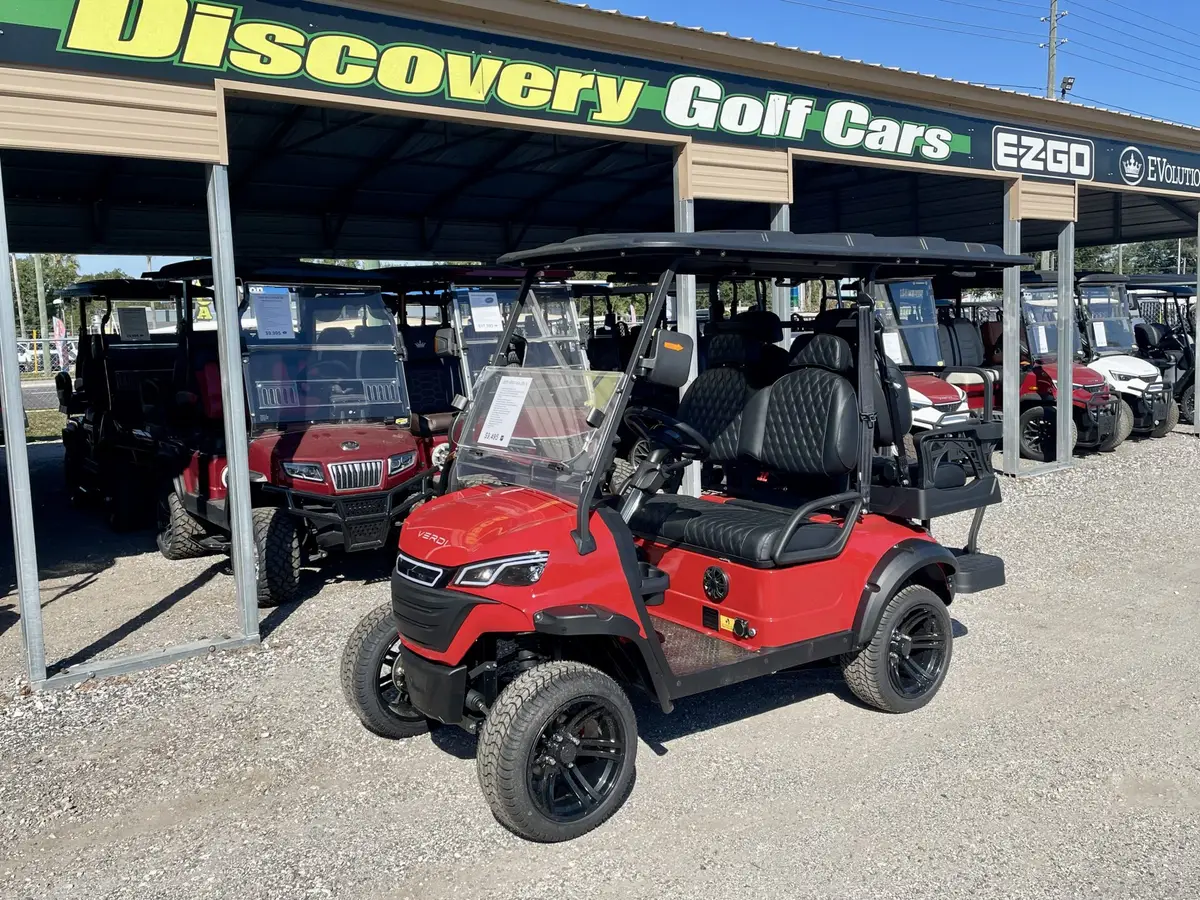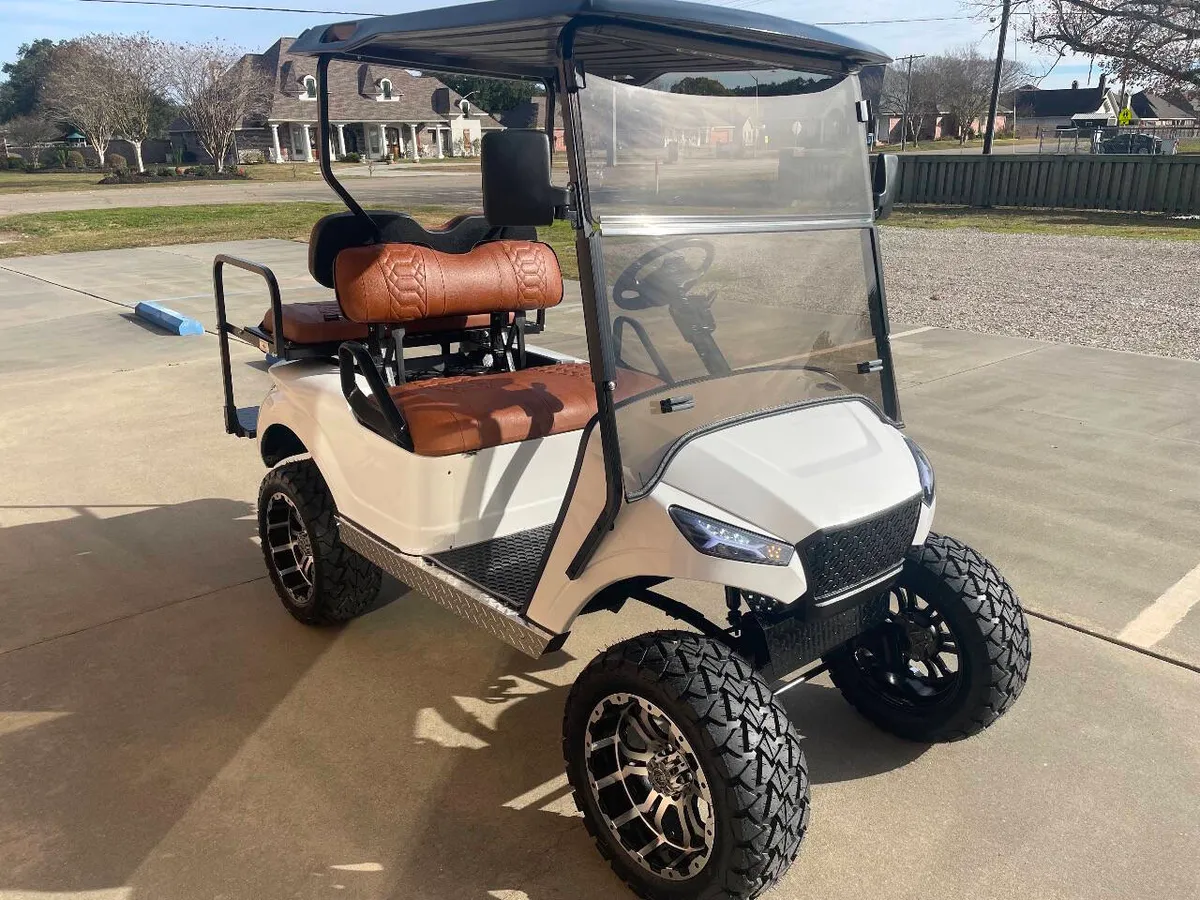
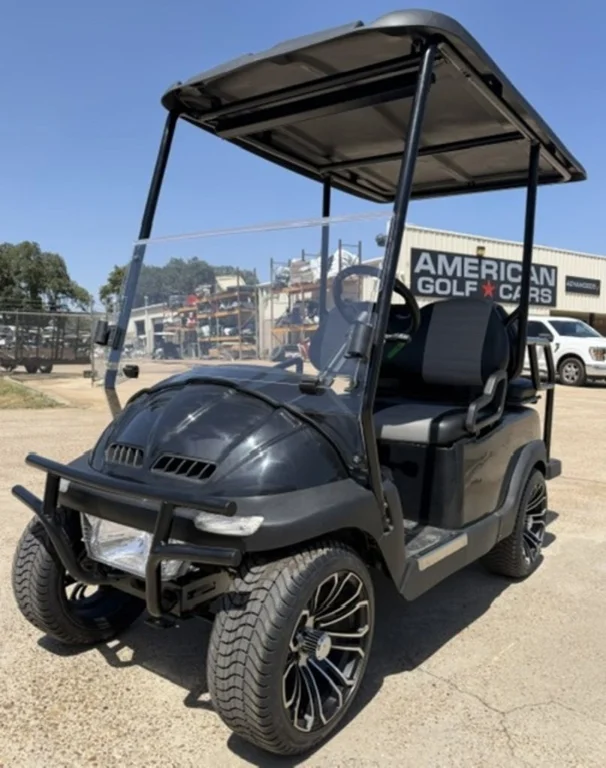
How Louisiana classifies golf carts vs. LSVs
Louisiana law draws a firm line between golf carts and low-speed vehicles (LSVs), and that distinction affects nearly every legal requirement you will face as an owner. Understanding which category your vehicle falls into before you buy or hit the road is essential.
| Feature | Golf cart | Low-speed vehicle (LSV) |
|---|---|---|
| Top speed | Up to 25 mph | Greater than 20 mph, up to 25 mph |
| Original design purpose | Off-road / golf course use | On-road use meeting federal safety standards |
| Federal standard | None required | FMVSS (49 CFR 571.500) |
| VIN required | No | Yes, 17-digit VIN |
| Registration type | Off-road decal (OMV) | Standard license plate (OMV) |
| Road access | Locally designated roads only | Roads posted at 35 mph or less |
| Insurance required on public roads | Yes (RS 32:900(B)) | Yes (RS 32:861 and RS 32:862) |
| Driver's license required | Yes | Yes |
A golf cart under Louisiana law (RS 32:299.4) is defined as an electric, four-wheeled vehicle designed for off-road and golf course use with a maximum speed of 25 mph. An LSV under RS 32:300.1 is also four-wheeled and falls in the 20 to 25 mph speed range, but it must meet Federal Motor Vehicle Safety Standards, carry a 17-digit VIN, and is built with on-road use in mind from the factory.
The practical implication: if you are shopping for a cart you can drive on public streets with fewer restrictions, an LSV offers broader access by default. A standard golf cart can be street legal in Louisiana, but only under tighter conditions.
Are golf carts street legal in Louisiana?
Yes, golf carts are conditionally street legal in Louisiana. State law enables it, but local law determines whether and where it actually applies in your area.
Under RS 32:299.4, parishes and municipalities have the authority to designate specific roads where golf carts may legally operate. Those governing bodies must post signage on any designated road. Without that designation and signage, a golf cart cannot legally operate on that road, regardless of the posted speed limit.
Where you can and cannot drive
| Road type | Golf cart allowed? | LSV allowed? |
|---|---|---|
| Locally designated roads (posted) | Yes | Yes, if speed limit is 35 mph or less |
| Roads with speed limit of 35 mph or less (not designated) | No | Yes, subject to local approval |
| State highways | No | No (unless 35 mph or less and locally approved) |
| Federal highways | No | No |
| Interstate highways | No | No |
| Private property / golf courses | Yes | Yes |
Golf carts also face an intersection crossing rule: you cannot cross a road where the speed limit of the crossed road exceeds the speed limit of the designated road you are traveling on. This limits your ability to cross busier roads, even briefly.
LSVs have broader default access. They may operate on any road with a posted speed limit of 35 mph or less, subject to local authority approval. They are prohibited from interstate highways but are not restricted to only locally designated routes the way golf carts are.
Street legality in Louisiana is hyper-local. State law creates the framework, but your parish or municipality controls which roads are actually open to golf carts. Always check local ordinances before operating on public roads.
Required safety equipment
Louisiana sets a baseline equipment list for golf carts operating on public roads under RS 32:299.4. LSVs must meet a higher bar under the Federal Motor Vehicle Safety Standards (49 CFR 571.500). Parishes and municipalities can require equipment beyond the state minimum for golf carts.
| Equipment item | Golf cart | LSV |
|---|---|---|
| Efficient brakes | Required | Required |
| Reliable steering | Required | Required |
| Safe tires | Required | Required |
| Rearview mirror | Required | Required |
| Red reflectorized warning devices (front and rear) | Required | Required |
| Headlamps | Required | Required |
| Tail lamps | Required | Required |
| Brake lights | Required | Required |
| Turn signals | Required | Required |
| Windshield | Not required by state (local rules may differ) | Required |
| Seat belts | Not required by state (local rules may differ) | Required |
| Parking brake | Not required by state | Required |
| 17-digit VIN | Not required | Required |
Before taking your golf cart on any designated public road, confirm that your local parish or municipality has not added to this list. Some areas require additional lighting, reflectors, or safety features that go beyond what the state mandates.
Registration requirements
Whether you need to register your golf cart in Louisiana depends entirely on how and where you use it. Carts used exclusively on private property or golf courses do not require registration. Any cart operating on public roads does.
| Use case | Registration required? | Registration type |
|---|---|---|
| Private property or golf course only | No | N/A |
| Golf cart on designated public roads | Yes | Off-road vehicle decal (not a standard plate) |
| LSV on public roads | Yes | Standard motor vehicle license plate |
Golf carts are registered with the Louisiana Office of Motor Vehicles (OMV) as off-road vehicles. You receive a decal rather than a traditional license plate. LSVs are registered like standard motor vehicles and receive a full license plate; registration fees are collected on a two-year cycle.
How to register with the Louisiana OMV
You can complete registration online at expresslane.org or visit a local OMV office. Bring the following:
- Proof of ownership (bill of sale or manufacturer's certificate of origin)
- Valid government-issued ID
- Proof of liability insurance (for public road use)
- Payment for applicable registration fees
For LSVs, the 17-digit VIN will need to be verified as part of the standard vehicle registration process. If you are unsure which registration category applies to your vehicle, contact the OMV directly before going in.
The OMV's online portal at expresslane.org allows you to complete many registration transactions without visiting an office. Check there first to save time.
Insurance requirements
Louisiana explicitly requires liability insurance for golf carts operated on public roads. This is a notable requirement compared to many states that leave golf cart insurance ambiguous or optional. Proof of insurance must be kept inside the cart at all times when operating on public roads.
| Vehicle type | Insurance requirement | Governing statute |
|---|---|---|
| Golf cart (public roads) | Liability insurance meeting minimum limits | RS 32:900(B) |
| LSV (public roads) | Compulsory motor vehicle liability security | RS 32:861 and RS 32:862 |
| Golf cart (private property only) | Not required by state law | N/A |
Louisiana's minimum auto liability limits under RS 32:900(B) are $15,000 per person for bodily injury, $30,000 per accident for bodily injury, and $25,000 for property damage (commonly written as 15/30/25). These minimums apply to golf carts operating on public roads.
Golf cart liability insurance is typically available as an endorsement to a homeowner's policy or as a standalone policy. Annual premiums for basic golf cart liability coverage in Louisiana generally run $75 to $300 per year depending on coverage limits, the insurer, and how the cart is used. Contact your homeowner's insurance provider first, as many already offer this coverage at a low added cost.
Age and licensing requirements
A valid driver's license is required to operate a golf cart or LSV on any public road in Louisiana. The minimum age for a standard driver's license in Louisiana is 16 years old.
| License type | Minimum age | Sufficient for public road golf cart operation? |
|---|---|---|
| Learner's permit | 15 years old | No |
| Full driver's license | 16 years old | Yes |
A learner's permit, available at age 15, does not satisfy the requirement. The statute requires a full, valid driver's license, which effectively sets the minimum operating age at 16 for any public road use. This applies to both golf carts and LSVs.
On private property such as a golf course or gated community, no license is required by state law. However, private property owners and community associations may set their own rules.
Parish and municipal rules
Louisiana's framework gives parishes and municipalities significant control over golf cart use. State law establishes the floor; local governments determine what is actually permitted on their roads and can expand requirements beyond the state minimum.
Local governments are responsible for:
- Designating which specific roads are open to golf cart operation
- Posting required signage on those roads
- Adding equipment requirements beyond the state minimum list
- Setting any additional local restrictions on LSV use
Because no centralized state registry exists for locally designated roads, you must check directly with your parish government or city hall to find out which roads are approved. A few notable examples of how this plays out across Louisiana:
- St. Tammany Parish: Communities on the north shore, including areas around Mandeville and Covington, have active golf cart cultures with locally designated neighborhood roads. Check with individual municipalities within the parish, as rules vary.
- Jefferson Parish / Grand Isle: Coastal and resort areas tend to have more permissive local golf cart designations given the recreational nature of the communities.
- New Orleans: Street use within city limits is subject to city ordinance. Given the density and traffic patterns, designated routes are limited. Event-specific use during Mardi Gras or community festivals may require separate permits through the city.
- Baton Rouge / Lafayette: Suburban and urban corridors typically have fewer designated golf cart roads. Check with East Baton Rouge Parish or the City of Lafayette directly.
Do not assume that a low speed limit alone makes a road legal for golf cart use in Louisiana. Only locally designated and signed roads are authorized. Operating on an undesignated road is a violation regardless of speed.
DUI laws and golf carts
Yes, you can get a DUI on a golf cart in Louisiana. Law enforcement and legal sources treat golf carts as motor vehicles for purposes of DUI enforcement when operated on public roads. The state's DUI statute, RS 14:98, applies.
This is a particularly important point for Louisiana residents who use golf carts at community events, neighborhood parties, festivals, or in areas near golf courses that border public roads. Operating a cart under the influence on a designated public road carries the same legal consequences as a standard DUI.
Penalties for violations
Operating a golf cart or LSV in violation of Louisiana law can result in citations, fines, and in some cases vehicle impoundment. While Louisiana statutes do not always specify a single fixed fine for each golf cart violation, general traffic enforcement and local ordinance penalties apply.
| Violation | Likely consequence |
|---|---|
| Operating on a non-designated road | Traffic citation, fine under local ordinance |
| Operating without registration | Citation, potential fine |
| Operating without insurance | Citation, fine, possible suspension of driving privileges |
| Operating without a valid driver's license | Citation, fine |
| DUI on a golf cart | Arrest, criminal charges under RS 14:98, license suspension, fines |
| Missing required safety equipment | Equipment violation citation, fine |
Penalties for operating without insurance can be especially costly. Under Louisiana law, driving without minimum required coverage can result in fines, license plate suspension, and reinstatement fees. Repeat offenses carry escalating consequences.
Private property and golf course use
Louisiana state law does not require registration, insurance, or a driver's license for golf carts operated exclusively on private property or golf courses. This exemption covers a wide range of scenarios where many Louisiana cart owners actually spend most of their time.
Common private-use situations where state law generally does not apply include:
- Golf courses and country clubs
- Gated residential communities with private internal roads
- Large private estates or agricultural land
- Private campgrounds and RV resorts
- Resort properties with internal pathways
However, private property managers, HOAs, and club operators often set their own rules, including age minimums, speed limits, and passenger limits. Just because state law is silent does not mean your community or venue has no rules of its own.
One important note on transporting a golf cart: hauling your cart on a trailer on public roads does not require the cart itself to be registered, but the towing vehicle and trailer must comply with all applicable Louisiana motor vehicle laws.
Golf cart vs. LSV: which to buy
If broader road access is your priority, an LSV is the more practical choice in Louisiana. LSVs can operate on any road posted at 35 mph or less without needing a special local designation, giving you significantly more freedom in most communities.
| Factor | Golf cart | LSV |
|---|---|---|
| Purchase price (typical range) | $5,000 – $15,000 | $10,000 – $25,000+ |
| Road access without local designation | None | Roads posted 35 mph or less |
| Registration complexity | Lower (decal only) | Higher (standard motor vehicle process) |
| Insurance cost (estimated annual) | $75 – $300 | $200 – $600+ |
| Federal safety compliance required | No | Yes (FMVSS / 49 CFR 571.500) |
Converting a standard golf cart to meet LSV standards is generally not a practical path in Louisiana. To qualify as an LSV, a vehicle must be manufactured to meet FMVSS, including windshield standards, seat belt anchoring points, parking brake specifications, and a 17-digit VIN. Retrofitting a factory golf cart to achieve this certification is complex, expensive, and in most cases not approved through Louisiana OMV. If you want LSV access, purchasing a purpose-built LSV from the factory is the recommended approach.
Popular purpose-built LSV brands include Polaris GEM, Club Car Current, and Arcimoto. These vehicles ship with the required FMVSS compliance, VINs, and documentation needed for standard motor vehicle registration in Louisiana.
Frequently asked questions
Are golf carts street legal in Louisiana?
Yes, conditionally. Golf carts are street legal only on roads specifically designated by a parish or municipality and marked with required signage. They cannot operate on state highways, federal highways, or interstate highways.
Do I need to register my golf cart in Louisiana?
Yes, if you plan to operate it on any public road. Golf carts used only on private property or golf courses do not require registration. Public road use requires registration with the Louisiana OMV as an off-road vehicle, resulting in a decal rather than a license plate.
Do I need insurance for my golf cart in Louisiana?
Yes. Liability insurance meeting the minimum limits under RS 32:900(B) is required for any golf cart operated on a public road. Proof of insurance must be carried in the cart. The state minimums are $15,000 / $30,000 / $25,000 (bodily injury per person / per accident / property damage).
What is the minimum age to drive a golf cart in Louisiana?
16 years old, which is the minimum age for a full driver's license. A learner's permit at age 15 is not sufficient for operating a golf cart on public roads.
What is the difference between a golf cart and an LSV in Louisiana?
A golf cart is designed for off-road and golf course use and is registered as an off-road vehicle with a decal. An LSV is built to meet Federal Motor Vehicle Safety Standards, carries a 17-digit VIN, is registered like a standard vehicle with a license plate, and has broader default road access on any road posted at 35 mph or less.
Can you get a DUI on a golf cart in Louisiana?
Yes. Louisiana's DUI statute (RS 14:98) applies to golf cart operation on public roads. Law enforcement treats golf carts as motor vehicles for DUI purposes when they are being used on public roads.
Do I need a license plate on my golf cart?
No. Registered golf carts in Louisiana receive an off-road vehicle decal from the OMV, not a standard license plate. LSVs receive a standard plate through the regular motor vehicle registration process.
Can I drive my golf cart on any road in Louisiana?
No. You can only drive on roads that have been specifically designated by your local parish or municipality and that display the required signage. You cannot cross roads where the speed limit exceeds the designated road's limit, and you cannot drive on state highways, federal highways, or interstates.
What safety equipment does my golf cart need?
Under RS 32:299.4, your golf cart must have efficient brakes, reliable steering, safe tires, a rearview mirror, red reflectorized warning devices front and rear, headlamps, tail lamps, brake lights, and turn signals. Your local parish may require additional equipment beyond this state minimum.
Where can I register my golf cart in Louisiana?
Through the Louisiana Office of Motor Vehicles (OMV), either online at expresslane.org or at a local OMV office. Bring proof of ownership, a valid ID, and proof of insurance for public road use.