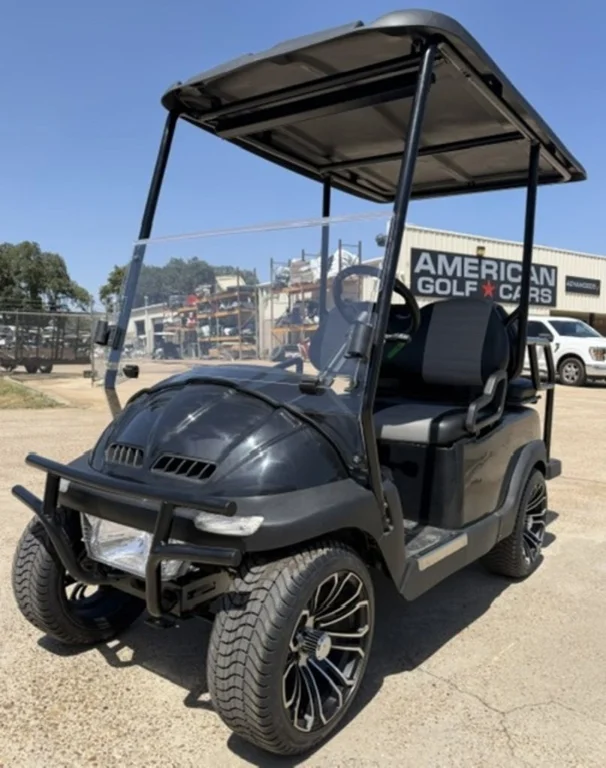
How Connecticut classifies golf carts vs. LSVs
Connecticut operates a two-track legal system for small electric vehicles, and understanding which track your vehicle falls into determines almost everything else: whether you need state DMV registration, what equipment is required, and where you can legally drive.
| Feature | Golf cart | Low-speed vehicle (LSV) |
|---|---|---|
| Governing authority | Local town ordinance (CGS §14-300g) | Connecticut DMV (state law) |
| Top speed | Typically under 20 mph | 20 – 25 mph (federal definition) |
| VIN required | No | Yes, 17-digit VIN |
| FMVSS compliance | No | Yes, federally required |
| Street legal statewide | No, local ordinance only | Yes, once DMV-registered |
| Registration | Town level | State DMV |
Golf carts are governed at the local level under Connecticut General Statutes Section 14-300g. They are not street legal by default anywhere in the state. A city, town, or borough must pass a specific ordinance authorizing their use on public roads before you can legally drive one outside of private property.
Low-speed vehicles (LSVs) are a separate federal vehicle category. They are factory-built electric vehicles with a top speed between 20 and 25 mph, must meet Federal Motor Vehicle Safety Standards (FMVSS), and carry a 17-digit VIN. Once registered with the Connecticut DMV, they are street legal statewide on roads posted at 25 mph or less.
These two categories are not interchangeable. You cannot convert a standard golf cart into a street-legal LSV by adding equipment. If a vehicle was not manufactured as an LSV with a 17-digit VIN, it cannot be registered as one with the Connecticut DMV.
Are golf carts street legal in Connecticut?
Golf carts are not street legal by default in Connecticut. The answer depends entirely on whether your municipality has enacted an ordinance under CGS §14-300g. LSVs follow a different path and are street legal statewide once properly registered.
| Vehicle type | Street legal status | Road speed limit allowed |
|---|---|---|
| Golf cart (town with ordinance) | Legal on authorized streets only | 25 mph or less |
| Golf cart (town without ordinance) | Not street legal | Not permitted |
| LSV (DMV-registered) | Legal statewide | 25 mph or less |
Under CGS §14-300g, local traffic authorities, including cities, towns, and boroughs, have the power to authorize golf cart use on streets within their jurisdiction. Without that local ordinance, operating a golf cart on a public road is illegal regardless of how slowly you drive or how much safety equipment you add.
LSVs are street legal across Connecticut once registered with the DMV, but they are restricted to roads posted at 25 mph or less. This is notably stricter than many other states, which allow LSVs on roads posted up to 35 mph.
Where you can and cannot drive
Both golf carts and LSVs are restricted to lower-speed roads, but the rules differ between the two vehicle types and vary further based on local ordinances.
| Location | Golf cart (with local ordinance) | LSV (DMV-registered) |
|---|---|---|
| Roads posted 25 mph or less | Generally permitted | Permitted statewide |
| Roads posted above 25 mph | Not permitted | Not permitted |
| State highways | Not permitted | Not permitted |
| Nighttime operation | Not permitted (daylight only) | Permitted (with required lighting) |
| Private property | Permitted (no ordinance needed) | Permitted |
Golf carts authorized under local ordinances are typically limited to daylight hours only. Night driving is not permitted under the standard local ordinance framework. LSVs, because they are equipped with headlights, taillights, and other required lighting, can operate at night.
Neither vehicle type is permitted on state highways or roads with posted speed limits above 25 mph.
Equipment requirements
Required equipment differs significantly between golf carts and LSVs. Golf carts have a minimal state baseline, with towns often adding their own requirements. LSVs must meet federal safety standards at the factory level.
| Equipment | Golf cart (state minimum) | LSV (FMVSS required) |
|---|---|---|
| Horn | Required | Required |
| Visibility flag | Required | Not specified |
| Headlights | May be required locally | Required |
| Taillights and brake lights | May be required locally | Required |
| Turn signals | May be required locally | Required |
| Reflectors | May be required locally | Required |
| Windshield | May be required locally | Required |
| Exterior mirrors | May be required locally | Required |
| Seat belts (all occupants) | May be required locally | Required |
| Parking brake | Not specified at state level | Required |
| 17-digit VIN | Not applicable | Required |
Under CGS §14-300g, the state minimum for golf carts is a working horn and a visibility flag. Towns can and do require more. Stonington, for example, requires warning flags, horns, and turn signals. Old Lyme requires registration plates and a left-rear flag. Always check your specific municipality's requirements before driving.
LSVs must meet full FMVSS compliance as manufactured. This includes headlights, taillights, brake lights, turn signals, reflectors, a windshield, exterior mirrors, seat belts for all occupants, and a parking brake. These requirements are not optional add-ons; they must be factory-installed on a federally classified LSV.
Registration process
Golf carts and LSVs follow completely separate registration processes. Golf carts register at the town level with varying procedures and fees. LSVs register through the Connecticut DMV using a standardized process.
| Step | Golf cart (town-level) | LSV (Connecticut DMV) |
|---|---|---|
| Where to register | Town hall or police department | Connecticut DMV |
| Key form | Varies by town | DMV Form H-13 |
| Proof of ownership | Required (varies by town) | Manufacturer's Certificate of Origin or title |
| Proof of insurance | Required in most towns | Required |
| Photos | Required in some towns (e.g., East Lyme: 2 color photos) | Not typically required |
| Annual fee | Varies (East Lyme: $35 per year) | DMV registration fees plus applicable sales tax |
East Lyme offers a well-documented example of the golf cart registration process. Registration is handled through the police department and requires proof of ownership, a certificate of insurance, two color photos of the vehicle, and a $35 annual fee.
For LSVs, registration goes through the Connecticut DMV. You will need to submit Form H-13, a Manufacturer's Certificate of Origin or existing title, proof of insurance, and pay applicable registration fees and sales tax. Contact the DMV directly for current fee amounts, as these are subject to change.
Golf carts used exclusively on private property do not require registration at any level. Registration is only required when operating on public roads authorized by a local ordinance.
Insurance requirements
Insurance is required for both golf carts operating under local ordinances and LSVs registered with the state DMV. The requirements differ in scope and minimums.
| Coverage type | Golf cart | LSV |
|---|---|---|
| Liability insurance | Required by most towns | Required (same as standard motor vehicles) |
| Bodily injury per person | Varies by town | $25,000 minimum |
| Bodily injury per accident | Varies by town | $50,000 minimum |
| Property damage | Varies by town | $25,000 minimum |
| Uninsured/underinsured motorist | Not always specified | Required |
LSVs are treated like standard motor vehicles for insurance purposes. Connecticut's cited minimum liability coverage is $25,000 per person / $50,000 per accident / $25,000 property damage (25/50/25), plus uninsured and underinsured motorist coverage. Verify current minimum requirements directly with the Connecticut DMV or a licensed insurance agent before purchasing a policy.
For golf carts, towns that authorize street use typically require proof of liability insurance as a condition of local registration. The specific coverage minimums vary by municipality. Some golf cart owners add a standalone liability policy, while others extend coverage through a homeowner's insurance endorsement. Check with your insurer to confirm what golf cart insurance coverage applies on public roads.
Age and license requirements
Both golf carts and LSVs require a valid Connecticut motor vehicle operator's license. There is no separate golf cart permit or junior operator category.
| Requirement | Golf cart | LSV |
|---|---|---|
| Minimum age | 16 | 16 |
| Valid CT driver's license | Required | Required |
| Special golf cart permit | Not available | Not applicable |
The minimum driving age for both vehicle types is 16, and a valid Connecticut operator's license is required. Unlicensed drivers, including minors under 16, cannot legally operate a golf cart or LSV on public roads, even in municipalities with active ordinances.
Connecticut towns with golf cart ordinances
The following municipalities have documented golf cart ordinances or active registration programs. This is not an exhaustive list. Many Connecticut towns have not enacted ordinances, and others may have updated their rules since this was written. Always verify with your town directly before driving.
| Town | Ordinance status | Key requirements |
|---|---|---|
| East Lyme | Active registration program | Police department registration, proof of ownership, certificate of insurance, two color photos, $35 annual fee |
| Old Lyme | Active ordinance | Registration plates, left-rear visibility flag, state compliance required |
| Stonington | Approved by Board of Police Commissioners | Registration, warning flags, horn, turn signals required |
The municipalities listed above represent a sample of towns with known active frameworks, not a complete directory. Coastal and beach communities in Connecticut are more likely to have enacted golf cart ordinances than inland towns. If your town is not listed, it may still have a local ordinance, or it may not permit golf carts on public roads at all.
How to find out if your town has a golf cart ordinance
Connecticut does not maintain a centralized state database of municipalities with golf cart ordinances. You will need to contact your town directly. Here is how to do it efficiently.
- Start with the town clerk's office. The town clerk maintains local ordinances and can tell you whether one exists for golf carts. Ask specifically: "Does the town have an ordinance under CGS Section 14-300g authorizing golf cart use on public roads?"
- Contact the police department. In towns with active programs, the police department often handles registration (East Lyme is a prime example). They can confirm whether a program exists and walk you through the registration steps.
- Check the town's official website. Search the municipal code section of the town website. Search terms like "golf cart," "low-speed vehicle," or "14-300g" may surface relevant ordinances.
- Ask about the traffic authority. Under CGS §14-300g, the local traffic authority is the entity that can authorize golf cart use. In some towns, this is the Board of Police Commissioners; in others, it may be the town council or a dedicated traffic authority.
- Get the answer in writing. If a town representative tells you golf carts are permitted, ask for documentation or the ordinance number. Verbal confirmation alone is not a legal defense if you are cited.
If your town does not yet have an ordinance, residents can petition the local traffic authority to enact one. The process varies by municipality, but the town clerk's or selectman's office can explain how to get started.
Penalties for violations
Operating a golf cart illegally in Connecticut carries real legal consequences. Violations under CGS §14-300g are typically charged as infractions, but additional charges can stack depending on the circumstances.
| Violation | Likely charge |
|---|---|
| Operating a golf cart without a local ordinance | Infraction under CGS §14-300g |
| Operating an unregistered vehicle | Unregistered vehicle charge |
| Operating without insurance | Uninsured vehicle charge |
| Operating without a valid license | Unlicensed operator charge |
A single unlawful golf cart trip can result in multiple simultaneous charges. If you are driving without a local ordinance in place, without registration, and without insurance, you could face three or more separate violations at once. Fines, license points, and potential insurance consequences can all follow.
Private property and golf course use
Connecticut law does not regulate golf cart use on private property. If you are driving exclusively on your own land, within a gated community, on a golf course, or in another fully private setting, no state or local registration, insurance, or equipment requirements apply.
| Use context | Registration required | Insurance required | License required |
|---|---|---|---|
| Private residential property | No | No (state law) | No (state law) |
| Golf course | No | No (state law) | No (state law) |
| Gated HOA community (internal roads) | No (state law; HOA rules may differ) | No (state law; HOA rules may differ) | No (state law) |
| Public road without local ordinance | Yes (if ordinance exists) | Yes | Yes |
Keep in mind that HOAs and gated communities often have their own internal rules for golf cart operation. These are separate from state and local law and may impose age restrictions, equipment requirements, or designated route limits. Check your HOA's governing documents for specific rules.
On golf courses, liability insurance from the facility typically covers course-provided carts. If you bring a personal golf cart onto a golf course, check with the course and your own insurer about how coverage applies.
Connecticut vs. neighboring states
Connecticut's 25 mph road speed cap for both golf carts and LSVs is among the strictest in the Northeast. Drivers who travel between states should be aware that rules differ significantly across state lines.
| State | LSV road speed limit | Golf cart street legal statewide? |
|---|---|---|
| Connecticut | 25 mph | No, local ordinance required |
| Rhode Island | Up to 35 mph (varies) | Limited, varies by municipality |
| Massachusetts | Up to 25 mph | No, local or state permit required |
| New York | Up to 35 mph | No, local authorization required |
Connecticut's stricter 25 mph cap means that roads accessible to LSVs in Rhode Island or New York may not be legal to drive on with the same vehicle in Connecticut. If you are traveling with a golf cart or LSV across state lines, verify the specific rules for each state before your trip. For example, Massachusetts golf cart laws follow a similarly restrictive framework that is worth reviewing if you operate near the state border.
Safety tips for street use
Golf carts and LSVs share the road with much heavier and faster vehicles. Adopting safe operation habits reduces risk for drivers, passengers, and everyone else on the road.
- Stay on authorized roads. Only drive on roads where golf carts are explicitly permitted under local ordinance, and stay within posted 25 mph zones for LSVs.
- Drive predictably. Signal your turns, use your horn when approaching intersections, and maintain a consistent lane position.
- Wear seat belts. Even when not legally required on a golf cart, seat belts significantly reduce injury risk in a collision or rollover.
- Avoid distracted driving. The same rules that apply to cars apply here. Do not use a phone while operating any vehicle on a public road.
- Check your equipment before each trip. Confirm that your horn, lights (if equipped), and brakes are functioning. A simple pre-drive check takes less than a minute.
- Be extra cautious at dusk. Golf carts under local ordinances are restricted to daylight hours. If light conditions are fading, return to your destination or a private area.
- Do not exceed your vehicle's passenger capacity. Overloading a golf cart affects handling and increases rollover risk, particularly on turns.
Frequently asked questions
The following answers address the most common questions about Connecticut golf cart laws.
Can I make my golf cart street legal in Connecticut?
Yes, if your town has passed an ordinance under CGS §14-300g. You will need to register the cart locally, meet your town's equipment requirements, and carry liability insurance. Without a local ordinance, no amount of added equipment makes a golf cart street legal.
Can I convert my golf cart into an LSV?
No. LSVs must be factory-built to FMVSS standards and carry a 17-digit VIN. A converted golf cart does not qualify as an LSV and cannot be registered as one with the Connecticut DMV.
Can I drive a golf cart at night?
No. Golf carts authorized under local ordinances are limited to daylight hours. LSVs, which have required lighting equipment, can operate at night.
Do I need a driver's license to operate a golf cart in Connecticut?
Yes. Both golf carts and LSVs require a valid Connecticut motor vehicle operator's license. The minimum age is 16. There is no separate golf cart license or junior operator permit.
What is the penalty for operating a golf cart illegally?
Violations under CGS §14-300g are typically charged as infractions. Additional charges for operating an unregistered vehicle, driving without insurance, or driving without a license can be added simultaneously.
Do I need to register a golf cart used only on private property?
No. State and local registration requirements only apply when operating on public roads. Golf carts used exclusively on private property, golf courses, or within fully private communities do not require registration.
Are golf carts allowed on state highways in Connecticut?
No. Golf carts and LSVs are not permitted on state highways or any road posted above 25 mph.
Official resources and where to verify current rules
Connecticut golf cart and LSV laws can change, and local ordinances vary widely. Always verify current rules with the appropriate official source before purchasing a vehicle or attempting to register it. If you are still in the process of selecting a golf cart, a golf cart buying guide can help you evaluate your options before committing to a purchase.
| Resource | What it covers |
|---|---|
| Connecticut General Statutes §14-300g | State-level golf cart authorization framework |
| Connecticut DMV (ct.gov/dmv) | LSV registration (Form H-13), fees, insurance minimums |
| Your town clerk's office | Local ordinances, registration programs |
| Your local police department | Registration process, enforcement information |
| Your insurance agent | Golf cart and LSV coverage options and minimums |
This article is for informational purposes only and does not constitute legal advice. Connecticut golf cart laws and local ordinances change. Confirm all details with your town clerk, local police department, the Connecticut DMV, or a licensed attorney before operating a golf cart or LSV on public roads.