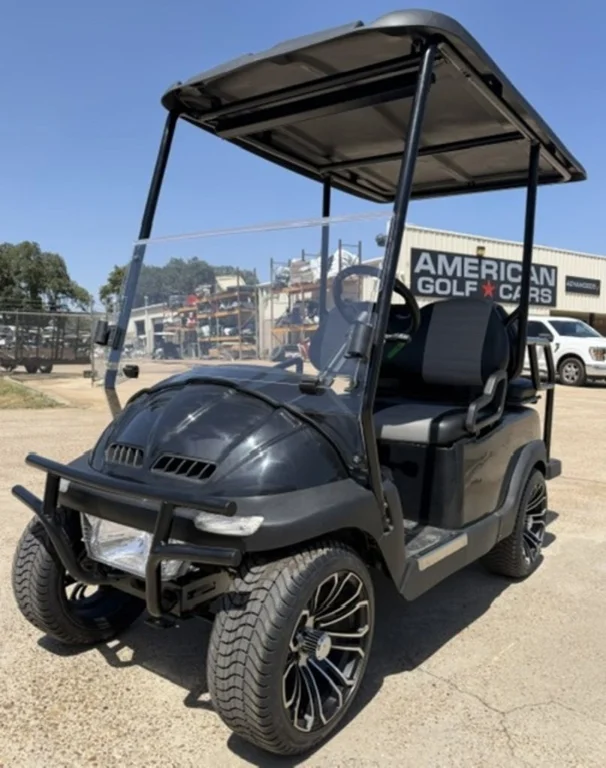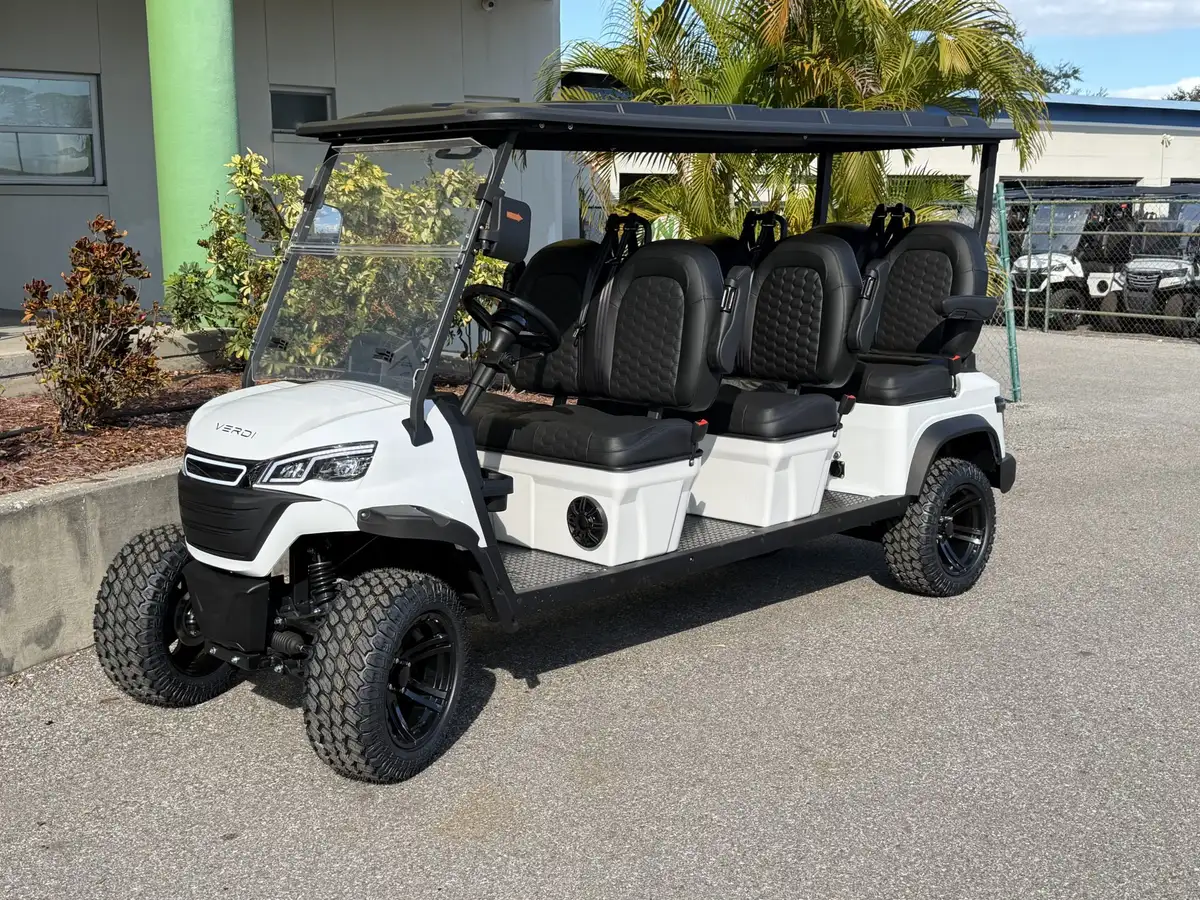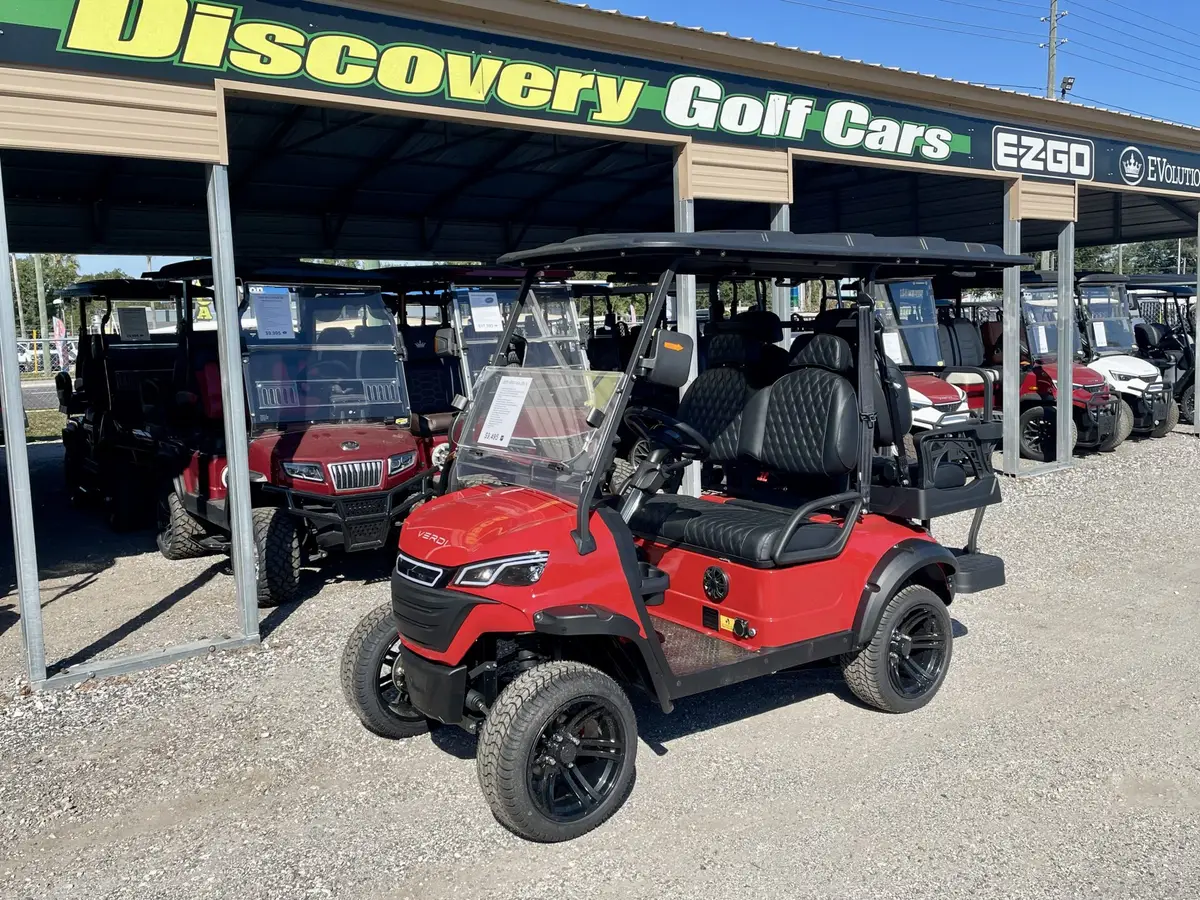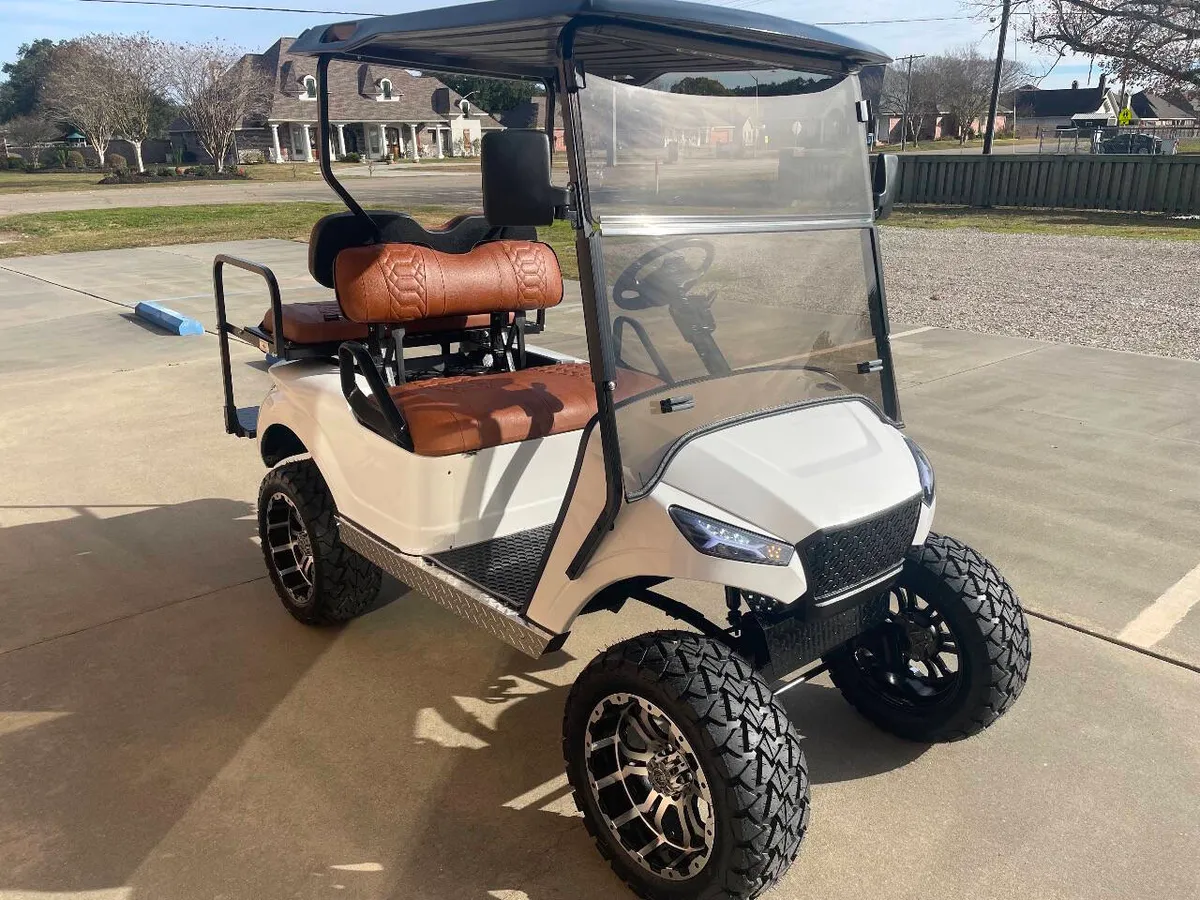
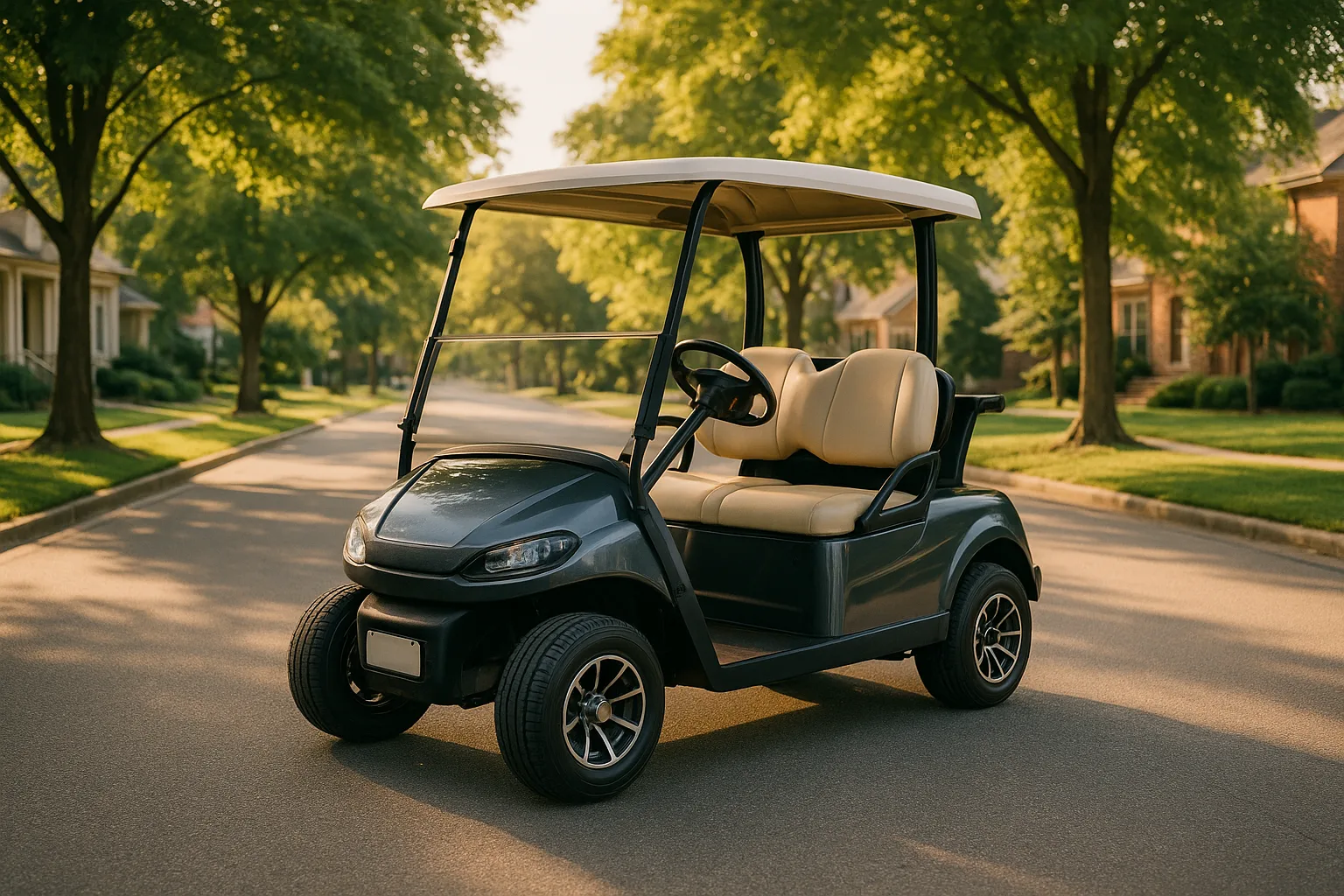
Golf cart vs. LSV: the distinction that determines everything
Whether you can legally drive your golf cart on public roads depends almost entirely on one question: is it a golf cart or a low-speed vehicle (LSV)? These two categories are treated completely differently under federal and state law, and confusing them is the most common mistake buyers make.
| Feature | Golf cart | LSV (low-speed vehicle) |
|---|---|---|
| Top speed | Under 20 mph | 20–25 mph |
| Federal standard | None | FMVSS 500 |
| Manufacturer VIN | No | Yes (17 digits) |
| DMV title required | Rarely | Yes, in all states |
| Max road speed limit access | 25 mph roads | 35 mph roads |
| Typical purchase price | $5,000 – $12,000 | $8,000 – $15,000 |
A standard golf cart is designed for course use, tops out under 20 mph, and is not built to any federal motor vehicle safety standard. It does not have a manufacturer-assigned Vehicle Identification Number (VIN). Without a VIN, it cannot be titled or registered as a motor vehicle through the DMV in most states.
An LSV is a four-wheeled vehicle that travels between 20 and 25 mph and meets Federal Motor Vehicle Safety Standard 500 (FMVSS 500). It carries a 17-digit manufacturer VIN from the factory and must be titled, registered, and insured just like a conventional automobile. If you are weighing your options, understanding how much a golf cart costs versus a factory-built LSV can help you budget appropriately for the right vehicle category.
The VIN is the single most important document separating a registerable motor vehicle from a golf cart. A VIN cannot be assigned after the fact by a dealer or owner. If you buy a used vehicle without one, you cannot convert it into a registerable LSV simply by adding equipment.
You may also encounter the terms NEV (neighborhood electric vehicle), LSEV (low-speed electric vehicle), and multipurpose vehicle (used in Wyoming's regulatory framework). These are all variations on the LSV concept and are generally regulated the same way.
What most states have in common
Despite significant variation between states, several rules apply consistently across nearly every jurisdiction. Understanding these baseline rules helps you grasp how individual state laws layer on top.
| Rule | Golf cart | LSV |
|---|---|---|
| Public road access | Roads posted 25 mph or less | Roads posted 35 mph or less |
| Driver's license required | Yes, in most states | Yes, in all states |
| Minimum operator age | Typically 16 | Typically 16 |
| DUI laws apply | Yes, on public roads | Yes, on public roads |
| Insurance required | Varies by state | Yes, in all states |
Speed limit access: Golf carts are almost universally restricted to roads with posted speed limits of 25 mph or less. Registered LSVs can typically travel on roads posted up to 35 mph. Some states allow local governments to set different thresholds, so always verify at the local level.
Driver's license: A valid driver's license is required in the vast majority of states for either vehicle type on public roads. Most states set the minimum age at 16 with a valid license. A handful of jurisdictions allow younger operators on certain local roads under specific conditions, but these are exceptions.
DUI and impaired driving: Impaired driving laws apply to golf carts on public roads in virtually every state, exactly as they apply to automobiles. If you are over the legal blood alcohol limit on a public street in a golf cart, you can be arrested for DUI. Private property, including golf courses and gated communities, may be treated differently depending on state law.
Street-legal equipment requirements
The equipment your golf cart or LSV must carry depends on whether it is operating under a local ordinance (golf cart access) or full LSV registration. Local ordinance requirements vary but typically include a subset of the full LSV equipment list.
| Equipment item | Golf cart (local ordinance) | LSV (FMVSS 500) |
|---|---|---|
| Headlights | Usually required | Required |
| Taillights | Usually required | Required |
| Brake lights | Usually required | Required |
| Turn signals | Often required | Required |
| Rearview mirrors | Often required | Required |
| Horn | Often required | Required |
| Windshield | Varies by jurisdiction | Required |
| Seat belts | Varies by jurisdiction | Required |
| Speedometer | Rarely required | Required |
| Reflectors | Often required | Required |
FMVSS 500 is the federal standard that factory-built LSVs must meet. It mandates the full list above plus specific performance benchmarks for lighting intensity, braking distance, and structural integrity. A golf cart cannot meet FMVSS 500 by bolting on aftermarket parts because the standard applies to the vehicle as manufactured, not as modified.
Street-legal conversion kits for golf carts, covering lights, mirrors, turn signals, and a horn, typically cost $200 to $800, depending on the brand and how many components your cart already has. These kits can satisfy local ordinance requirements in many jurisdictions but will not qualify your cart for full LSV registration.
Registration and insurance overview
Registration requirements differ sharply between golf carts and LSVs. LSVs must be registered as motor vehicles in every state. Golf cart registration rules vary widely and are often set at the local level rather than by the state DMV.
| State/scenario | Registration type | Typical fee |
|---|---|---|
| LSV (all states) | Full DMV motor vehicle registration | Varies by state |
| Golf cart permit (select states) | State-issued golf cart permit | $15 – $75 |
| South Carolina | Statewide DMV permit (unique system) | Varies |
| Texas | Golf cart license plate (unique system) | Varies |
| Local ordinance only | No state registration required | $0 (state level) |
Documents typically required for registration:
- Bill of sale or proof of ownership
- Proof of liability insurance (for LSVs and in some golf cart permit states)
- VIN verification (LSVs only)
- Equipment inspection or certification in some states
- Completed DMV application form
Insurance: All states require liability insurance for registered LSVs. Requirements for golf carts on public roads under local ordinances vary by state and municipality. Where required, coverage minimums often mirror standard auto liability minimums, though some states set lower thresholds specifically for golf carts. HOA communities and private developments frequently have their own insurance rules that differ from public road requirements.
If you primarily operate in a private community or HOA neighborhood, state public road insurance laws may not apply. Check with your HOA and your homeowner's insurance carrier to determine whether your existing policy covers golf cart liability on private roads.
How to find your local golf cart ordinance
Many states do not set statewide golf cart road access rules. Instead, they delegate authority to cities, counties, towns, or villages. This means rules can differ block by block within the same state. A golf cart that is perfectly legal on Main Street in one town may be illegal a mile away in the next jurisdiction.
To find your local ordinance:
- Visit your city or county government website and search for "golf cart ordinance" or "low-speed vehicle."
- Contact your local police department's non-emergency line and ask which roads permit golf carts and what equipment is required.
- Call your county clerk's office, which often maintains local code records.
- Contact your state DMV and ask whether golf cart road use is governed at the state or local level in your area.
States with uniform statewide rules, such as Florida and South Carolina, are easier to navigate because a single set of standards applies everywhere. In states that delegate to local governments, such as California and many northeastern states, you must verify rules at the municipal level every time you plan to drive in a new area.
Golf cart conversion: what is possible and what is not
Many buyers ask whether they can convert a standard golf cart into a street-legal vehicle. The honest answer depends on what "street legal" means in your context.
| Conversion goal | Possible? | What it requires |
|---|---|---|
| Meet local ordinance equipment requirements | Yes | Add lights, mirrors, signals, horn; cost $200 – $800 |
| Register as a full LSV with DMV | No (in virtually all states) | Requires manufacturer VIN and FMVSS 500 compliance |
| Increase top speed above 20 mph | Mechanically possible | May void warranty; does not create legal LSV status |
Adding lights, a horn, mirrors, and turn signals to a golf cart can make it compliant with local ordinance requirements in many jurisdictions. This is a legitimate path to road use on low-speed local streets where your municipality permits golf carts.
What you cannot do is convert a golf cart into a registerable LSV. Because FMVSS 500 applies to vehicles as manufactured by the original factory, and because a manufacturer-assigned 17-digit VIN cannot be added after the fact, a standard golf cart has no legal path to full DMV motor vehicle registration in virtually any state. Increasing the cart's speed through a motor upgrade does not change its classification.
Be cautious of anyone claiming they can assign a VIN to your golf cart for registration purposes. In most states, this is not a legal process for standard golf carts, and an improperly registered vehicle can create serious liability issues.
Buying used: When purchasing a used vehicle, verify whether it is a true factory-built LSV with an existing manufacturer VIN and registration history, or a modified golf cart. This distinction determines whether you can legally register and insure it as a motor vehicle. Ask for the title, registration documents, and VIN plate before completing any purchase. If you are shopping for a new electric golf cart and want street-legal capability, look specifically for models factory-certified as LSVs rather than standard golf carts.
Golf cart laws by state: comparison table
The table below summarizes key rules for all 50 states. Because many states delegate authority to local governments, the "rule level" column is especially important. Always verify current rules with your state DMV and local municipality, as laws change.
| State | Registration required | License required | Min. age | Max road speed limit | Rule level | Insurance required |
|---|---|---|---|---|---|---|
| Alabama | No (golf cart) | Yes | 16 | 25 mph | Local | Varies |
| Alaska | No | Yes | 16 | 25 mph | Local | Varies |
| Arizona | No (golf cart) | Yes | 16 | 35 mph (LSV) | Statewide | Yes (LSV) |
| Arkansas | No | Yes | 16 | 25 mph | Local | Varies |
| California | Yes (LSV) | Yes | 16 | 35 mph (LSV) | Local (golf cart) | Yes (LSV) |
| Colorado | Yes (LSV) | Yes | 16 | 35 mph (LSV) | Local (golf cart) | Yes (LSV) |
| Connecticut | Yes (LSV) | Yes | 16 | 25 mph | Local | Yes |
| Delaware | No | Yes | 16 | 25 mph | Local | Varies |
| Florida | No (golf cart) | Yes | 14* | 25 mph | Statewide | Yes |
| Georgia | Yes (local permit) | Yes | 16 | 35 mph | Statewide | Yes |
| Hawaii | Yes | Yes | 16 | 35 mph (LSV) | Statewide | Yes |
| Idaho | No | Yes | 16 | 25 mph | Local | Varies |
| Illinois | No | Yes | 16 | 25 mph | Local | Varies |
| Indiana | No | Yes | 16 | 25 mph | Local | Varies |
| Iowa | No | Yes | 16 | 25 mph | Local | Varies |
| Kansas | No | Yes | 16 | 30 mph | Local | Varies |
| Kentucky | No | Yes | 16 | 25 mph | Local | Varies |
| Louisiana | No | Yes | 16 | 25 mph | Local | Varies |
| Maine | Yes (LSV) | Yes | 16 | 35 mph (LSV) | Local (golf cart) | Yes (LSV) |
| Maryland | Yes (LSV) | Yes | 16 | 30 mph | Local | Yes |
| Massachusetts | Yes | Yes | 16 | 25 mph | Local | Yes |
| Michigan | No | Yes | 16 | 25 mph | Local | Varies |
| Minnesota | No | Yes | 16 | 25 mph | Local | Varies |
| Mississippi | No | Yes | 16 | 25 mph | Local | Varies |
| Missouri | No | Yes | 16 | 25 mph | Local | Varies |
| Montana | No | Yes | 16 | 25 mph | Local | Varies |
| Nebraska | No | Yes | 16 | 25 mph | Local | Varies |
| Nevada | Yes (LSV) | Yes | 16 | 35 mph (LSV) | Statewide | Yes |
| New Hampshire | No | Yes | 16 | 25 mph | Local | Varies |
| New Jersey | Yes | Yes | 16 | 25 mph | Local | Yes |
| New Mexico | No | Yes | 16 | 25 mph | Local | Varies |
| New York | Yes (LSV) | Yes | 16 | 35 mph (LSV) | Local (golf cart) | Yes (LSV) |
| North Carolina | No | Yes | 16 | 25 mph | Local | Varies |
| North Dakota | No | Yes | 16 | 25 mph | Local | Varies |
| Ohio | No | Yes | 16 | 25 mph | Local | Varies |
| Oklahoma | No | Yes | 16 | 25 mph | Local | Varies |
| Oregon | Yes (LSV) | Yes | 16 | 35 mph (LSV) | Local (golf cart) | Yes (LSV) |
| Pennsylvania | Yes (LSV) | Yes | 16 | 25 mph | Local (golf cart) | Yes |
| Rhode Island | Yes | Yes | 16 | 25 mph | Local | Yes |
| South Carolina | Yes (DMV permit) | Yes | 16 | 35 mph | Statewide | Yes |
| South Dakota | No | Yes | 16 | 25 mph | Local | Varies |
| Tennessee | No | Yes | 16 | 35 mph | Local | Varies |
| Texas | Yes (golf cart plate) | Yes | 16 | 35 mph | Statewide | Yes |
| Utah | Yes (LSV) | Yes | 16 | 35 mph (LSV) | Local (golf cart) | Yes (LSV) |
| Vermont | Yes (LSV) | Yes | 16 | 35 mph (LSV) | Local (golf cart) | Yes |
| Virginia | Yes (LSV) | Yes | 16 | 35 mph (LSV) | Local (golf cart) | Yes (LSV) |
| Washington | Yes (LSV) | Yes | 16 | 35 mph (LSV) | Local (golf cart) | Yes (LSV) |
| West Virginia | No | Yes | 16 | 25 mph | Local | Varies |
| Wisconsin | No | Yes | 16 | 25 mph | Local | Varies |
| Wyoming | Yes (multipurpose vehicle) | Yes | 16 | 35 mph | Statewide | Yes |
*Florida allows operators as young as 14 on designated golf cart paths and certain local roads. Standard public road operation still requires a valid driver's license. Always verify current rules with your state DMV, as laws are subject to change.
Key state rules in detail
The following states generate the most questions about golf cart laws. Here is a closer look at what makes each one distinct.
Florida
Florida has some of the most permissive and clearly defined golf cart laws in the country. Golf carts may operate on roads with posted speed limits of 25 mph or less, and some designated golf cart communities permit carts on paths regardless of road speed. Florida law allows operators as young as 14 on certain designated routes, but a valid driver's license is required on standard public roads. Golf carts do not require DMV registration in Florida, but they must carry liability insurance when operating on public streets.
Texas
Texas created a unique golf cart license plate system that allows street-legal golf carts to operate on roads posted at 35 mph or less. To receive a Texas golf cart license plate, the cart must meet specific equipment requirements including headlights, taillights, turn signals, mirrors, a horn, and a windshield. Proof of liability insurance is required. Texas's 35 mph threshold is notably higher than the standard 25 mph limit found in most states.
California
California distinguishes clearly between golf carts and LSVs. LSVs must be fully registered as motor vehicles. Golf carts may operate on local streets under local ordinances, but the state does not have a uniform statewide golf cart road access law. This means your local city or county sets the rules. Many California communities, particularly retirement communities and beach towns, have active local ordinances permitting golf cart use.
Georgia
Georgia allows golf carts on roads with posted speed limits up to 35 mph, which is higher than most states permit. Local governments issue permits and must designate specific streets where golf carts are allowed. A valid driver's license, proof of insurance, and a local permit are all required. Georgia is considered relatively golf-cart-friendly due to its higher speed threshold and statewide permitting framework.
South Carolina
South Carolina operates a statewide DMV permit system for golf carts, which is distinct from most states. Golf carts can be permitted for road use on streets posted at 35 mph or less. The permit is issued at the state level rather than by local governments. Required equipment includes headlights, taillights, turn signals, mirrors, and a seat belt. Proof of insurance is mandatory.
Arizona
Arizona takes a straightforward approach. Golf carts may operate on local streets under local ordinances with standard equipment requirements. LSVs must be registered as motor vehicles and can travel on roads posted up to 35 mph. Arizona's warm climate and active retirement community culture make golf carts extremely common, and many municipalities have well-established local ordinances.
Frequently asked questions
Can I drive my golf cart on public roads?
In many states, yes, but only on roads posted at 25 mph or less, and only if your cart meets the equipment requirements set by your local ordinance or state law. Check both your state law and your local municipality's rules before driving on any public street.
Do I need to register my golf cart with the DMV?
It depends on your state. Many states do not require DMV registration for golf carts operating under local ordinances. However, LSVs must be registered as motor vehicles in every state. States like Texas and South Carolina have unique registration or permit systems specifically for golf carts.
What is the difference between a golf cart and an LSV?
A golf cart tops out under 20 mph and has no manufacturer VIN. An LSV travels between 20 and 25 mph, meets FMVSS 500 federal safety standards, and carries a factory-assigned 17-digit VIN. LSVs must be titled and registered like a standard automobile. Golf carts cannot be converted into LSVs after the fact.
Can I get a DUI on a golf cart?
Yes. If you are operating a golf cart on a public road while impaired, you are subject to DUI laws just as you would be in a car. This applies in virtually every state. Private property situations, such as a golf course or gated community, may be treated differently depending on your state's specific statutes.
What equipment does my golf cart need to be street legal?
Most local ordinances require headlights, taillights, brake lights, turn signals, rearview mirrors, and a horn at a minimum. Many also require a windshield, seat belts, and reflectors. Full LSV registration requires compliance with FMVSS 500, which includes all of the above plus a speedometer and specific performance standards.
Can I convert my golf cart to be street legal?
You can add equipment to meet local ordinance requirements, typically for $200 to $800 in parts. However, you cannot convert a standard golf cart into a registerable LSV because the cart lacks a manufacturer-assigned VIN and was not built to FMVSS 500 standards. No dealer or individual can legally assign a VIN to a standard golf cart for motor vehicle registration purposes.
Do I need insurance to drive a golf cart on public roads?
Many states require liability insurance for golf carts operating on public roads. All states require insurance for registered LSVs. Even where it is not legally mandated, carrying insurance is strongly recommended. If you primarily operate in an HOA or private community, check with your homeowner's insurer about coverage.
How do I find my local golf cart ordinance?
Start with your city or county government website and search for "golf cart ordinance." You can also call your local police department's non-emergency line or your county clerk's office. If your state delegates golf cart authority to local governments, your state DMV may be able to point you to the correct local contact.
What is FMVSS 500?
FMVSS 500 is Federal Motor Vehicle Safety Standard 500, the federal regulation that governs low-speed vehicles. It sets mandatory requirements for lighting, braking, mirrors, seat belts, windshields, speedometers, and structural performance for four-wheeled vehicles with a top speed between 20 and 25 mph. Only factory-built LSVs can claim FMVSS 500 compliance.
Do HOA and private community rules differ from public road laws?
Yes. HOA communities and private developments set their own golf cart rules, which may be more or less restrictive than state and local public road laws. State DUI laws may still apply on private roads in some states. Always review your HOA's governing documents and check with local legal counsel if you are unsure how state law interacts with your private community's rules.
This guide reflects general legal frameworks as of the most recent review. Golf cart laws change frequently at both the state and local level. Always verify current requirements directly with your state DMV and local municipality before operating a golf cart or LSV on public roads.