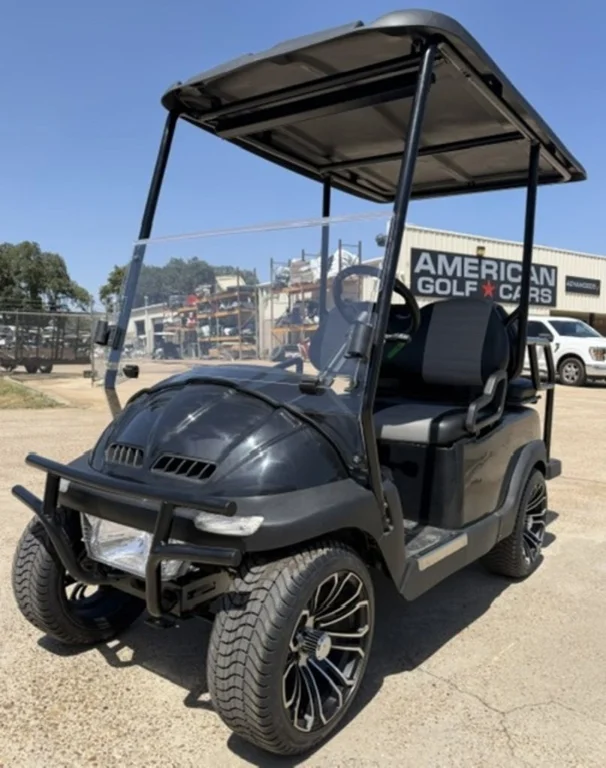
Are golf carts street legal in Virginia?
Golf carts are street legal in Virginia only where a local ordinance specifically permits it. State law (Article 13.1 of the Code of Virginia, Sections 46.2-916.1 through 46.2-916.3) prohibits golf cart operation on public roads by default. Without an enabling ordinance from your city or county, driving a golf cart on any public road is unlawful regardless of your equipment or insurance status.
This makes Virginia a locality-by-locality state. The answer to "can I drive my golf cart on the road?" depends entirely on where you live, not just what the state code says. For a broader view of how different states handle this, see our guide to golf cart laws by state.
| Vehicle type | Road access | Requires local ordinance? | Max posted speed limit |
|---|---|---|---|
| Golf cart | Roads posted 25 mph or less | Yes | 25 mph |
| Golf cart (crossing only) | Crossing roads posted 35 mph or less | Yes | 35 mph |
| Low-speed vehicle (LSV) | Roads posted 35 mph or less | No | 35 mph |
Even where an ordinance exists, golf carts are restricted to roads posted at 25 mph or less. They may cross intersecting roads posted at 35 mph or less, but they cannot travel along those higher-speed roads. State primary highways, interstates, and limited-access roads are always off-limits.
Golf carts and low-speed vehicles (LSVs) are two separate legal categories in Virginia. Knowing which one applies to your vehicle determines your registration requirements, road access, and equipment obligations.
Golf cart vs. low-speed vehicle in Virginia
Virginia treats golf carts and low-speed vehicles as distinct classifications with different rules, registration requirements, and road access. The core difference comes down to top speed and federal certification. Golf carts typically top out below 20 mph, while LSVs are capable of 20 to 25 mph on a paved, level surface and must meet federal safety standards under FMVSS 500 (49 CFR 571.500).
| Feature | Golf cart | Low-speed vehicle (LSV) |
|---|---|---|
| Top speed | Below 20 mph | 20 – 25 mph |
| Max road speed limit | 25 mph posted | 35 mph posted |
| Local ordinance required | Yes | No |
| State registration | Exempt (Section 46.2-676) | Required (DMV title and plates) |
| License plates | Not required | Standard Virginia plates (since Oct 1, 2013) |
| Driver's license required | Yes, on public roads | Yes (license or learner's permit) |
| Safety inspection | Not required | Exempt (Section 46.2-908.3) |
| Emissions inspection | Not required | Exempt (Section 46.2-908.3) |
| 17-digit manufacturer VIN | Not required | Required |
| Federal equipment standard | None | FMVSS 500 (49 CFR 571.500) |
LSVs operate under Article 12.1 of the Code of Virginia (Section 46.2-908.3) and can travel statewide on roads posted at 35 mph or less without needing any local ordinance. That broader access comes at the cost of more rigorous equipment standards and full DMV registration.
Equipment requirements for Virginia roads
Equipment requirements differ based on whether your vehicle is a golf cart or a factory-built LSV, and whether you plan to operate after dark.
Golf cart equipment
Any golf cart operating on a public road in Virginia must display a slow-moving vehicle (SMV) emblem as required by Section 46.2-1081. This is the minimum state-level requirement for daytime operation.
For after-dark use, the cart must also be equipped with a full lighting package:
- Headlights
- Taillights
- Stop lamps
- Turn signals
- Reflectors
Without proper lighting, golf cart operation is limited to sunrise to sunset. Local ordinances may add requirements beyond state minimums, such as mirrors or safety flags, so always verify with your locality before hitting the road.
LSV equipment (FMVSS 500)
Factory-built LSVs must meet federal Motor Vehicle Safety Standard 500 before they can be sold or registered. Required equipment includes:
- Headlamps
- Front and rear turn signals
- Tail and stop lamps
- Reflex reflectors
- Exterior mirrors (driver and passenger side)
- Parking brake
- Windshield
- Seat belts
- 17-digit manufacturer-assigned VIN
Virginia also requires LSVs to display an SMV emblem when operating on public roads, identical to the golf cart requirement.
Buying a used LSV? Verify the 17-digit VIN plate before purchase. Without a manufacturer-assigned VIN, the vehicle cannot be titled or registered through Virginia DMV, and no workaround exists under current state law.
Registration and insurance
Golf carts
Golf carts are exempt from Virginia state registration, license plates, decals, and registration fees under Section 46.2-676. However, individual localities may require a local permit, municipal decal, or community registration as a condition of their ordinance. State law does not mandate liability insurance for golf carts, but your locality may require it as part of its permitting process.
It is also worth checking whether your homeowner's insurance policy covers golf cart use on roads, since many standard policies extend coverage only for use on private property or golf courses. For a full breakdown of coverage options, see our guide to golf cart insurance.
LSVs
LSVs must be titled and registered through the Virginia DMV. To complete registration, you will need:
- Manufacturer's Certificate of Origin (for a new vehicle) or an existing title (for a used vehicle)
- Proof of Virginia insurance
- Titling and registration fees
LSVs display standard Virginia license plates. Since October 1, 2013, this has been a firm requirement. LSVs are exempt from both safety and emissions inspections under Section 46.2-908.3.
Local ordinances and where to check
The local ordinance system is the gateway to street-legal golf cart use in Virginia. Under Section 46.2-916.2, a city or county governing body may pass an ordinance permitting golf carts on eligible roads after considering traffic speed and volume, road character, compatibility with local transportation plans, and Virginia's Statewide Pedestrian Policy.
Localities with known ordinances
| Locality | Status | Notes |
|---|---|---|
| Colonial Beach | Ordinance in place | Known golf cart-friendly community; verify current permit requirements with town clerk |
| Northumberland County | Ordinance in place | Rural waterfront county; check county code for specific road designations |
| Mathews County | Ordinance in place | Coastal community with established golf cart use |
| Hampton Roads area | Varies by city | Individual municipalities within the region have separate ordinances |
| Virginia Beach | Check locally | Ordinance status varies; contact city clerk or non-emergency police line for current rules |
Virginia Beach
Virginia Beach is the most-searched Virginia locality for golf cart questions, and getting a clear answer requires a direct call or inquiry to the city. Ordinance rules and any permitted road designations can change, and no statewide database tracks active local golf cart ordinances in real time. Contact the Virginia Beach City Clerk's office or the non-emergency police line for the current status.
How to find out if your locality has an ordinance
- Contact your city or county clerk's office directly
- Search your municipality's code on the Virginia Municipal League's online code library or municode.com
- Call your local non-emergency police line
HOA and planned community rules can add another layer on top of local ordinances. If you live in a community governed by a homeowners association, check your CC&Rs and community rules separately from city or county law.
Age and licensing requirements
A valid Virginia driver's license is required to operate a golf cart on any public road (Section 46.2-916.3). For LSVs, a driver's license or a learner's permit is sufficient under Section 46.2-908.3. Virginia issues learner's permits at age 15.5 and full licenses at age 16.
On private property, golf courses, and other non-public areas, Virginia imposes no state-level age or licensing requirements for golf cart operation. Individual property owners, golf courses, and communities may set their own rules.
Can you convert a golf cart into a street-legal LSV in Virginia?
No. Converting a standard golf cart into a street-legal LSV is not a viable path in Virginia, and this is one of the most common misconceptions in the golf cart market.
The hard barrier is the 17-digit manufacturer-assigned VIN. Federal law requires every LSV to carry a VIN assigned by the original manufacturer. Virginia DMV has no program for assigning VINs to converted or modified golf carts, and adding aftermarket equipment such as headlights, seat belts, or a windshield does not change the vehicle's DMV classification.
If you want an LSV, you must purchase one that was factory-built and certified to FMVSS 500 standards from the start. Established LSV manufacturers include Tomberlin, Star EV, and Columbia ParCar. When buying a used LSV, always confirm the presence of a 17-digit VIN plate and obtain the title or Manufacturer's Certificate of Origin before completing the purchase.
Can you get a DUI on a golf cart in Virginia?
Yes. Virginia's DUI statute (Section 18.2-266) applies to the operation of any motor vehicle on a public highway. When a golf cart is operating on a public road under a local ordinance, it is subject to the same impaired driving laws as any other vehicle. A driver found operating a golf cart while impaired by alcohol or drugs on a public road can face DUI charges with the same penalties that apply to passenger vehicle offenses.
On private property, such as a golf course or residential community not connected to public roads, the application of Section 18.2-266 is more limited, but other legal exposure including reckless endangerment and property damage liability remains. The safest position is straightforward: do not operate a golf cart while impaired under any circumstances.
Penalties for unlawful golf cart operation
Driving a golf cart on a public road without an enabling local ordinance is a traffic violation under Virginia law. Penalties can include fines and, depending on circumstances, additional traffic charges. Operating without required equipment such as the SMV emblem is a separate infraction. Because specific fine amounts are set by local courts and can be updated by the General Assembly, contact your local general district court or a Virginia traffic attorney for current penalty amounts.
The practical enforcement risk is real. Local law enforcement and state police have authority to stop and cite golf cart operators on public roads who are not in compliance with applicable ordinances and equipment requirements.
Frequently asked questions
Do I need a permit or decal for my golf cart in Virginia?
At the state level, no permit or decal is required. However, individual localities with golf cart ordinances may require a local permit, registration, or decal as part of their program. Check with your city or county clerk's office for local requirements.
Can I drive my golf cart after dark in Virginia?
Only if your cart is equipped with headlights, taillights, stop lamps, turn signals, and reflectors. Without that full lighting package, operation is limited to sunrise to sunset.
Are LSVs exempt from Virginia safety inspections?
Yes. LSVs are explicitly exempt from both safety and emissions inspections under Section 46.2-908.3 of the Code of Virginia.
Can a 15-year-old drive a golf cart on a public road in Virginia?
Not legally. A valid driver's license is required for golf cart operation on public roads. Virginia's learner's permit, available at age 15.5, satisfies the requirement for LSVs but not for golf carts. For golf carts, a full license is required.
Does Virginia Beach allow golf carts on public roads?
Virginia Beach's golf cart ordinance status is subject to change and varies by area within the city. Contact the Virginia Beach City Clerk's office or the non-emergency police line for the most current rules before driving on any public road.
Is Colonial Beach golf cart friendly?
Yes. Colonial Beach has a known golf cart ordinance and is considered one of Virginia's more golf cart-friendly communities. Confirm current permit requirements and permitted roads with the town clerk before operating on public streets.
Does my homeowner's insurance cover a golf cart on public roads?
Most standard homeowner's policies cover golf carts only on private property or golf courses, not on public roads. If you plan to operate on public roads, contact your insurer about a separate golf cart policy or endorsement. LSV owners must carry Virginia auto insurance as a condition of registration.
What roads can I never drive a golf cart on in Virginia?
State primary highways, interstates, and limited-access roads are always prohibited for golf cart use, regardless of any local ordinance. Even where an ordinance is in place, golf carts are limited to roads posted at 25 mph or less.