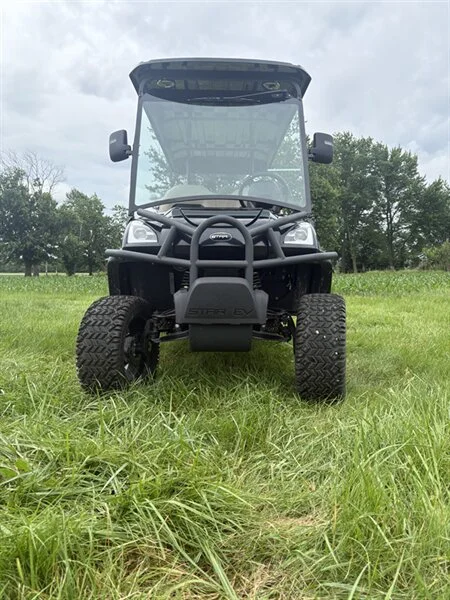
Star EV golf carts: who makes them and why it matters
Star EV is a U.S.-based electric vehicle manufacturer founded in 2003 by Jane Zhang and Jun Hu, headquartered in Simpsonville, South Carolina. Operating under parent company JH Global Services, the brand has over 20 years of manufacturing experience and maintains a U.S.-based engineering and assembly facility. That domestic presence is a meaningful differentiator in a market where many competitors source and assemble overseas.
The company has earned notable recognition, including a 2023 EY Entrepreneur of the Year National finalist nod for co-founder Jane Zhang, placement on the SC Fastest 50 Growing Companies list, and inclusion on Inc.'s Female Founders List. Star EV distributes through a worldwide authorized dealer network and offers online purchasing in select U.S. states for its flagship Sirius model.
For buyers comparing brands, Star EV sits in the premium segment alongside names like ICON EV and Advanced EV, offering factory street-legal configurations, AC motors, and lithium battery options across its personal cart lineup.
Model lineup and how the three lines compare
Star EV offers three personal golf cart lines: the Sirius (flagship luxury), the J Model (versatile mid-range daily driver), and the Capella (course and community use). Together, these three lines span 19 total configurations. The brand also produces commercial M-Series shuttle vehicles in 14- and 23-passenger layouts for fleet buyers, though this article focuses on the personal lines.
| Model | Positioning | Configurations | Top speed | Battery options | Estimated price range |
|---|---|---|---|---|---|
| Sirius | Flagship luxury LSV | 2, 2+2, 2+2 Lifted, 4, 4+2, 4+2 Lifted | 25 mph (LSV) | LiFePO4 lithium standard | ~$14,000 – low $20,000s |
| J Model | Mid-range, most configs | 2, 2+2, 2+2 Lifted, 4, 4 Lifted, 4+2, 4+2 Lifted | 25 mph (LSV) | Marxon 48V 105Ah lithium standard | Low – mid $10,000s (quote required) |
| Capella | Course and community use | 2, 2+2, 4, 4+2, 2+2 Lifted, 4+2 Lifted | 19.5 mph base / 25 mph LSV config | Trojan lead-acid standard, lithium upgrade available | From ~$10,000 into mid-$10,000s |
All three lines run on a 48V electrical system with AC motors and built-in thermal protection. The key differences come down to feature tier, battery chemistry, and street-legal readiness out of the box.
Sirius: the flagship model
The Sirius is Star EV's premium offering and the model most likely to compete with upscale golf cart brands on amenities. It comes street-legal from the factory as a Low Speed Vehicle (LSV), requiring no conversion. Pricing starts at approximately $14,000 and can reach the low $20,000s depending on configuration.
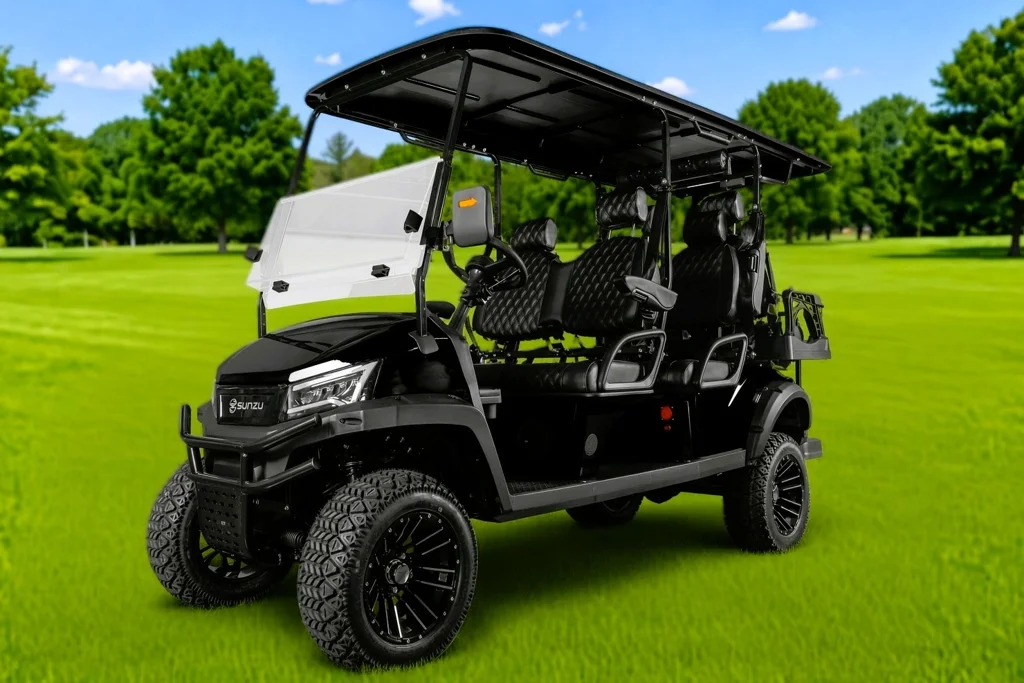
Sirius configurations and specs
The Sirius is available in six configurations: 2-passenger, 2+2, 2+2 Lifted, 4-passenger, 4+2, and 4+2 Lifted. Two-passenger and 2+2 models use a 4 kW AC motor with a 350A controller. Four-passenger and 4+2 models step up to a 5 kW motor and 450A controller.
| Spec | 2-passenger / 2+2 | 4-passenger / 4+2 |
|---|---|---|
| Motor | 4 kW AC | 5 kW AC |
| Controller | 350A | 450A |
| Voltage | 48V | 48V |
| Top speed | 25 mph | 25 mph |
| Range per charge | 40 – 60 miles | |
| Standard tires | 205/40 R14 on 14-inch aluminum rims | |
| Lifted tires | 20x10R14 all-terrain | |
Sirius interior and technology
The Sirius is loaded with features that set it apart from mid-range carts. Standard equipment includes a full-color infotainment touchscreen, premium Bluetooth sound system, ambient lighting, diamond-stitched seating, and illuminated LED rocker panels. A locking insulated trunk with a drainable cooler adds genuine utility for course and neighborhood use.
On the safety side, the Sirius includes DOT/SAE certified LED projection headlights with self-canceling turn signals, side mirrors, and seatbelts. These are built-in LSV features, not aftermarket additions.
The Sirius is available for online purchase in select states: Kansas, Kentucky, New Jersey, Oklahoma, Oregon, South Carolina, Tennessee, and Texas. Buyers outside these states will need to go through an authorized dealer.
J Model: the versatile daily driver
The J Model is Star EV's most configurable personal cart, offering seven configurations. It's street-legal from the factory like the Sirius, making it a practical choice for buyers who want LSV capability without the flagship price. Pricing falls in the low to mid $10,000s, though a dealer quote is required for exact figures.
J Model configurations and specs
J Model configurations include: 2-passenger, 2+2, 2+2 Lifted, 4-passenger, 4 Lifted, 4+2, and 4+2 Lifted. Motor and controller sizing follows the same pattern as the Sirius: 4 kW / 350A for smaller configs and 5 kW / 450A for larger ones.
| Spec | Detail |
|---|---|
| Battery | Marxon 48V 105Ah LiFePO4 lithium |
| Onboard charger | 20A |
| Range per charge | 34 – 40 miles |
| Top speed | 25 mph (LSV) |
| Standard tires | 215/35-12 on 12-inch rims |
| Lifted tires | 23x10-14 on 14-inch rims |
| Voltage | 48V |
J Model features
The J Model includes a 7-inch display with integrated backup camera, spandex leather seating, a flip seat with storage trunk, aluminum rocker panels, side mirrors, and seatbelts. It's a well-equipped cart at a mid-range price point and covers most buyer needs without stepping up to Sirius pricing.
Capella: course and community use
The Capella is Star EV's most accessible entry point, starting from approximately $10,000 and extending into the mid-$10,000s depending on battery and configuration. It's positioned for golf course and community use and received a notable interior upgrade in 2024 with the addition of an integrated touchscreen dashboard.
Capella configurations and specs
The Capella comes in six configurations: 2-passenger, 2+2, 4-passenger, 4+2, 2+2 Lifted, and 4+2 Lifted. Unlike the Sirius and J Model, the base Capella runs at 19.5 mph and is not street-legal by default. An LSV configuration is available that brings it to 25 mph and meets federal FMVSS safety requirements.
| Spec | Detail |
|---|---|
| Base top speed | 19.5 mph |
| LSV top speed | 25 mph |
| Standard battery | Trojan deep-cycle lead-acid |
| Battery upgrade | LiFePO4 lithium (available) |
| Standard rims | 10-inch aluminum alloy |
| Lifted rims | 12-inch |
| Voltage | 48V |
Capella standout features
The Capella includes the QDS Quiet Drive System with temperature protection and independent suspension with double A-arm geometry, which delivers a smoother ride than many carts in this price range. The onboard charger includes a tri-color indicator. All models come with premium automotive paint, injection-molded roofs, and LED headlights with turn signals.
If street-legal use is a priority, make sure to specify the LSV configuration when ordering a Capella. The base model's 19.5 mph top speed does not meet LSV requirements for public road use in most states.
Battery and powertrain across all models
All three Star EV personal cart lines share a 48V AC motor platform with built-in thermal protection. The brand uses LiFePO4 (lithium iron phosphate) chemistry across its lithium-equipped models, rated for over 2,000 charge cycles. This chemistry is known for stability, longevity, and safer thermal behavior compared to other lithium types.
| Battery type | Cycle life | Model availability |
|---|---|---|
| LiFePO4 lithium standard | 2,000+ charge cycles | Sirius (standard), J Model (standard) |
| Trojan lead-acid standard | Varies by maintenance | Capella (standard) |
| LiFePO4 lithium upgrade | 2,000+ charge cycles | Capella (optional) |
For buyers comparing long-term operating costs, the lithium packs on the Sirius and J Model eliminate the maintenance demands of lead-acid batteries, including watering, equalization charges, and terminal corrosion. The Capella's lead-acid standard battery keeps entry pricing lower but adds ongoing maintenance considerations.
Street-legal status explained
The Sirius and J Model are fully street-legal Low Speed Vehicles (LSVs) from the factory. No conversion, no aftermarket kit, and no additional certification is required. They meet federal FMVSS LSV standards as built, which include DOT-certified lighting, mirrors, seatbelts, and a minimum top speed of 20 mph.
The Capella's base configuration tops out at 19.5 mph and does not meet LSV minimums by default. Star EV offers an LSV configuration for the Capella at 25 mph that does qualify. Buyers who plan to drive on public roads with posted speed limits of 35 mph or under should confirm the LSV configuration at the time of purchase.
LSV laws vary by state and municipality. Even with a factory-certified LSV, check your local regulations for road eligibility before purchasing.
Pricing and how to buy
Star EV does not publish MSRP pricing on its website, which is a common frustration for buyers doing early-stage research. Based on authorized dealer listings, here are the known price ranges for each model line.
| Model | Starting price | Upper range | How to buy |
|---|---|---|---|
| Capella | ~$10,000 | Mid-$10,000s | Dealer quote or visit |
| J Model | Low $10,000s | Mid-$10,000s | Dealer quote or visit |
| Sirius | ~$14,000 | Low $20,000s | Online (select states) or dealer |
The Sirius is the only Star EV personal cart available for online purchase, and only in Kansas, Kentucky, New Jersey, Oklahoma, Oregon, South Carolina, Tennessee, and Texas. The J Model and Capella require a dealer quote or in-person visit. Because pricing varies by configuration, battery type, and dealer, contacting an authorized dealer directly is the most reliable way to get accurate figures.
Warranty coverage
All three Star EV personal cart lines come with a 4-year limited warranty, which includes 2 years of bumper-to-bumper coverage. Lithium battery packs carry coverage of up to 6.5 years depending on usage patterns. The warranty activates from the date of purchase at an authorized dealer.
| Coverage type | Duration |
|---|---|
| Limited warranty (all personal models) | 4 years |
| Bumper-to-bumper | 2 years |
| Lithium battery pack | Up to 6.5 years |
Standard wear items including tires and brake pads are excluded from bumper-to-bumper coverage, which is typical across the golf cart industry. The lithium battery warranty is notably competitive compared to many brands that offer only 2 to 3 years of battery coverage.
Parts, accessories, and long-term support
Star EV sells brand accessories directly, including STARGO storage boxes, soundbars, steering wheels, floor mats, vehicle covers, tires, and scorecard holders. A Street Art Series with designer graphics is available at select dealers for buyers who want a customized look.
Third-party support is available through retailers like Buggies Unlimited, which stocks compatible windshields, soundbars, motors, battery kits, floor mats, seat kits, and general storage accessories for Star EV carts.
Owners of older Star EV models have reported difficulty sourcing OEM parts directly from the company, particularly for legacy components like wiring harnesses and motors. If you're buying a used Star EV, confirm parts availability for your specific model year before purchasing. Third-party suppliers like Buggies Unlimited may be your most reliable option for older cart support.
For current model years, Star EV's corporate team is generally responsive to direct inquiries. The authorized dealer network is the recommended first stop for service and OEM parts needs.
Who Star EV is best for
Star EV carts are a strong fit for buyers who want a factory street-legal LSV with a lithium battery standard, a meaningful warranty, and U.S.-based engineering support. The brand competes well against ICON EV and Advanced EV in the premium golf cart segment and surpasses the baseline offerings from the traditional Big 3 (Club Car, E-Z-GO, Yamaha) in terms of tech features and battery chemistry at comparable price points. For a broader look at how these models stack up, the golf cart buying guide covers key factors to evaluate across brands.
| Buyer profile | Recommended model |
|---|---|
| Luxury buyer, street use, maximum features | Sirius |
| Daily driver, street-legal, most configuration options | J Model |
| Golf course or private community use, budget-conscious entry | Capella |
| Fleet or commercial shuttle needs | M-Series (14 or 23-passenger) |
Star EV may not be the right choice for buyers who need extensive OEM parts support for older or used carts, or for buyers in states where no local dealer is accessible and online sales are not available for their preferred model. Used cart buyers should verify the model year and confirm component availability before committing.
Frequently asked questions
Are Star EV golf carts good quality?
Star EV has over 20 years of manufacturing experience and uses AC motors, LiFePO4 lithium batteries, and factory LSV certification across its personal lineup. Build quality and feature levels are competitive with premium brands in the segment. Owner feedback is generally positive on performance and features, though some users of older models have noted OEM parts availability challenges.
Where are Star EV golf carts made?
Star EV is headquartered in Simpsonville, South Carolina, and maintains a U.S.-based engineering and assembly facility. The parent company is JH Global Services.
Does Star EV use lithium batteries?
Yes. The Sirius and J Model come standard with LiFePO4 lithium batteries rated for over 2,000 charge cycles. The Capella includes Trojan lead-acid batteries as standard, with a lithium upgrade available.
What is the range of a Star EV golf cart?
The Sirius delivers 40 to 60 miles per charge. The J Model delivers 34 to 40 miles per charge. Range for the Capella depends on battery configuration and is not published as a specific figure by the manufacturer.
Are Star EV golf carts street-legal?
The Sirius and J Model are factory-certified LSVs and are street-legal on public roads posted at 35 mph or under without any conversion or modification. The base Capella runs at 19.5 mph and requires the LSV configuration upgrade (25 mph) to qualify for street-legal use.
How much does a Star EV golf cart cost?
The Capella starts at approximately $10,000. The J Model is in the low to mid $10,000s (quote required). The Sirius starts around $14,000 and can reach the low $20,000s for higher configurations. Star EV does not publish MSRP on its website, so dealer contact is required for exact pricing. For broader context on what golf carts cost across brands, see how much does a golf cart cost.
Where can I buy Star EV parts and accessories?
Star EV brand accessories are available through authorized dealers. Third-party parts for current and older models are available through retailers like Buggies Unlimited. For legacy model components, third-party sourcing is often more reliable than going directly to Star EV.
What is the difference between the Sirius, J Model, and Capella?
The Sirius is the flagship with premium features, the longest range, and the highest price. The J Model offers the most configurations and full street-legal capability at a lower price point. The Capella is the most affordable, designed for course and community use, and requires an LSV configuration upgrade for street-legal operation.