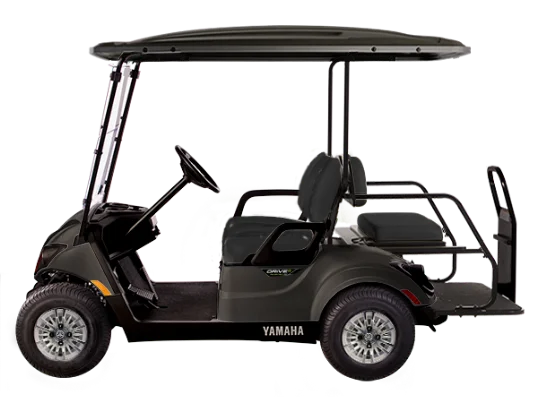
What defines a luxury golf cart?
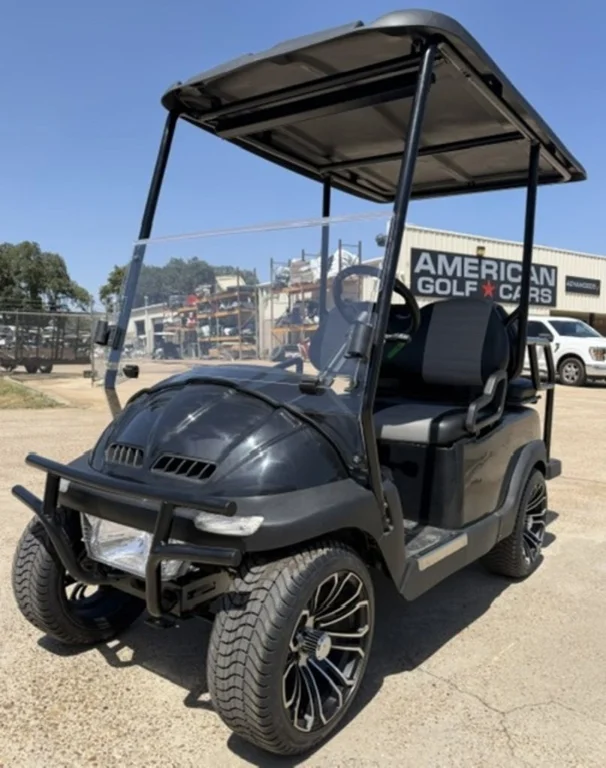
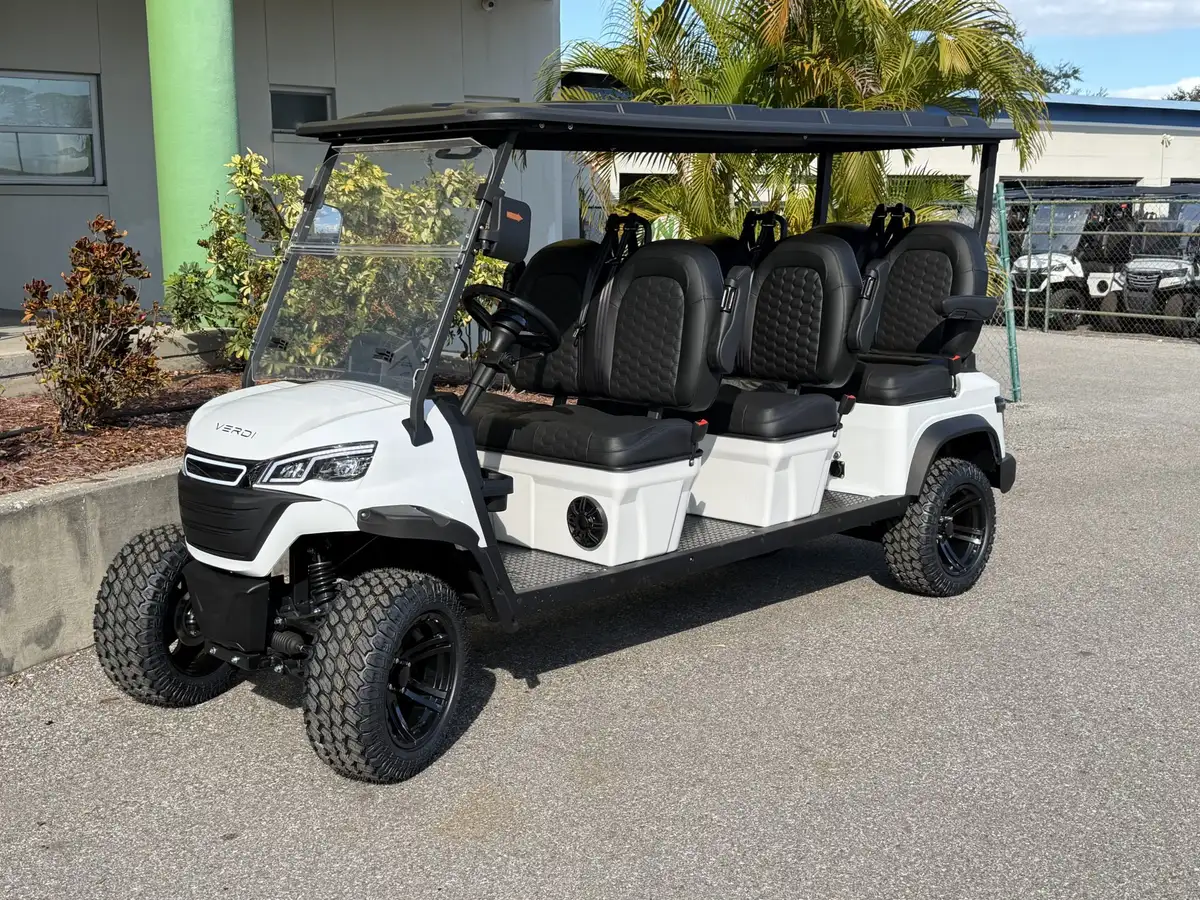
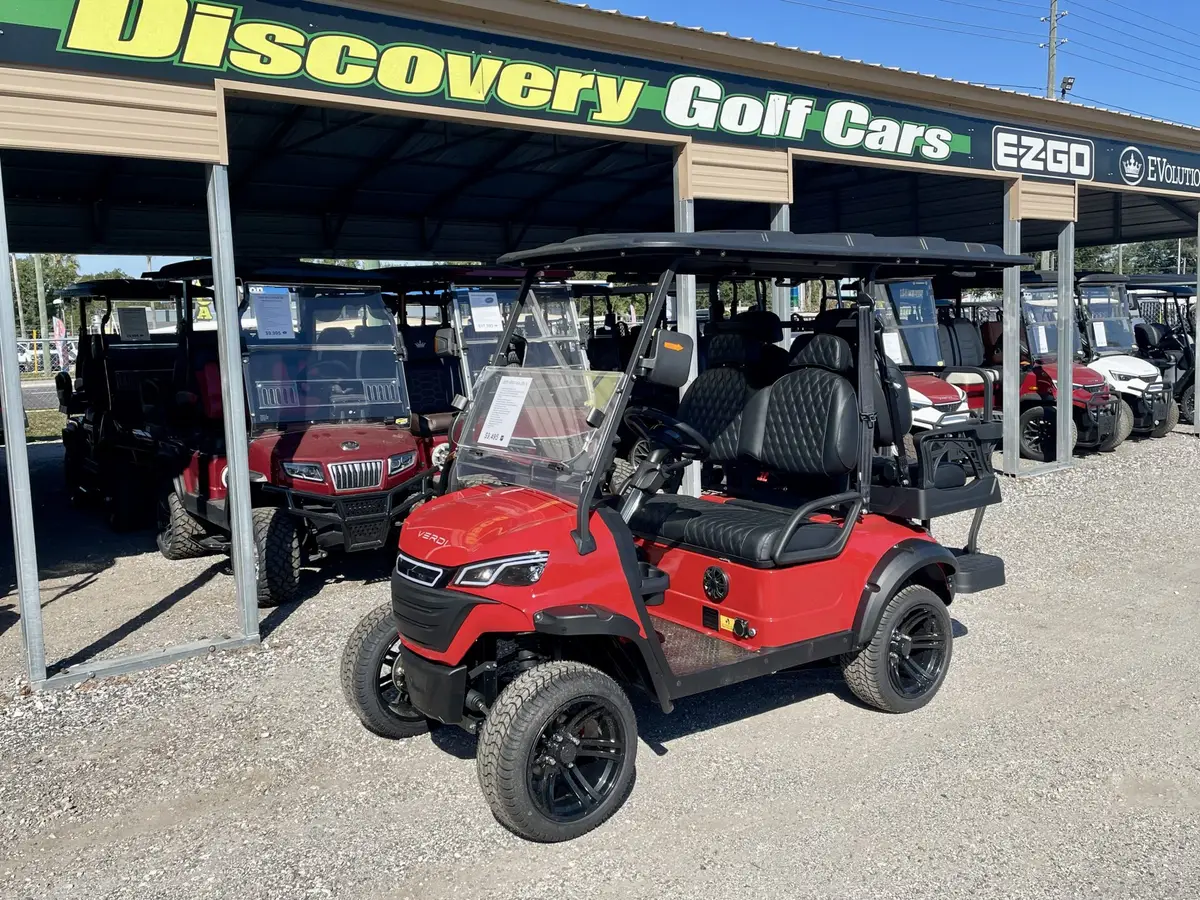
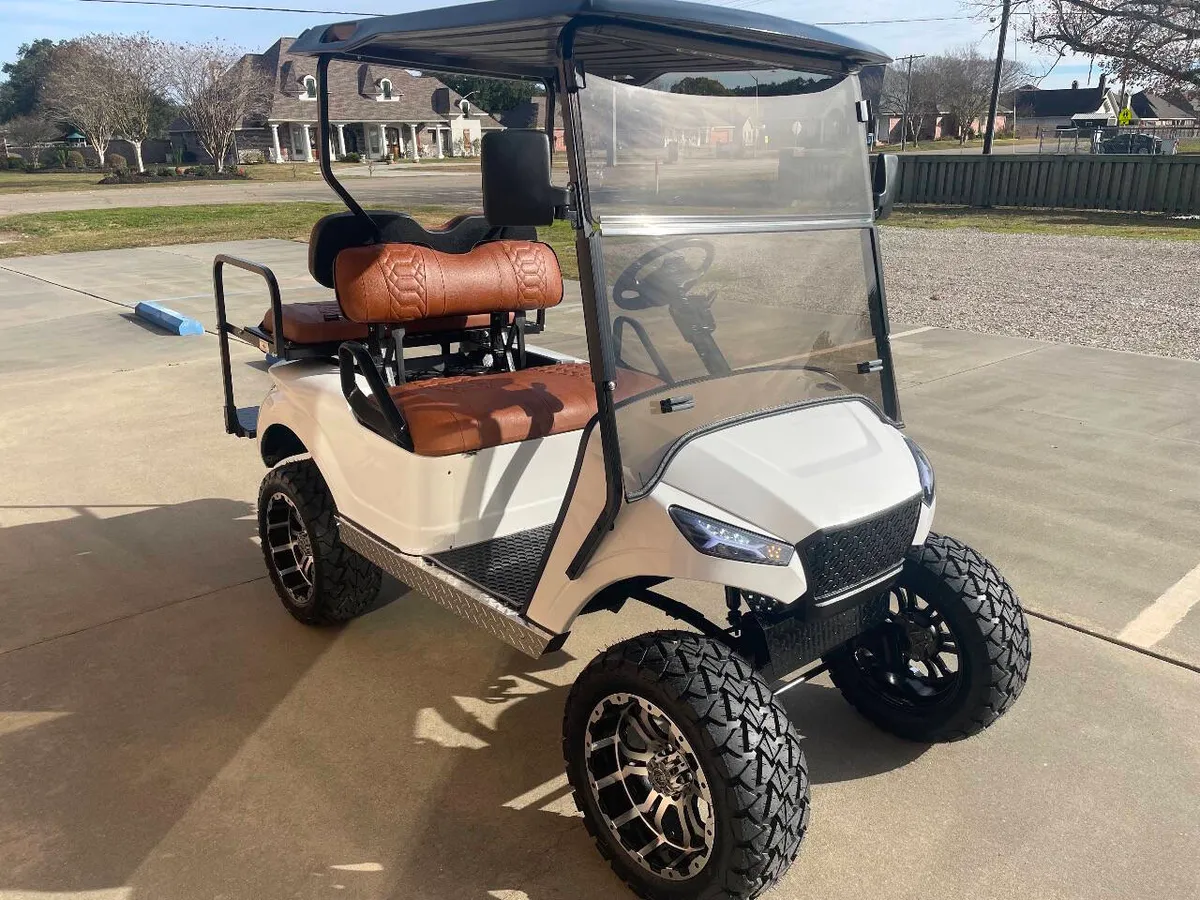
Luxury golf carts are purpose-built personal vehicles that combine automotive-grade materials, advanced technology, and refined craftsmanship into a compact, low-speed platform. They go well beyond the basic utility cart you might find at a rental counter, offering features like genuine leather seating, carbon fiber trim, lithium battery systems, and infotainment screens with Apple CarPlay integration.
| Feature category | Standard golf cart | Luxury golf cart |
|---|---|---|
| Seating material | Vinyl or basic fabric | Hand-stitched leather, diamond-stitch patterns |
| Battery system | Lead-acid (flooded) | Lithium-ion (105Ah to 210Ah+) |
| Infotainment | None or basic radio | 7–10.1 inch touchscreen, Apple CarPlay, Bluetooth |
| Braking | Drum brakes | 4-wheel disc brakes, electric power braking |
| Frame material | Steel | Aluminum, carbon fiber components |
| Street legal (LSV) | Rarely | Often available or standard |
| Starting price | $5,000 – $8,000 | $12,499 – $30,000+ |
One of the clearest markers of a luxury cart is its Low Speed Vehicle (LSV) capability. LSVs are federally recognized motor vehicles capable of speeds between 20 and 25 mph, equipped with required safety features like headlights, turn signals, mirrors, seat belts, and a VIN. This classification allows them to legally operate on public roads posted at 35 mph or lower in most U.S. states.
Where a standard golf cart is confined to private property, courses, or golf-cart-friendly communities, an LSV-certified luxury cart opens up genuine street use in gated communities, resort towns, beachfront neighborhoods, and beyond. That expanded utility is one of the primary reasons buyers justify the premium price.
LSV regulations vary by state. Always verify local rules before purchasing a luxury cart for road use, as some states require registration, insurance, and a valid driver's license.
Top luxury golf cart brands
A handful of manufacturers dominate the luxury golf cart segment, each with a distinct value proposition. The brands below cover the full price spectrum, from entry-level premium to flagship models that rival boutique EVs in cost and craftsmanship.
| Brand | Key differentiator | Starting price |
|---|---|---|
| Club Car Onward | Broad customization, dealer network | $12,998 – $17,498 |
| MadJax XSeries | Lifted suspension, aggressive styling | From $13,498 |
| Honor G1 | All-aluminum frame, safety engineering | From $14,500 |
| Atlas Gen 2 | Lifetime powertrain warranty | From $15,429 |
| Garia Via | Danish craftsmanship, automotive design | From $22,994 |
| Tomberlin Ghosthawk | 17 HP AC powertrain, CarPlay/Android Auto | High $20,000s – low $30,000s |
| GEM e4 | EV crossover positioning, large cabin | High $20,000s |
| Moke America | Zero-emission, lifestyle/boutique appeal | Contact dealer |
Garia
Garia was founded in Denmark in 2005 with a single goal: build the world's finest golf car. The brand draws a deliberate distinction between a "golf cart" and a "golf car," positioning its products as closer to a luxury automobile than a utility vehicle. Acquired by Club Car in 2022, Garia has maintained its premium identity while gaining broader distribution. Its Mansory collaboration model pushes customization to an extreme level, with bespoke paint and interior finishes available for buyers who want a truly one-of-a-kind vehicle.
The Garia Via 2-Seater LSV starts at $22,994 and is available with a 120Ah or 180Ah lithium battery, or an entry-level 6x8V Trojan T-875 lead-acid configuration. The brand claims the largest cabin in its class and backs it with a 5-year frame warranty and a 3-year general warranty.
Tomberlin Ghosthawk
The Ghosthawk is Tomberlin's flagship model, priced in the high $20,000s to low $30,000s. It runs a 17-horsepower AC powertrain with electric power steering, a 48V 210Ah Evolve lithium battery, and a 7-inch touchscreen with Apple CarPlay and Android Auto. The Tomberlin 360 app adds geo-fencing and remote speed control, making it a strong option for fleet managers or parents of teen drivers.
Atlas Gen 2
Atlas competes on reliability, offering a lifetime powertrain warranty that no other brand in this segment matches. The Gen 2 lineup starts at $15,429 for a 4-passenger lifted model, with an LSV upgrade available for an additional $1,000. Notable details include 14-inch aluminum wheels, an Italian-made steering wheel, and lithium battery options of 105Ah or 210Ah.
Honor G1
The Honor G1 2+2 starts at $14,500 and is built around an all-aluminum frame with an integrated sway bar and 4-wheel disc brakes. Three lithium battery tiers are available: 51V 105Ah, 51V 160Ah, and 51V 210Ah. The Honor App provides remote speed control and lockout, which is useful for community or property management applications.
Club Car Onward
Club Car's 60-year manufacturing history gives the Onward strong credibility in the luxury segment. A gas-powered 4-passenger Onward starts at $12,998, while the lithium version reaches $17,498. With more than 15 paint options and an extensive accessory catalog, it is one of the most customizable options at this price point and benefits from one of the widest dealer service networks in North America.
MadJax XSeries
Starting at $13,498, the MadJax XSeries targets buyers who want lifted suspension, bold styling, and off-road capability in a luxury package. It sits in the entry-level luxury tier and is a common starting point for buyers who plan to add aftermarket upgrades over time.
GEM e4
The GEM e4 is priced in the high $20,000s and leans into its crossover EV identity. Key specs include nearly 6 inches of suspension travel, 43 inches of legroom (accommodating passengers up to 6'8"), a tilting steering wheel with electric power assist, and a choice of 8 kWh or 16 kWh lithium-ion battery packs. It is a strong option for buyers who prioritize passenger comfort and extended range.
Key features to look for
Luxury golf carts distinguish themselves through a layered set of features that affect performance, comfort, safety, and long-term value. Understanding what each category offers helps buyers prioritize their budget effectively.
| Feature category | What to look for | Impact on price |
|---|---|---|
| Battery system | Lithium-ion, 105Ah to 210Ah+ | +$1,500 – $4,000 over lead-acid |
| Infotainment | 10-inch touchscreen, Apple CarPlay | +$500 – $2,000 |
| Safety package | Disc brakes, 3-point belts, backup camera | Often standard on LSV models |
| Seating | Leather, diamond stitch, Cool Touch fabric | +$300 – $1,500 |
| Connectivity | App integration, geo-fencing, wireless charging | Often bundled with premium trims |
| Structural upgrades | Aluminum frame, sway bar, lifted suspension | +$500 – $2,500 |
| Customization | 15+ paint colors, Pantone matching, custom stitching | +$200 – $5,000+ |
Battery and power
Lithium-ion batteries are the single most important upgrade in a luxury golf cart. Compared to traditional lead-acid or AGM batteries, lithium packs charge faster, last significantly longer, weigh less, and deliver consistent power across the full discharge cycle. Capacity options across major brands currently range from 51V/105Ah (suitable for everyday neighborhood use) up to 48V/210Ah configurations suited for extended range or hilly terrain.
The GEM e4 takes a different approach, offering 8 kWh and 16 kWh lithium-ion packs sized more like a compact EV than a golf cart. For most buyers, a 160Ah or 180Ah lithium battery provides the best balance of range, cost, and weight.
Infotainment and connectivity
High-end carts increasingly rival entry-level cars in their infotainment offerings. Screen sizes range from 7 inches (Tomberlin) to 10 inches (Honor, Backyard Escapism) and 10.1 inches (Garia SuperSport). Apple CarPlay and Android Auto integration is becoming a standard expectation at this price point, enabling navigation, music, and hands-free calls through a familiar interface.
Audio options from brands like Rockford Fosgate and ECOXGEAR deliver genuine sound quality suitable for outdoor listening. Connectivity features extend beyond the vehicle itself, with apps like the Honor App and Tomberlin 360 offering remote speed control, geo-fencing, and lockout functions from a smartphone.
Safety and braking
LSV certification requires a baseline of safety features, but luxury brands go further. Four-wheel disc brakes, electric power braking, 3-point seat belts, backup cameras, and Smart Park systems are common on flagship models. The Honor G1's integrated sway bar reduces body roll, and the Tomberlin Ghosthawk's electric power steering reduces driver fatigue on longer trips.
Comfort and seating
Seating quality is one of the most immediately noticeable differences when stepping into a luxury golf cart. Options include hand-stitched leather upholstery, diamond-stitch patterns, ventilated or heated seats, and Cool Touch fabrics that resist heat buildup in direct sunlight. Cabin space also varies significantly: the GEM e4 offers 43 inches of legroom, while Garia claims the largest cabin in its class by volume.
Luxury golf cart pricing tiers
Luxury golf cart pricing falls into three broad tiers based on brand, configuration, battery type, and LSV status. Customization and optional upgrades can push final pricing well above listed MSRP in any tier.
| Price tier | Price range | Representative models |
|---|---|---|
| Entry-level luxury | $12,499 – $15,499 | Club Car Onward (gas), MadJax XSeries, Honor G1 base, Backyard Escapism 4-seater LSV, Atlas base |
| Mid-range luxury | $15,500 – $22,000 | Atlas lifted LSV, Club Car Onward lithium, Backyard Escapism 6-seater extended range, Garia Via base |
| Premium/flagship | $22,000 – $30,000+ | Garia Via fully optioned, Tomberlin Ghosthawk, GEM e4, Backyard Escapism 8-seater |
Entry-level luxury carts in the $12,499 to $15,499 range typically include a lithium battery option, improved seating, and basic safety features, but may not include LSV certification as standard. The Backyard Escapism 4-seater LSV 48V lithium starts at $12,499, making it one of the most affordable street-legal options in the segment.
Mid-range models between $15,500 and $22,000 unlock more battery capacity, richer interior options, lifted suspension, and typically include LSV packages. The Atlas 4-passenger lifted model with the LSV upgrade lands at $16,429, offering a lifetime powertrain warranty at a competitive price point.
Flagship models above $22,000 deliver the highest levels of technology, craftsmanship, and performance. The Garia Via starts at $22,994 for a 2-seater LSV, and fully configured Tomberlin Ghosthawk and GEM e4 models can approach or exceed $30,000.
Customization costs add up quickly. A base model with a lithium battery upgrade, premium audio, custom paint, and leather seating can easily add $3,000 to $7,000 to the starting price. For a broader look at what golf carts cost across all tiers, including standard and mid-range options, see our full pricing guide.
Warranty and ownership considerations
At this price point, warranty coverage should be a primary evaluation factor. Coverage terms vary significantly across brands and can have a meaningful impact on the long-term cost of ownership.
| Brand | Powertrain warranty | Battery warranty | Frame/vehicle warranty |
|---|---|---|---|
| Atlas | Lifetime | 5 years | 2 years |
| Garia | 3 years (general) | Not specified | 5 years (frame) |
| Backyard Escapism | 2 years | 5 years | Not specified |
| Honor, Tomberlin, GEM | Verify with dealer | Verify with dealer | Verify with dealer |
Atlas's lifetime powertrain warranty stands alone in this segment and is a compelling reason to consider it over comparably priced alternatives. Battery warranties are particularly important given that lithium pack replacement costs can range from $1,500 to $4,000 or more depending on capacity.
Service network access matters as much as the warranty itself. Club Car's nationwide dealer footprint means repairs and parts are accessible almost anywhere. Boutique brands like Garia and Tomberlin may have more limited service coverage depending on your region, so it is worth confirming local support before purchasing.
Financing is available through select dealers, with some offering 0% APR promotional periods. This can make flagship models accessible without requiring full payment upfront.
Before finalizing any purchase, confirm that the dealer or brand has a local service center or an established remote service protocol. Limited service access can be costly for brands with thinner dealer networks.
Customization options
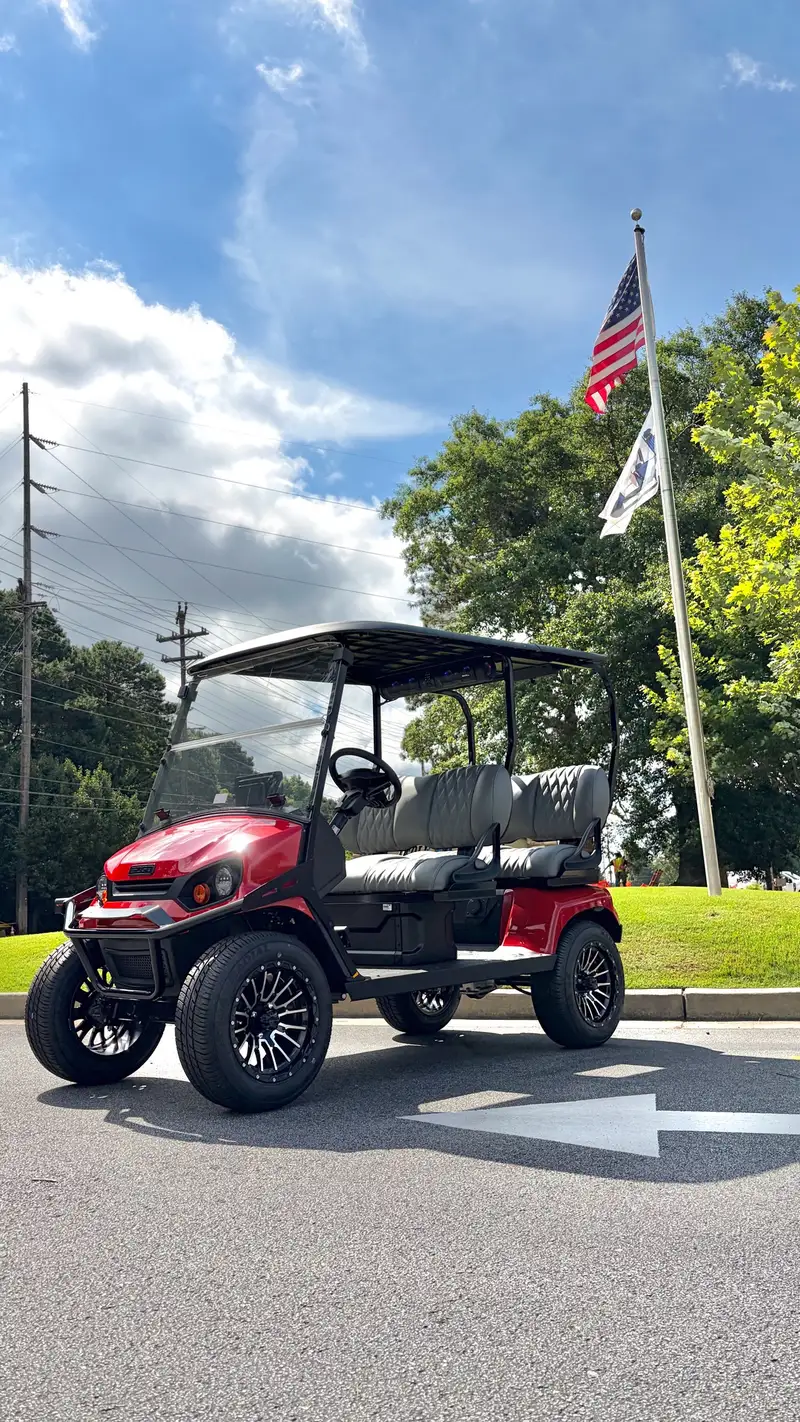
Personalization is a major draw of the luxury golf cart segment. Most premium brands offer a meaningful range of factory customization options, and some support full bespoke builds.
| Customization type | Options available | Approximate added cost |
|---|---|---|
| Paint colors | 15+ standard options, custom Pantone matching | $200 – $2,000+ |
| Upholstery | Leather, vinyl, diamond stitch, personalized text | $300 – $1,500 |
| Wheels and tires | 14–15 inch aluminum, lifted configurations | $500 – $2,000 |
| Audio system | Rockford Fosgate, ECOXGEAR premium speakers | $500 – $2,000 |
| Battery upgrade | Step up from 105Ah to 210Ah lithium | $800 – $2,500 |
| LSV package | Lights, mirrors, seat belts, horn, VIN (e.g., Atlas +$1,000) | $1,000 – $2,500 |
Brands like Garia and Club Car Onward offer the widest factory customization menus, with some configurations taking 6 to 12 weeks for delivery on built-to-order models. Backyard Escapism focuses almost exclusively on the custom build experience, with full transparency about lead times, manufacturing, and the order-to-delivery process.
For buyers who want a truly unique vehicle, Garia's Mansory collaboration offers exterior and interior treatments at a level of exclusivity typically reserved for exotic cars. Custom Pantone paint matching, personalized stitching, and monogrammed elements are available across several brands at the flagship tier.
How to choose the right luxury golf cart
The right luxury golf cart depends on four primary factors: where you plan to use it, how many passengers you need to carry, which features matter most to you, and your total budget including ongoing ownership costs. Working through each consideration before visiting a dealer will help narrow the field considerably.
| Use case | Best fit | Key consideration |
|---|---|---|
| Golf course only | Honor G1, Club Car Onward | LSV not required; prioritize ride comfort and battery range |
| Gated community / neighborhood roads | Atlas Gen 2 LSV, Backyard Escapism LSV | LSV certification required; check local speed limit rules |
| Resort or beachfront property | Garia Via, Moke America | Style and craftsmanship matter; compact footprint is useful |
| Family use (6–8 passengers) | Backyard Escapism 6- or 8-seater, GEM e4 | Extended range battery recommended for multi-passenger load |
| Performance and tech priority | Tomberlin Ghosthawk | AC powertrain, electric power steering, CarPlay/Android Auto |
| Best long-term value | Atlas Gen 2 | Lifetime powertrain warranty offsets higher upfront cost |
If street legality is a requirement, confirm that LSV certification is included or available as an upgrade before purchasing. The Atlas LSV upgrade costs an additional $1,000, while other brands include it as part of specific trims or charge more depending on what safety equipment is required.
Battery capacity deserves careful consideration for buyers in hilly terrain or those who plan extended daily use. A 105Ah pack is adequate for flat neighborhoods and occasional rides, but a 180Ah or 210Ah configuration is a better choice for hilly golf courses, longer community routes, or homes where daily charging is inconvenient.
Passenger capacity is another key decision point. If you regularly carry more than four people, comparing 4-seat and 6-seat configurations before committing to a specific model can save you from outgrowing your purchase quickly.
If long-term ownership cost matters, factor in battery replacement, charging costs, insurance, and any state registration fees for LSVs. These expenses can add hundreds of dollars per year beyond the purchase price.
Frequently asked questions
What is the difference between a golf cart and an LSV?
A standard golf cart is not classified as a motor vehicle and is typically restricted to private property or designated cart paths. A Low Speed Vehicle (LSV) meets federal safety standards, carries a VIN, and can legally operate on public roads posted at 35 mph or lower in most states. LSV-certified luxury carts require headlights, turn signals, mirrors, seat belts, and a parking brake at minimum.
Are luxury golf carts worth the price?
For buyers who plan regular use in a neighborhood, resort, or community setting, a luxury golf cart offers a compelling combination of utility, comfort, and style at a fraction of the cost of a second car. The value proposition strengthens considerably when the cart qualifies as an LSV, replacing short car trips entirely. Buyers focused purely on golf course use may find mid-tier options adequate at a lower price point.
How long do lithium batteries last in a luxury golf cart?
Lithium-ion batteries in quality luxury golf carts typically last 8 to 10 years with normal use, compared to 4 to 6 years for lead-acid batteries. Most brands offer 5-year battery warranties on lithium configurations, which provides meaningful coverage during the period of highest risk. Proper charging habits and storage significantly affect longevity.
Can I finance a luxury golf cart?
Yes. Many dealers offer financing for luxury golf carts, and some manufacturers support 0% APR promotional periods through approved lenders. Given that flagship models can exceed $30,000, financing is a common route for buyers who want to preserve liquidity while accessing a premium product.
How long does a custom build take?
Lead times for factory-customized luxury golf carts range from 4 to 12 weeks depending on the brand, level of customization, and current production schedules. Brands with dedicated custom build programs, like Backyard Escapism and Garia, typically provide more transparent timelines and order tracking than standard dealer orders.
Do luxury golf carts hold their value?
Lithium-equipped LSV models from recognized brands tend to hold their value better than standard lead-acid carts, due to longer battery life, broader street usability, and stronger buyer demand in the used market. Premium brands like Garia, Tomberlin, and Atlas maintain resale value better than lesser-known manufacturers, particularly when service records and original documentation are available.