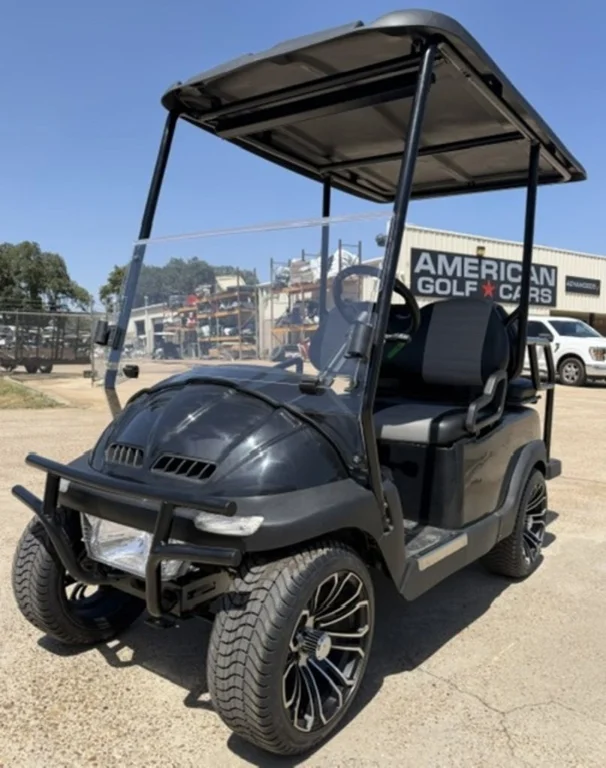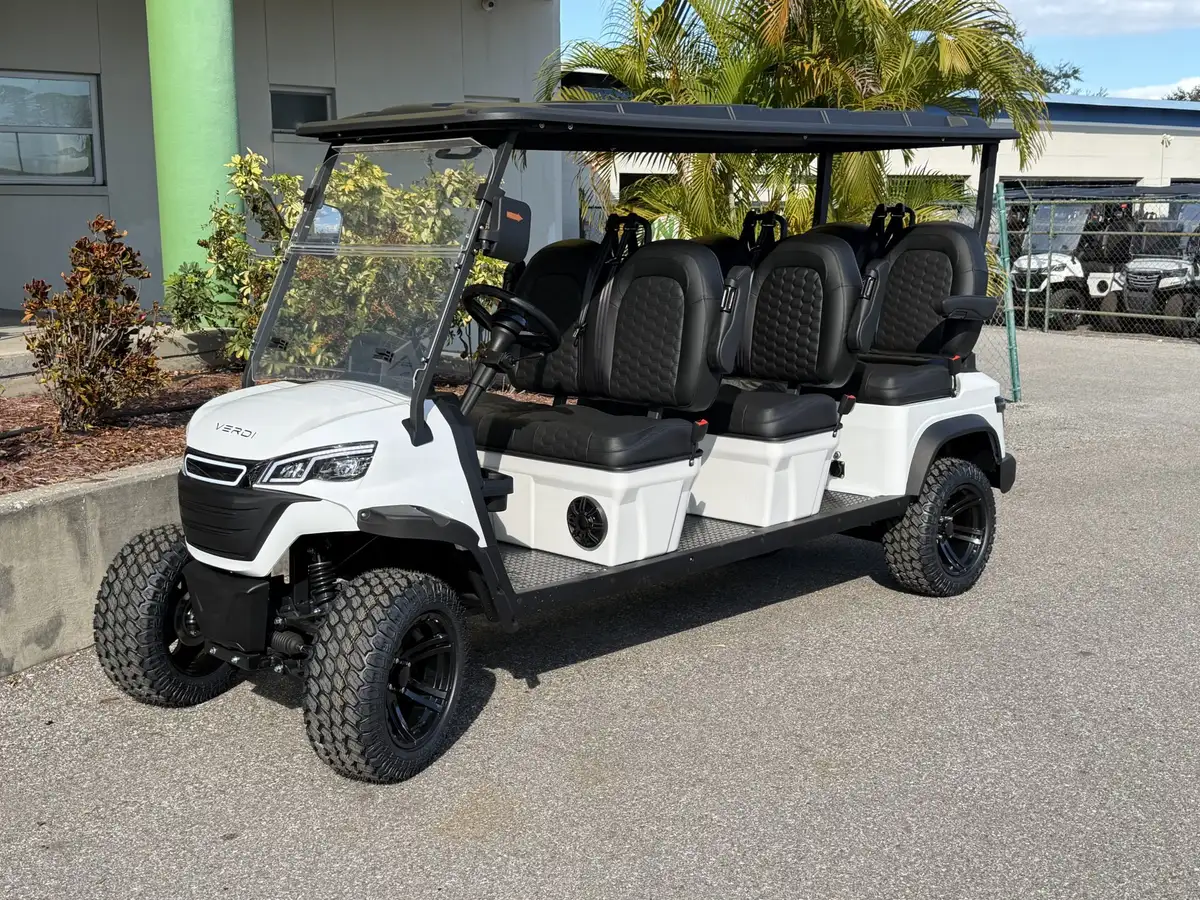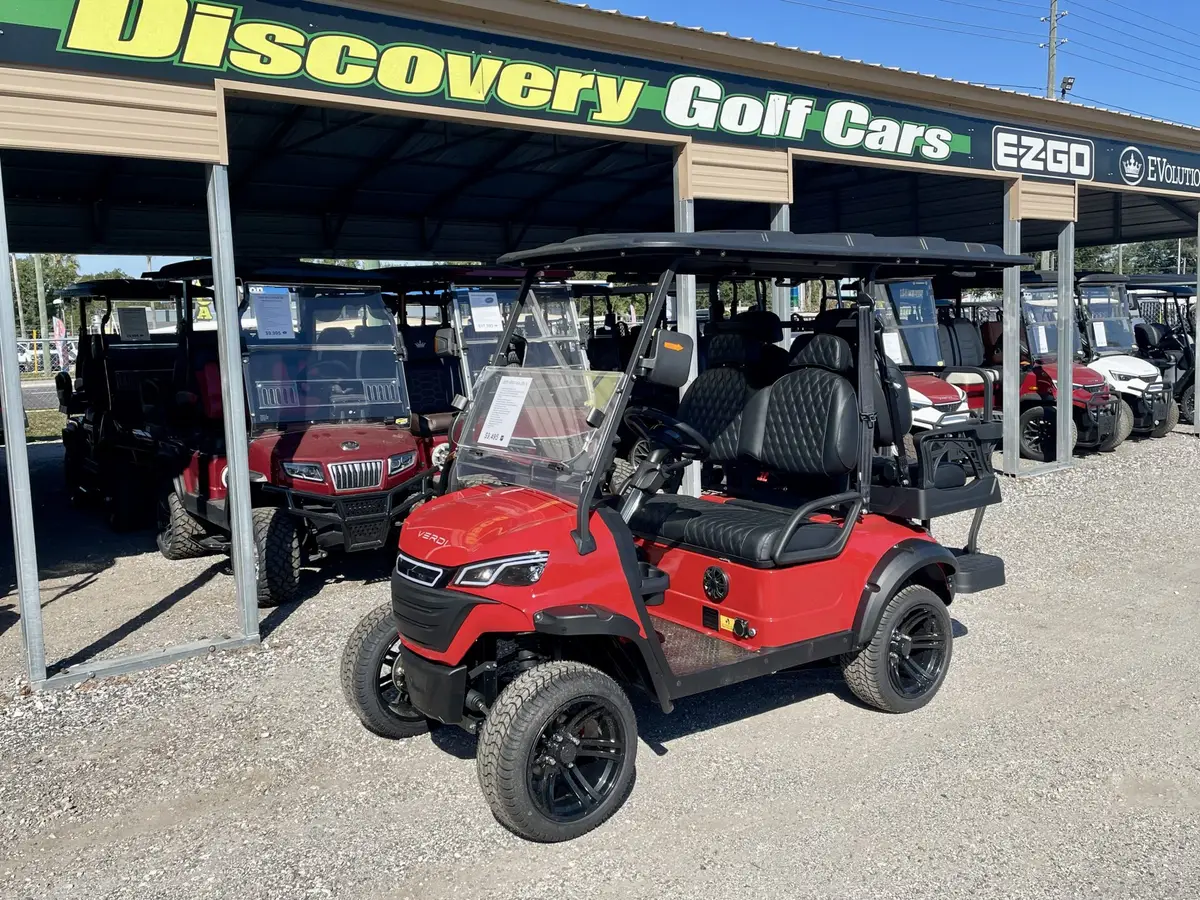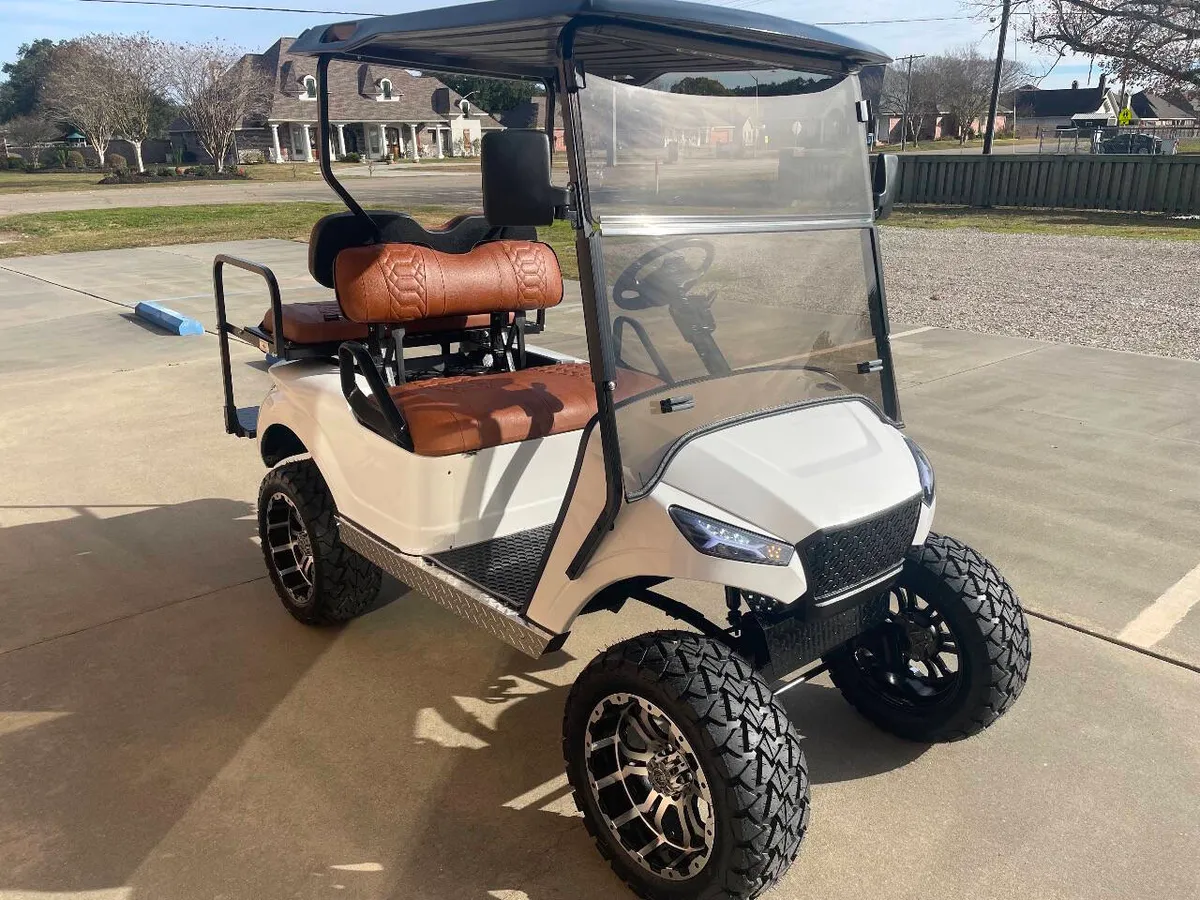
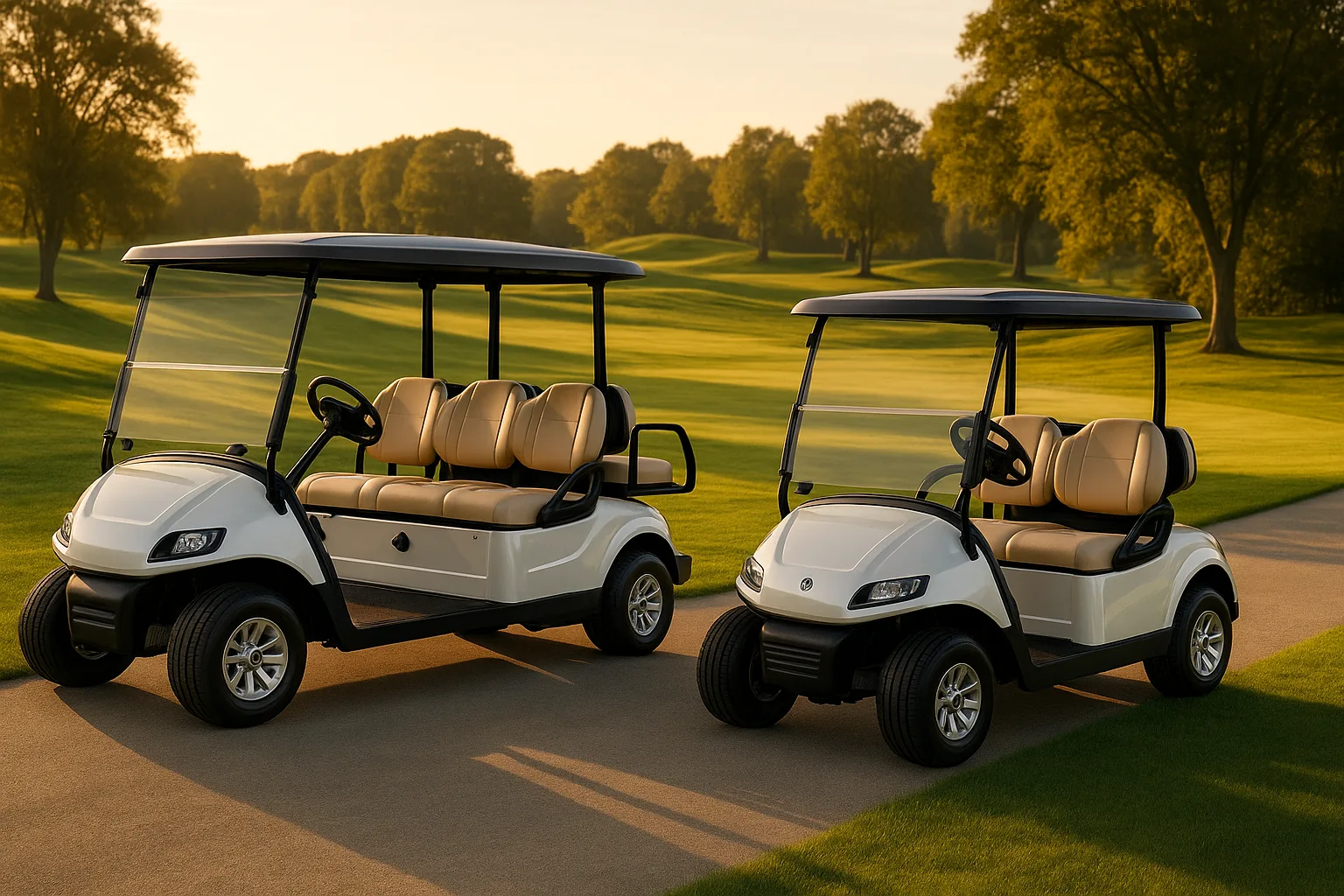
4-seat vs. 6-seat golf carts at a glance
Adding two seats to a golf cart changes more than just the headcount. It affects the physical footprint, towing requirements, maneuverability, and price. Whether you're outfitting a large family, managing a resort, or simply hauling neighbors around a retirement community, the right passenger capacity makes a real difference in daily usability.
| Feature | 4-seat golf cart | 6-seat golf cart |
|---|---|---|
| Typical length | 9–10 feet | ~12 feet |
| Typical weight | 750–1,050 lbs | 1,100–1,400 lbs |
| Starting price (new) | $8,495 – $11,655 | $11,849 – $13,995 |
| Luxury price ceiling | ~$30,000 | $28,000+ |
| Recommended trailer size | 12-foot | 14-foot |
| Best use | Couples, small families, tight spaces | Large families, communities, commercial |
The sections below break down each configuration in detail, covering who should buy which size, which models lead the market, and what features matter most at each price point.
Who should choose a 6-seat golf cart
A 6-seat golf cart earns its extra footprint when you regularly need to move five or six passengers at once. If that describes your typical ride, the upgrade from four seats is worth every dollar.
| Buyer type | Why a 6-seat fits |
|---|---|
| Large or multigenerational families | Fits parents, grandparents, and multiple kids in one trip |
| HOA and retirement communities | Handles group outings without multiple carts |
| Resorts and campgrounds | Moves guests efficiently across large properties |
| Tailgating and beach communities | Brings the whole crew in one run |
| Golf courses with larger groups | Reduces cart count for foursomes plus caddies or spectators |
Large families and multigenerational groups
Families with three or more kids, or households that regularly include grandparents on outings, constantly hit the limits of a 4-seat cart. A 6-seater eliminates the frustrating game of deciding who rides and who waits.
Community and HOA use
In retirement communities, beach neighborhoods, and gated developments, the golf cart is often the primary form of local transport. A 6-seat model lets you bring the whole group to the clubhouse or beach access point without coordinating two separate carts.
Commercial and resort applications
Resorts, campgrounds, wedding venues, and event companies benefit most from a 6-seat configuration. These buyers should prioritize commercial-grade durability, strong warranties, and higher-capacity lithium batteries (206Ah or more) for all-day operation.
Tailgating and recreational venues
At stadiums, fairgrounds, and beach communities, the 6-seater doubles as both transportation and social space. Models with premium audio systems, such as the Evolution D-MAX XT6 with its 24-speaker setup, are especially popular in these settings.
Who should choose a 4-seat golf cart
A 4-seat cart is the smarter choice for more buyers than most roundups suggest. If your group rarely exceeds four passengers, you'll pay more, park harder, and tow heavier without any real benefit from the larger model.
| Buyer type | Why a 4-seat fits |
|---|---|
| Couples and small families | Rarely exceeds four passengers; extra seats go unused |
| Limited storage or garage space | 9–10 feet fits where 12 feet won't |
| Budget-conscious buyers | Saves $1,000–$3,000 over a comparable 6-seat model |
| Tight paths or golf courses | Easier to maneuver and park in narrow spaces |
| HOA communities with size restrictions | Stays within length or weight limits that exclude 6-seat models |
HOA and community tip: Some managed communities cap golf cart length or weight to protect paths and shared infrastructure. Check your community's rules before buying a 6-seat model, since the extra two feet of length and 300–400 lbs of added weight can push a cart outside permitted limits.
Budget-conscious buyers who want maximum value should focus on the 4-seat market. Entry-level models like the Denago Nomad XL at $8,495 or the ICON i40L at $8,995 deliver solid features at a price point that 6-seat models simply cannot match.
Seating configurations explained
Not all 6-seat carts are built the same way. The seating direction and layout significantly affect ride comfort, social dynamics, and safety. Understanding these configurations before you buy prevents disappointment after delivery.
| Configuration type | Description | Common in |
|---|---|---|
| Rear-facing jump seats | Third-row passengers face backward; most common layout | E-Z-GO Express 6, ICON i60X |
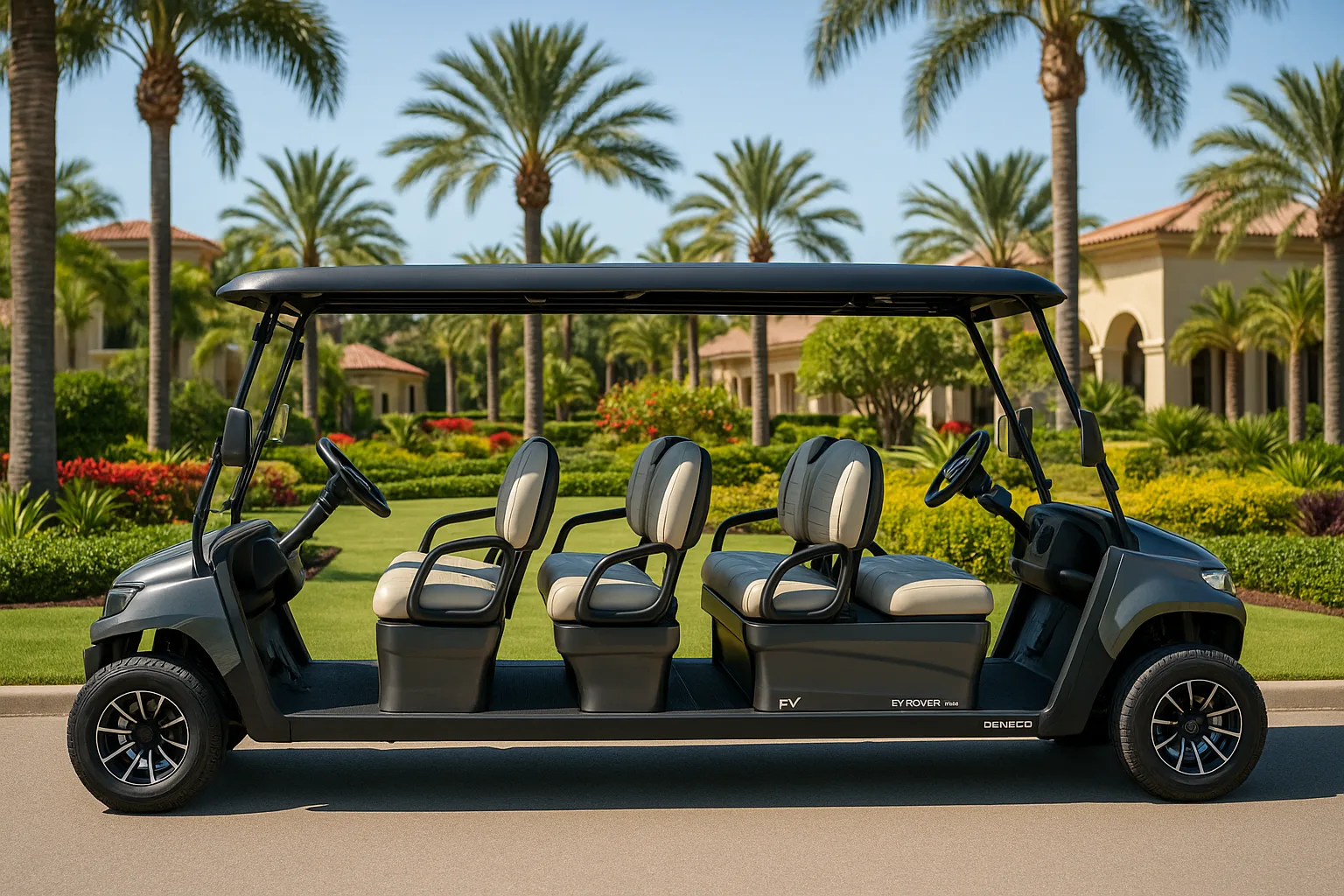
| All forward-facing | All six seats face forward; rare and premium | Denago EV Rover XXL |
| Flip-down cargo conversion | Rear seat folds down to create cargo bed; dual-purpose | Aftermarket rear seat kits |
Rear-facing jump seats
The most common layout for 6-seat golf carts uses rear-facing jump seats in the third row. Passengers face backward, which works fine at low speeds but can cause discomfort on longer rides or rough terrain. Legroom in the rear-facing row is also typically tighter than in the main cabin.
All forward-facing seats
Forward-facing 6-seat layouts are rare but growing in availability. The Denago EV Rover XXL is the most widely cited example, priced at $13,995. All six passengers face forward, which improves ride comfort, makes conversation easier, and feels more car-like overall. This configuration is worth seeking out if your passengers include older adults or anyone prone to motion discomfort.
Flip-down cargo conversions
Some buyers prefer the flexibility of a seat-and-cargo hybrid. Rear seat kits mount in the cargo bed area and can be folded down when not needed, restoring hauling capacity. This is especially useful for buyers who split time between hauling gear and hauling passengers.
Top 6-seat golf cart models
The 6-seat market spans a wide range, from approachable entry-level carts to fully equipped luxury vehicles. Here are the leading options across the price spectrum.
| Model | Starting price | Key features |
|---|---|---|
| E-Z-GO Express 6 | $12,149 | ELiTE lithium, 48V AC or gas, multiple trim levels |
| ICON i60X | $12,995 – $13,900 | 51V/105Ah ECO lithium, 10.1-inch touchscreen, four-wheel disc brakes |
| Denago EV Rover XXL | $13,995 | All forward-facing seats, LiFePO4 lithium, Apple CarPlay, backup camera |
| Backyard Escapism 6-Seater LSV | $15,499 (reg. $18,500) | 206Ah lithium, 70-mile range, street-legal LSV, custom build-to-order |
| Evolution D-MAX XT6 | $17,595 | 48V lithium, Apple CarPlay, on-demand 4WD, 24-speaker system, dash refrigerator |
| Club Car Cru | $28,156 | Luxury lounge design, NEV street-legal, panoramic roof, 16kW lithium option |
E-Z-GO Express 6
The Express 6 is one of the most flexible 6-seat platforms on the market, available in eight trim levels ranging from the Valor S at $12,149 up to the Summit XTL gas at $18,249. It runs on ELiTE lithium (a Samsung SDI partnership), 48V AC electric, or a 13.5-hp gas engine. Lifted configurations are available on upper trims.
ICON i60X
The i60X is a strong value in the $12,995 to $13,900 range. Its 10.1-inch touchscreen, four-wheel disc brakes, and 51V ECO lithium system punch above the price point. Available in both lifted and non-lifted versions, it suits buyers who want modern technology without crossing into premium pricing.
Denago EV Rover XXL
The Rover XXL stands out for its all forward-facing seat layout, a genuine differentiator at $13,995. It includes Apple CarPlay, Android Auto, and a backup camera as standard equipment. The LiFePO4 lithium pack delivers reliable range and long-term durability with minimal maintenance. For a deeper look at the brand, see our Denago Golf Carts Review.
Backyard Escapism 6-Seater LSV
At $15,499 (currently on sale from $18,500), the Backyard Escapism LSV is the best choice for buyers who need public road access. It meets US DOT LSV standards with seatbelts, mirrors, turn signals, and a VIN. Its 206Ah lithium pack delivers approximately 70 miles of range, and it offers a fully custom build-to-order experience with a 3 to 4 month lead time.
Evolution D-MAX XT6
The D-MAX XT6 at $17,595 targets the performance and entertainment buyer. On-demand 4WD with dual motors, a 24-speaker audio system, a built-in dash refrigerator, and Apple CarPlay make this the most feature-loaded cart below the Club Car Cru's price point.
Club Car Cru
Starting at $28,156, the Cru is the luxury flagship of the 6-seat market. Its lounge-style cabin, panoramic roof, removable center table, and NEV street-legal status set it apart from every other model in the segment. Battery options include AGM, 105Ah lithium, or a 16kW 210Ah lithium system for maximum range. For more on Club Car's full model lineup and history, see our Club Car Golf Cart History and Model Evolution guide.
Top 4-seat golf cart models
If four seats are enough for your needs, the savings are real. Entry-level 4-seat models start well below their 6-seat counterparts, and mid-range options offer impressive feature sets at competitive prices.
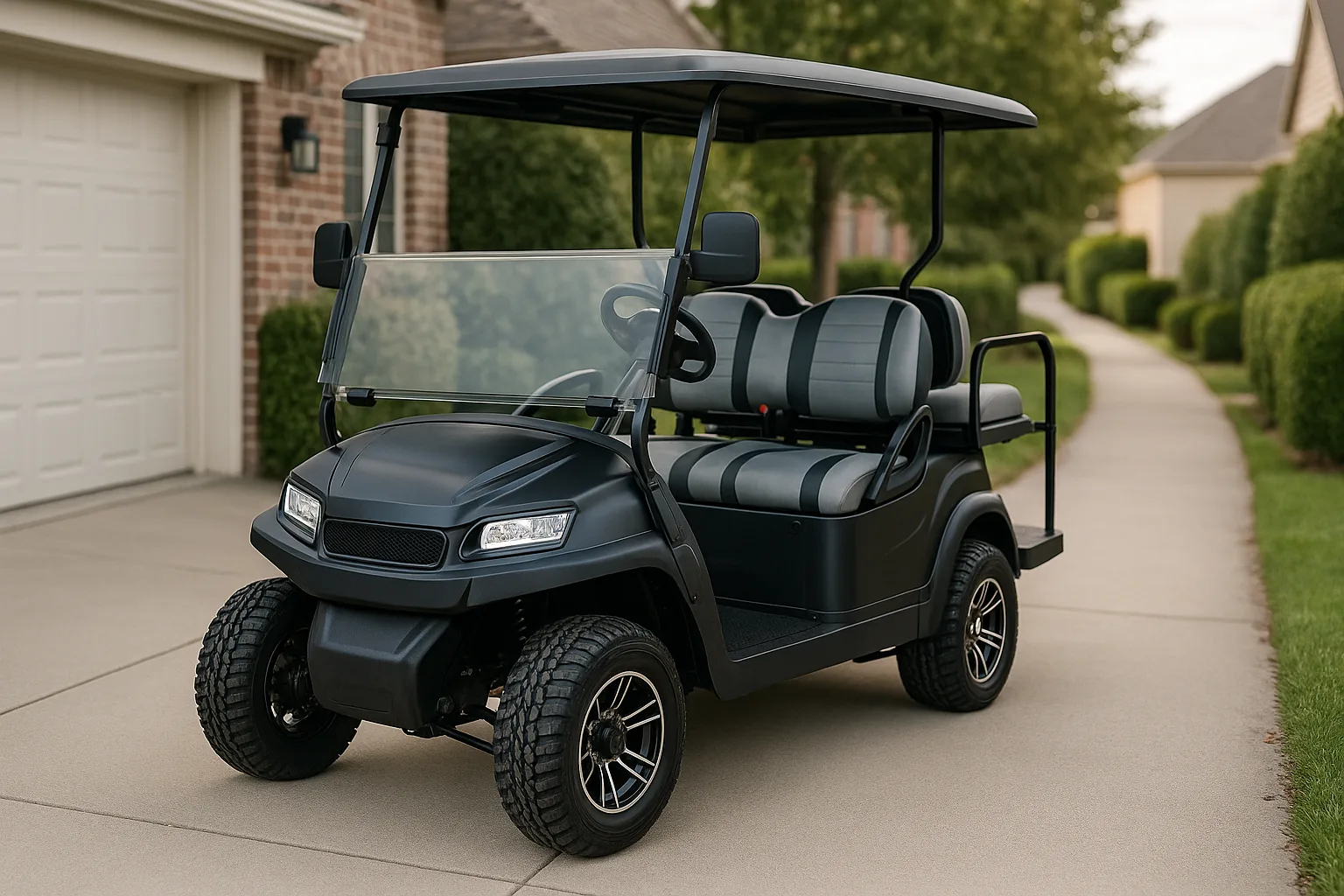
| Model | Starting price | Best for |
|---|---|---|
| Denago Nomad XL | $8,495 | Budget-conscious buyers wanting reliable electric |
| ICON i40L | $8,995 | Value seekers wanting lithium at entry price |
| Evolution D5 Maverick | $9,995 | Mid-range buyers wanting modern features |
| EPIC E40FX | $11,495 | Performance buyers wanting a lifted 4-seat |
| E-Z-GO Express 4 | $11,499 | Brand-loyal buyers comparing directly to Express 6 |
| Club Car Onward 4 | $11,655 | Premium 4-seat buyers wanting Club Car quality |
The price gap between the E-Z-GO Express 4 ($11,499) and Express 6 ($12,149) is only $650 at the base trim level. For buyers already in the Express family, moving to six seats costs surprisingly little. However, that gap widens significantly when comparing upper trims or shopping across brands.
Can you convert a 4-seat cart to 6 seats?
Yes, and it's one of the most practical options for buyers who already own a 4-seat cart or want to keep upfront costs lower. Rear seat kits mount to the cargo area and add two rear-facing seats, effectively transforming a 4-seat cart into a 6-seat configuration.
| Conversion detail | What to know |
|---|---|
| Seat direction | Rear-facing only; no forward-facing conversion kits available |
| Compatibility | Brand-specific kits available for E-Z-GO, Club Car, Yamaha, and others |
| Cargo trade-off | Replaces cargo bed space; some kits flip down to restore cargo use |
| Aftermarket brands | MODZ, MadJax, Lazy Life, El Tigre |
Conversion kits are a strong option for buyers who occasionally need extra seating but don't want to commit to a factory 6-seat model. The trade-offs are a permanent or semi-permanent loss of cargo space and a rear-facing seating position that is less comfortable than a purpose-built 6-seat cart with an extended frame.
Rear seat kits will not replicate the ride quality or legroom of a factory-built 6-seat cart. If you regularly carry six passengers, a factory 6-seat model is the better long-term investment.
Street legal and LSV considerations
Not all 6-seat golf carts are legal on public roads. Only carts certified as Low Speed Vehicles (LSVs) can be driven on roads with posted speed limits of 35 mph or less. This distinction matters significantly if you plan to travel outside private property. Golf cart laws vary by state, so it's worth confirming the rules in your area before purchasing.
| Feature required for LSV | Standard golf cart | LSV-certified cart |
|---|---|---|
| Seatbelts | Optional or aftermarket | Required (standard) |
| Turn signals and hazard lights | Not required | Required |
| Rearview mirrors | Optional | Required |
| Headlights and taillights | Common but optional | Required |
| Vehicle identification number (VIN) | Not assigned | Required |
| Top speed | 19–25 mph | 25–28 mph |
Among 6-seat models, the Backyard Escapism LSV and the Club Car Cru (classified as a Neighborhood Electric Vehicle, or NEV) are street-legal from the factory. Most other models, including the E-Z-GO Express 6 and ICON i60X, are not LSV-certified without modification.
Always confirm LSV compliance with the manufacturer before purchasing if street legality is part of your intended use.
Key features to compare
Once you've settled on the right seat count, the next decision is the feature set. These are the categories that most directly affect long-term satisfaction.
Battery and powertrain
| Battery type | Best for | Approximate range |
|---|---|---|
| 48V lead-acid | Lowest upfront cost | 20–30 miles |
| 48V or 51V lithium (105Ah) | Everyday neighborhood use | ~40 miles |
| Lithium (206Ah) | Extended range, towing, hilly terrain | 70–80 miles |
| Gas (13.5 hp) | Areas without reliable charging access | Unlimited (tank-dependent) |
For 6-seat models carrying heavier loads, a higher-capacity lithium pack pays dividends in range and consistent performance. The 206Ah pack in the Backyard Escapism LSV delivers roughly double the range of a standard 105Ah unit, which matters significantly for commercial operators running multiple daily routes. For a full breakdown of battery types and what to look for, see our guide to golf cart batteries.
Safety features
Seatbelts are standard on LSV-certified carts but optional or aftermarket on standard golf carts. Premium models like the ICON i60X and Backyard Escapism LSV include 3-point seatbelts for all six passengers. Four-wheel disc brakes appear on mid-range and premium models, offering shorter stopping distances compared to drum brakes on base configurations.
Backup cameras are increasingly standard on mid-range and premium 6-seat models and are especially valuable given the extended rear of a 12-foot cart.
Child passenger note: golf carts do not include built-in LATCH child safety seat systems. If you're transporting young children, aftermarket solutions are required. Confirm seatbelt availability and configuration before purchase.
Technology and infotainment
Entry-level carts use basic analog gauges. Mid-range models such as the ICON i60X and Denago Rover XXL include a 10-inch touchscreen, Bluetooth, USB ports, and backup camera integration. Premium models add Apple CarPlay and Android Auto, with the Evolution D-MAX XT6 going furthest with a 24-speaker system, wireless charging, LED mood lighting, and a built-in dash refrigerator.
Customization
Most major brands offer 9 to 10 color options, lifted versus standard configurations, and a range of add-ons including brush guards, soundbars, underglow lights, trailer hitches, and weather enclosures. Backyard Escapism takes customization furthest with a full build-to-order system that includes custom Pantone color, seat color, and wheel selection. If you're exploring more extensive modifications, our guide to custom golf cart bodies and design ideas covers what to plan for before starting a build.
Frequently asked questions
How long is a 6-seat golf cart?
Most 6-seat golf carts are approximately 12 feet long, compared to 9 to 10 feet for a 4-seat model. For more on how size affects garage fit and transport, see our golf cart dimensions guide.
How much does a 6-seat golf cart weigh?
6-seat golf carts typically weigh between 1,100 and 1,400 lbs, depending on the frame, battery type, and accessories. A 4-seat cart generally weighs 750 to 1,050 lbs.
What size trailer do you need for a 6-seat golf cart?
A 14-foot trailer is recommended for a 6-seat cart. A 12-foot trailer may technically fit but leaves little margin and can create loading complications. For 4-seat carts, a 12-foot trailer is typically sufficient.
How much does a 6-seat golf cart cost?
New 6-seat golf carts start around $11,849 to $13,995 for entry-level models and range up to $28,000+ for luxury configurations like the Club Car Cru. Mid-range models fall between $14,000 and $18,000. For a broader look at pricing across all cart types, see our guide on how much a golf cart costs.
Is a 6-seat golf cart street legal?
Not automatically. Only LSV-certified or NEV-classified models can legally operate on public roads with speed limits of 35 mph or lower. The Backyard Escapism 6-Seater LSV and Club Car Cru are factory street-legal. Most other models are not without modification.
Can you convert a 4-seat cart to 6 seats?
Yes. Rear seat kits from brands like MODZ, MadJax, and Lazy Life add two rear-facing seats to most major brand platforms. This is a lower-cost alternative to buying a factory 6-seat model, but the seats face backward and replace cargo space. Some kits include a flip-down option to restore cargo use when the seats aren't needed.
Are there forward-facing 6-seat golf carts?
Yes, but they are rare. The Denago EV Rover XXL at $13,995 is the most widely available example. All six seats face forward, significantly improving ride comfort for rear passengers compared to the standard rear-facing jump seat layout.
Do 6-seat golf carts come with seatbelts?
Not always. LSV-certified models include seatbelts as required equipment. Non-LSV models may offer seatbelts as standard on premium trims or as an optional add-on. Aftermarket seatbelt kits are also available for most major platforms.
Which brands make 6-seat golf carts?
The primary manufacturers offering 6-seat configurations are E-Z-GO, Club Car, Denago, ICON, Evolution, and Backyard Escapism. Yamaha and other brands also offer extended models or support aftermarket rear seat conversions.
What is the price difference between a 4-seat and 6-seat version of the same model?
Within the same brand, the price premium for moving from 4 to 6 seats is often $300 to $650 at the base trim level. For example, the E-Z-GO Express 4 starts at $11,499 while the Express 6 starts at $12,149. However, upper trims and cross-brand comparisons can show a gap of $1,000 to $3,000 or more.