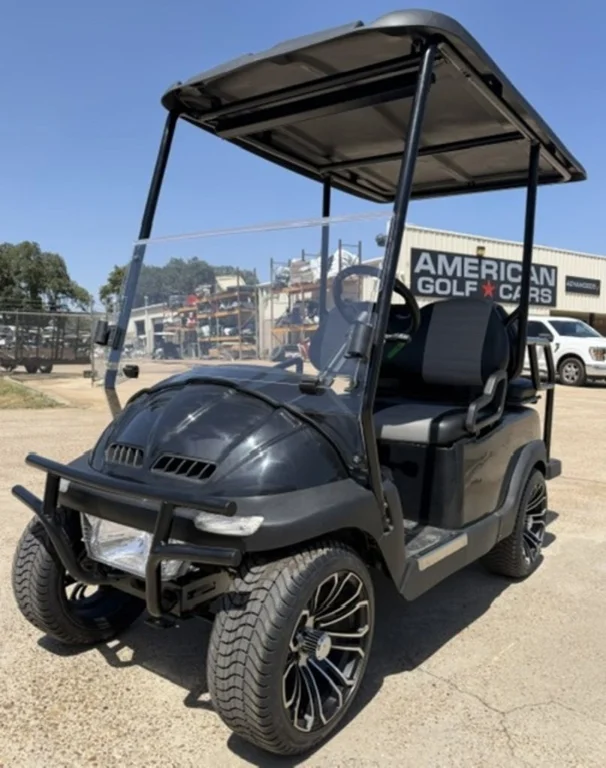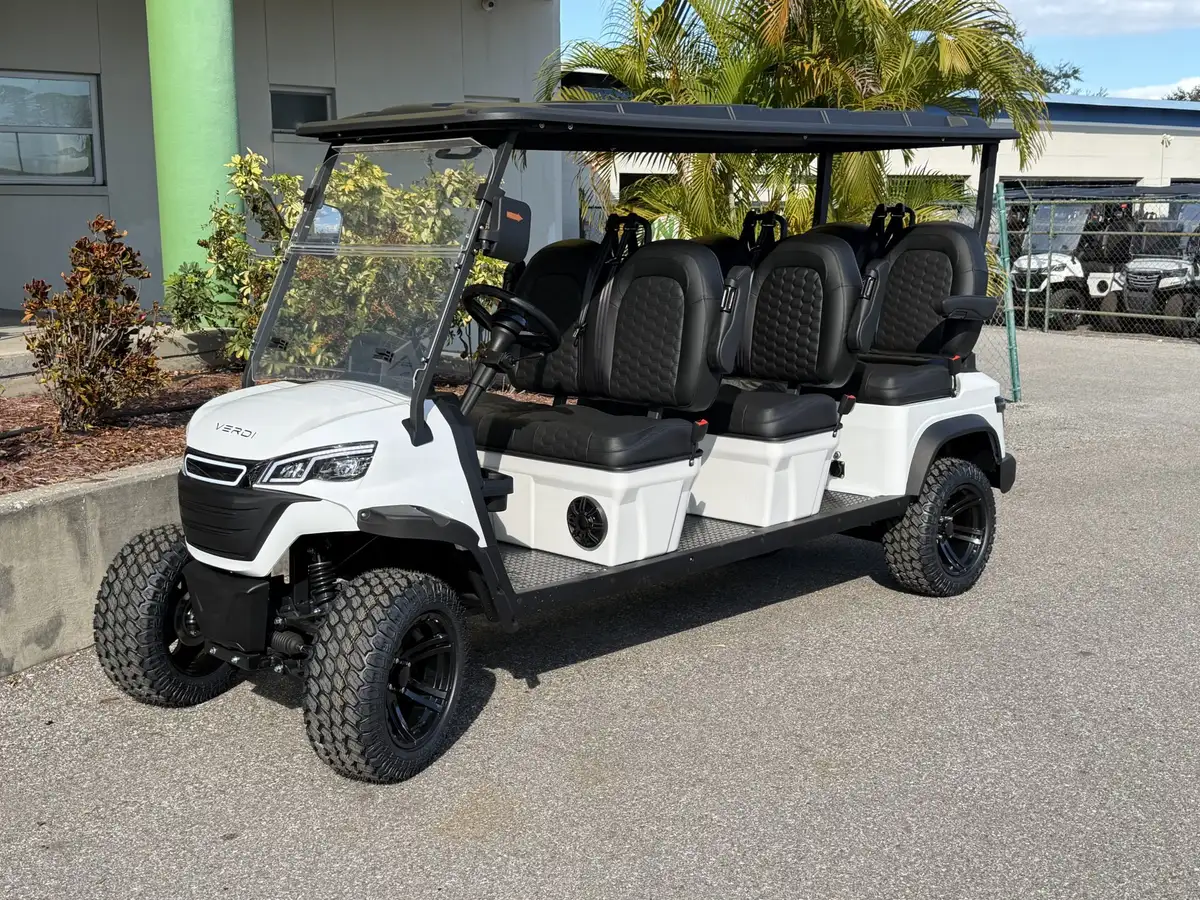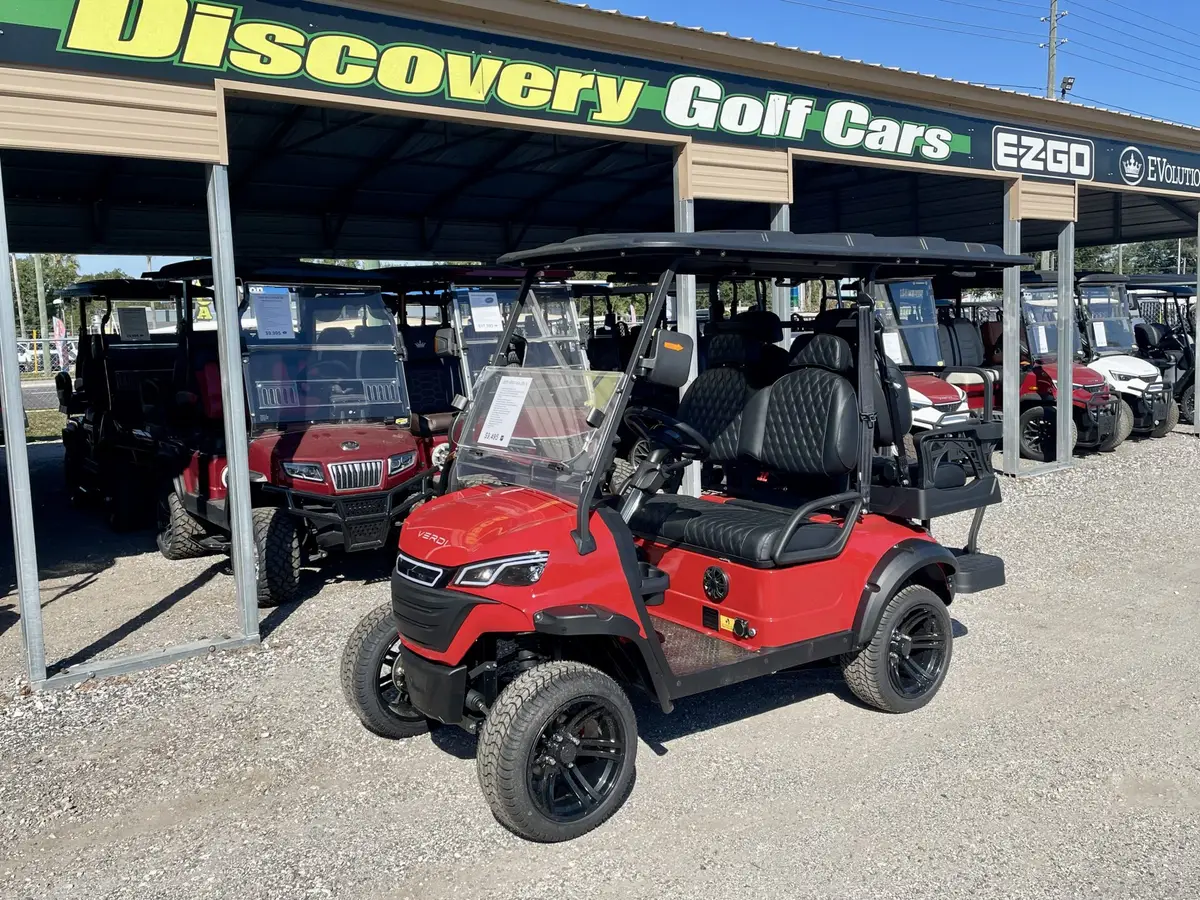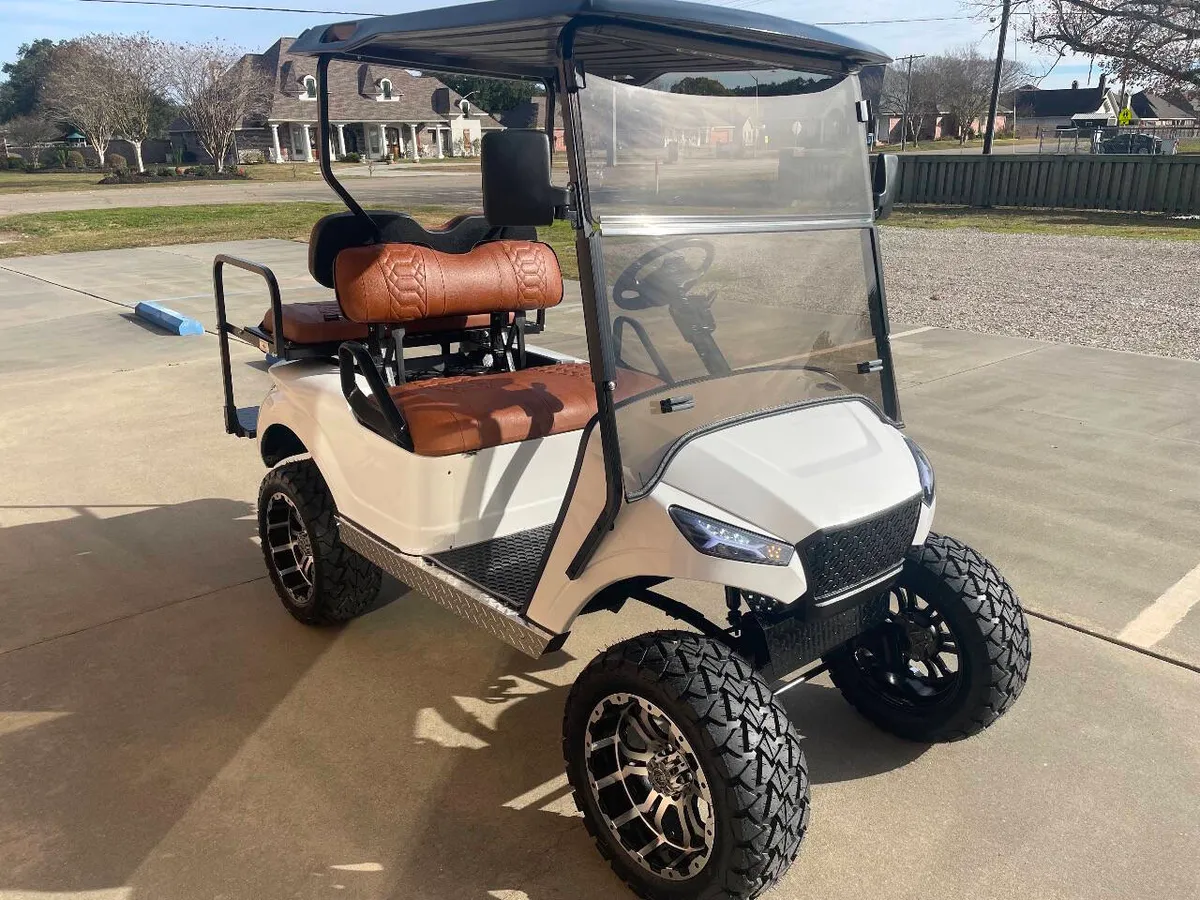
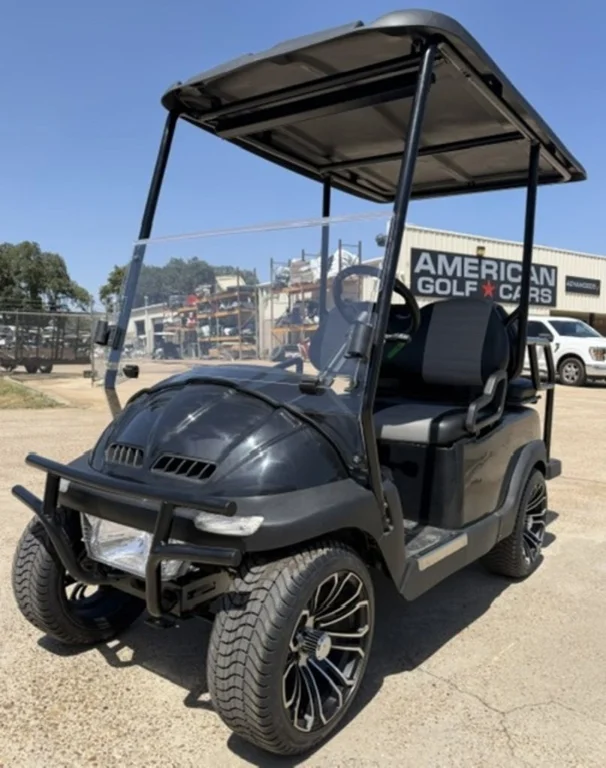
The golf cart vs. LSV distinction: Alabama's most important dividing line
Alabama law draws a hard line between two vehicle types that most people treat as the same thing: standard golf carts and low-speed vehicles (LSVs). Getting this distinction wrong is the single most common mistake buyers make, and it determines whether your vehicle can ever legally touch a public road.
| Vehicle type | Top speed | Street legal in Alabama? | VIN required? |
|---|---|---|---|
| Standard golf cart | 20 mph or less | Never | No |
| Low-speed vehicle (LSV) | More than 20 mph, not more than 25 mph | Yes, where a local ordinance permits it | Yes (17-digit VIN required) |
A standard golf cart is any vehicle designed primarily for golf course use with a top speed of 20 mph or less. Under Alabama law, these vehicles are not street legal under any circumstances, regardless of what equipment you add to them.
An LSV is a four-wheeled motor vehicle with a top speed above 20 mph but no more than 25 mph. LSVs must be factory-manufactured to meet Federal Motor Vehicle Safety Standard 500 (FMVSS 500) and come with a 17-digit Vehicle Identification Number (VIN) and a Manufacturer's Statement of Origin (MSO).
You cannot convert a standard golf cart into a street-legal LSV after purchase. Alabama law requires LSVs to be certified at the factory. No amount of aftermarket upgrades, including lights, mirrors, or seatbelts, will legally qualify a golf cart for road use.
If you are buying a vehicle with the intention of driving it on public roads in Alabama, verify that it carries a 17-digit VIN and an MSO before you complete the purchase. Ask the seller to confirm factory certification explicitly.
How Alabama's two-layer legal system works
Alabama state law, under Code of Alabama Title 32, sets the framework for LSV operation but delegates the authority to permit road use to individual municipalities. This means even a fully registered, properly equipped LSV cannot be driven on public roads unless your specific city or town has passed a local ordinance allowing it.
| Legal layer | What it controls |
|---|---|
| State law (Code of Alabama, Title 32) | Defines golf carts and LSVs, sets equipment minimums, establishes penalty structure |
| Municipal ordinance | Determines whether LSVs are permitted on local roads, sets local rules and permit requirements |
This creates a patchwork of rules across Alabama. A vehicle that is perfectly legal to drive in Gulf Shores may not be permitted on public roads one county over. Before you buy an LSV or relocate one, confirm that your municipality has an active ordinance in place. For a broader view of how states handle these distinctions, see our guide to golf cart laws by state.
The most permissive areas in Alabama are concentrated along the Gulf Coast. Cities like Gulf Shores, Orange Beach, Fairhope, Foley, and Daphne have established ordinances with clear permit processes. Inland municipalities vary widely, and many have no ordinance at all.
Golf cart and LSV rules by city
The following table summarizes key details for Alabama municipalities with known LSV ordinances. Always verify current rules directly with your city, as local ordinances are updated periodically.
| City | LSV ordinance? | Notable local requirements | Permit details |
|---|---|---|---|
| Gulf Shores | Yes | Orange warning flag mounted at least 6 feet above ground; minimum operator age 18 | $25 annual permit fee |
| Orange Beach | Yes | Headlights must be mounted no higher than 36 inches and illuminated at all times during operation | Four-year permit cycles (2025–2028, then 2029–2032) |
| Fairhope | Yes | Standard state equipment requirements apply | Contact City of Fairhope directly for current permit process |
| Foley | Yes | Standard state equipment requirements apply | Contact City of Foley directly for current permit process |
| Daphne | Yes | Standard state equipment requirements apply | Contact City of Daphne directly for current permit process |
Gulf Shores and Orange Beach publish their LSV ordinance details on their official city websites (gulfshoresal.gov and orangebeachal.gov). These are the most detailed and frequently updated municipal resources available in Alabama for LSV owners.
Where you can and cannot drive an LSV
Even in cities with active ordinances, LSV operation is restricted to specific road types and conditions. Knowing these limits before you drive prevents fines and keeps you on the right side of the law.
| Road or condition type | LSV permitted? |
|---|---|
| Roads with posted speed limits of 25 mph or less | Yes, where a local ordinance permits |
| Roads with posted speed limits above 25 mph | No |
| Highways and interstates | Never |
| Nighttime operation (after sunset) | Depends on local ordinance; many municipalities restrict to daylight hours |
| Designated LSV routes only | Some cities restrict use to specific routes; confirm locally |
As a general rule, LSVs are limited to roads with posted speed limits of 25 mph or less. No city in Alabama permits LSV use on highways, interstates, or any high-speed road, regardless of local ordinance language.
Nighttime operation is a common gray area. State law does not universally prohibit it, but many municipalities restrict LSV use to daylight hours (sunrise to sunset). Check your local ordinance before driving after dark.
Required equipment for street-legal LSV operation
Alabama law sets minimum equipment requirements for LSVs operating on public roads. Some municipalities layer additional requirements on top of these state minimums, as seen in Gulf Shores and Orange Beach.
| Equipment item | Required by state law? |
|---|---|
| Headlights | Yes |
| Brake lights | Yes |
| Turn signals | Yes |
| Windshield | Yes |
| Rearview mirror | Yes |
| Seat belts for all occupants | Yes |
| Reliable brakes and steering | Yes |
| Red reflectors (front and rear) | Yes |
| 17-digit VIN | Yes |
| Orange warning flag at 6 feet (Gulf Shores) | Local requirement only |
| Headlights mounted no higher than 36 inches, illuminated at all times (Orange Beach) | Local requirement only |
Because LSVs must be factory-certified to FMVSS 500 standards, most of this equipment comes installed from the manufacturer. The key risk is aftermarket modification that removes or compromises factory-installed safety components.
Registration and permit process
Getting an LSV legally registered for road use in Alabama involves both state and local steps. Skipping either layer will leave your vehicle technically unregistered even if it holds one of the two credentials.
- Confirm a local ordinance exists in your municipality before purchasing or attempting to register. If no ordinance exists, registration does not grant road-use permission.
- Schedule a vehicle inspection to verify that your LSV meets state and local equipment requirements. Have your proof of insurance ready at this stage.
- Register with the Alabama Department of Revenue, Motor Vehicle Division. You will receive a license plate for the vehicle.
- Apply for a local permit through your city or municipality. This is a separate credential from state registration and is required for legal road operation.
- Display your plate and any locally required identifiers (such as Gulf Shores permit stickers or Orange Beach credentials) on the vehicle before operating on public roads.
Gulf Shores charges $25 per year for its LSV permit. Orange Beach issues permits on four-year cycles (currently 2025–2028). Fees and renewal schedules vary by city, so confirm the current fee structure with your local municipality at the time of application.
Insurance requirements
Liability insurance is mandatory for any LSV operated on public roads in Alabama. Coverage minimums must match standard Alabama motor vehicle requirements. Proof of insurance is required at both the inspection stage and the local permit application.
| Insurance detail | Requirement |
|---|---|
| Type required | Liability insurance |
| Minimum coverage | Must meet standard Alabama motor vehicle minimums |
| Proof required at | Vehicle inspection and permit application |
| Policy options | Added to existing auto policy or set up as a separate LSV policy |
Many standard auto insurance providers can add an LSV to an existing vehicle policy. Some specialty insurers offer standalone LSV coverage. If you want to understand your options in more detail, our guide to golf cart insurance covers coverage types, costs, and questions to ask your provider.
Vehicles that remain exclusively on private property, golf courses, or within gated communities are not required to carry insurance under Alabama state law. The insurance requirement applies only when the vehicle operates on public roads.
Age and license requirements
Operating an LSV on a public road in Alabama requires a valid driver's license. Minimum age requirements vary by municipality, but the practical standard is straightforward: if a person is too young to legally drive a car, they are too young to drive an LSV on a public road.
| Requirement | Detail |
|---|---|
| Driver's license | Valid Alabama driver's license required |
| Minimum age (Gulf Shores) | 18 years old |
| General rule | Minimum age matches local ordinance; unlicensed and underage drivers prohibited on public roads statewide |
Gulf Shores sets its minimum operator age at 18, which is stricter than the standard driver's license threshold. Other municipalities may apply different minimums. Verify the age requirement in your specific city before allowing any driver to operate an LSV on public roads.
Penalties for violations
Alabama HB107 establishes the penalty structure for unauthorized golf cart or LSV operation on municipal streets and public roads. Violations carry a civil penalty of up to $50.
| Violation | Penalty |
|---|---|
| Operating a golf cart or unregistered LSV on a public road or municipal street | Civil penalty up to $50 (Alabama HB107) |
The fine itself is modest, but operating without proper registration or in a municipality without an active ordinance can also result in the vehicle being impounded. Enforcement intensity varies by city, with coastal communities that have active LSV programs typically applying more consistent oversight during peak tourist seasons.
Tourists visiting Gulf Coast communities are subject to the same local ordinances as residents. Visiting from out of state does not exempt an operator from Alabama's registration and permit requirements.
Private property, golf courses, and gated communities
Standard golf carts have a clear and fully legal place in Alabama: private property, golf courses, resort areas, and gated communities. No registration, insurance, or equipment requirements apply when a vehicle stays within these boundaries.
| Location | Registration required? | Insurance required? | Equipment standards? |
|---|---|---|---|
| Private property | No | No (state law) | No state minimums apply |
| Golf course | No | No (state law) | No state minimums apply |
| Gated community | No (state law) | No (state law) | HOA rules may apply internally |
| Public road | Yes (LSV only) | Yes | Full state and local minimums apply |
Gated communities and HOAs sometimes add their own internal rules governing golf cart use on private roads within the development. These are separate from state law and enforced privately by the HOA. If you live in a gated community, review your HOA's governing documents for any cart-specific policies.
Golf course communities that cross public roads briefly to access different holes present a practical gray area. If the crossing involves a public road, even for a short distance, Alabama law technically requires the vehicle to qualify as a registered LSV. Contact your local municipality for guidance if this situation applies to you.
What to verify before buying an LSV in Alabama
Buying the wrong vehicle type is the most preventable mistake Alabama buyers make. Use this checklist before completing any purchase if road use is your intent. Our golf cart buying guide covers additional considerations around pricing, value, and what to inspect before you commit.
- Confirm the 17-digit VIN. Ask to see the VIN plate physically on the vehicle and verify it on the title or MSO. No VIN means no legal road use.
- Request the Manufacturer's Statement of Origin (MSO). This document confirms factory certification and is required for Alabama title transfer and registration.
- Ask the seller to confirm FMVSS 500 compliance. A reputable dealer selling a certified LSV will be able to provide documentation confirming federal safety standard compliance.
- Verify the vehicle's top speed. It must exceed 20 mph and not exceed 25 mph to qualify as an LSV under Alabama law.
- Confirm your municipality has an active ordinance. Check with your city clerk or municipal office before the purchase, not after.
- Check that all factory safety equipment is intact. Aftermarket modifications that remove or compromise factory equipment can create compliance problems at inspection.
Electric and gas-powered LSVs are treated the same under Alabama law. The legal classification is based on speed rating and federal certification, not power source. As electric golf carts grow in popularity, confirm that any electric model you are considering carries the same 17-digit VIN and FMVSS 500 certification as a gas-powered equivalent.
Frequently asked questions
Can I make my golf cart street legal in Alabama?
No. Alabama law does not allow standard golf carts to be converted into street-legal vehicles. Only factory-certified LSVs with a 17-digit VIN and FMVSS 500 compliance qualify for road use, and that certification must come from the manufacturer, not from aftermarket modifications.
Do I need to register a golf cart that stays on private property?
No. Alabama state law does not require registration, insurance, or any specific equipment for golf carts operating exclusively on private property, golf courses, or within gated communities.
What is the fine for driving an unregistered golf cart on a public road?
Under Alabama HB107, the civil penalty is up to $50. Additional consequences such as vehicle impoundment are possible depending on local enforcement.
Can I drive an LSV at night in Alabama?
It depends on your local ordinance. State law does not universally prohibit nighttime operation, but many municipalities restrict LSV use to daylight hours (sunrise to sunset). Check with your city's municipal office for the specific rule in your area.
Which Alabama cities are most golf cart and LSV friendly?
The Gulf Coast communities have the most established and permissive LSV programs. Gulf Shores, Orange Beach, Fairhope, Foley, and Daphne all have active ordinances with clear permit processes. Gulf Shores and Orange Beach provide the most detailed public information through their official city websites.
Are tourists subject to the same LSV rules as Alabama residents?
Yes. Visiting from out of state does not exempt an operator from Alabama's local ordinance requirements. If you are bringing an LSV to a Gulf Coast community for vacation use on public roads, the vehicle must meet all applicable state and local requirements, including registration and insurance.