
DACH golf cart prices and models
DACH golf carts range from $9,995 to $14,580 depending on the model, trim, and dealer. The lineup spans two base platforms: the Falcon (a 2-passenger base, plus an upgraded Ultra variant) and the Apollo (4- and 6-passenger configurations). Both platforms are built around a 72V lithium battery system with roughly 50 miles of range and a 25 mph top speed.
| Model | Seating | Battery | Range | Top speed | Price |
|---|---|---|---|---|---|
| Falcon 2+2 | 2+2 (flip rear seat) | 72V lithium | ~50 miles | 25 mph | $9,995 |
| Falcon Ultra | 2+2 | 73.8V lithium + solar | ~50 miles + solar boost | 25 mph | $11,880 |
| Apollo / Gen2 | 4 (all forward-facing) | 72V lithium | ~50 miles | 25 mph | $12,995 |
| Apollo Rider | 4 | 73.6V 105AH LiFePO4 | Not stated separately | 25 mph | $11,995 MSRP |
| Apollo Elite | 4 (premium trim) | 72V lithium | ~50 miles | 25 mph | $13,980 |
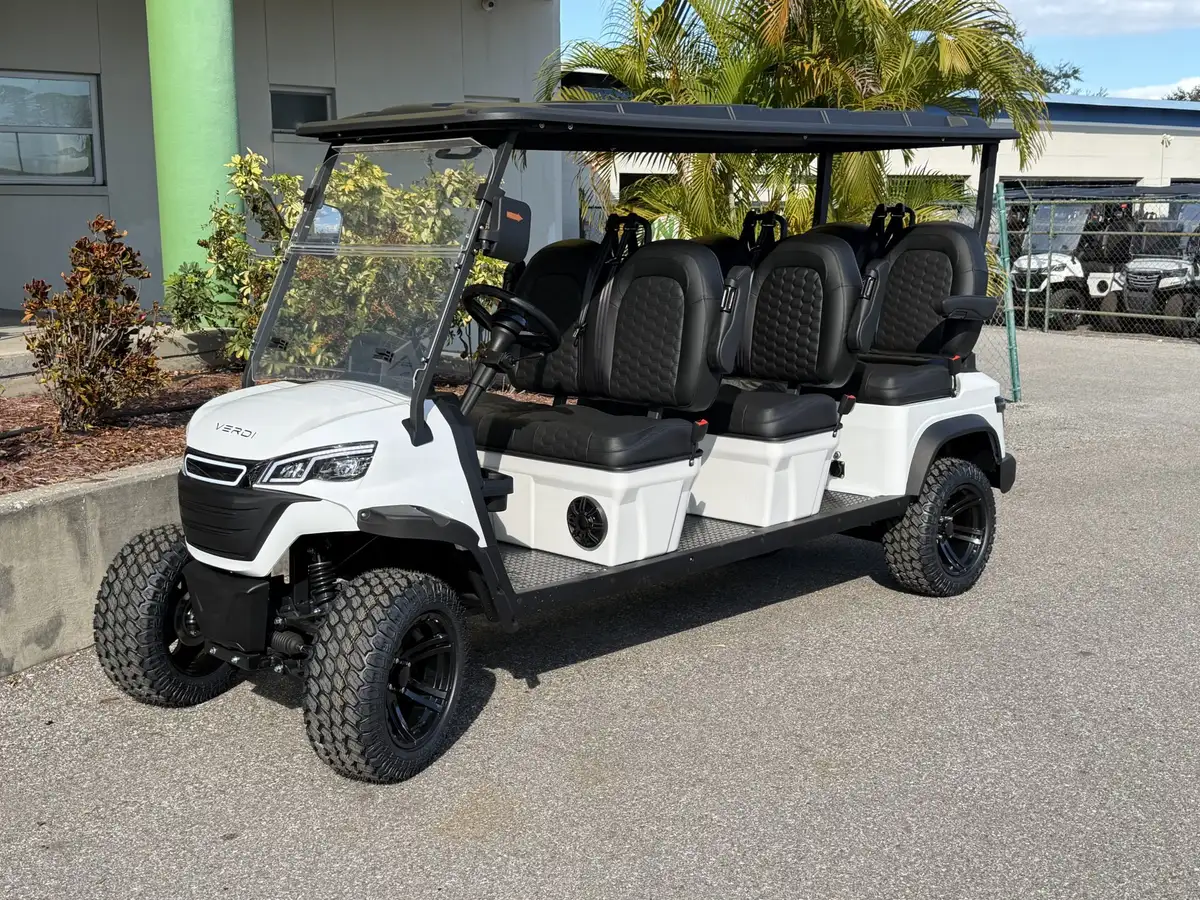
| Apollo 4+2 | 6 passengers | 72V lithium | ~50 miles | 25 mph | $14,580 |
Final pricing varies by dealer, location, and any added customization. Some dealers list the Apollo Rider slightly below the standard Apollo at $11,995 MSRP, so it's worth comparing listings directly before committing to a purchase.
Who makes DACH golf carts?
DACH assembles its carts in Orlando, Florida, which serves as the company's U.S. headquarters, R&D center, and distribution hub. The parent company is Shanghai Dachi Auto Power Co., Ltd., based in China. Frames, chassis components, and other parts are sourced internationally, with final assembly and quality control handled domestically.
This hybrid model of international sourcing with U.S. assembly is common among newer electric vehicle brands entering the golf cart market. It helps keep prices competitive while meeting domestic quality standards. However, DACH is relatively new to the U.S. market, which means long-term reliability data is still limited compared to brands like Club Car, E-Z-GO, or Yamaha.
Before buying, verify that a DACH dealer operates within a reasonable distance of your home. The dealer network is growing but still expanding, and proximity to a service location matters for warranty work and repairs.
Model-by-model breakdown
The DACH lineup covers distinct seating configurations and feature tiers. Understanding what separates each model prevents overpaying for features you don't need or underspending on a cart that won't serve your use case.
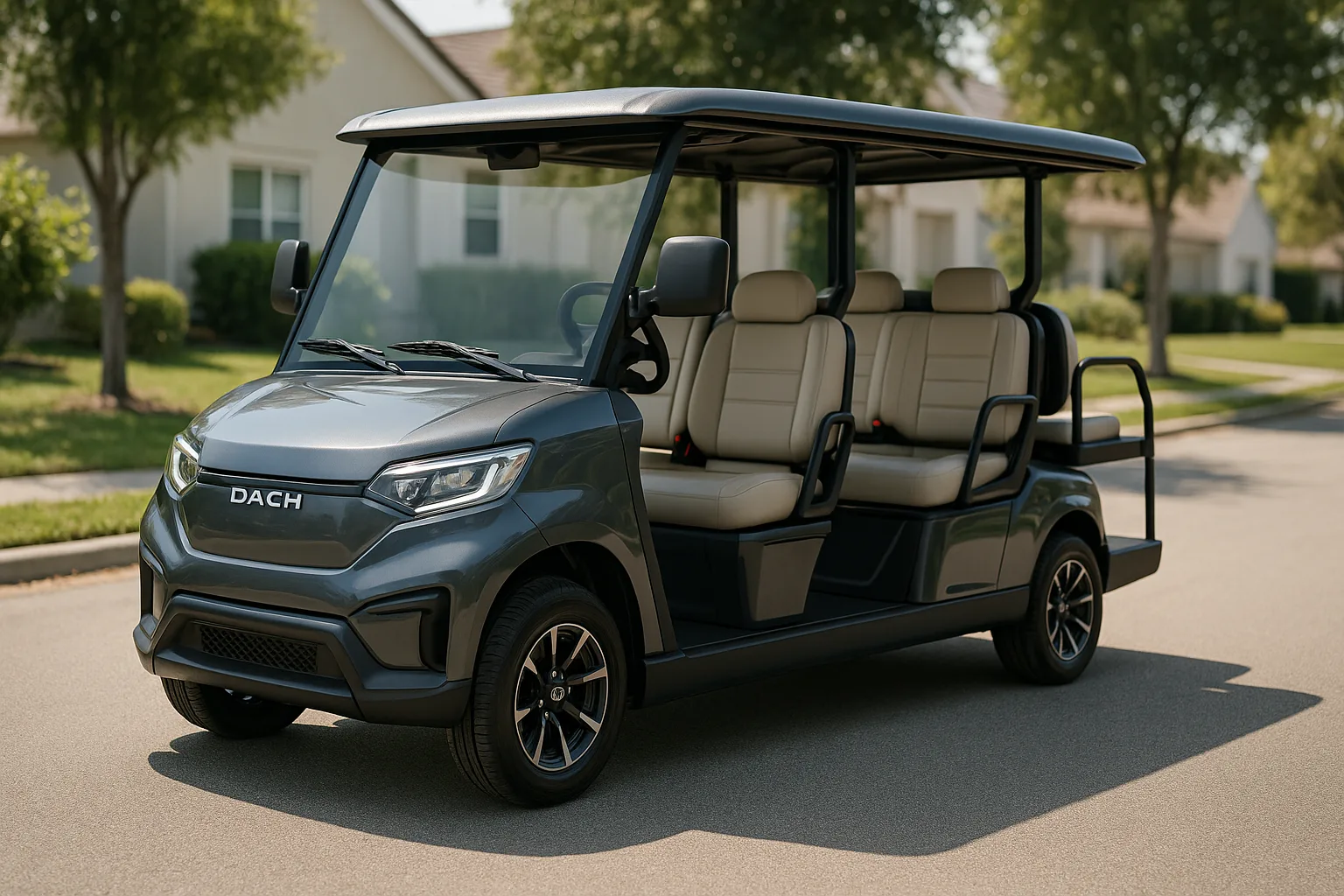
Falcon 2+2
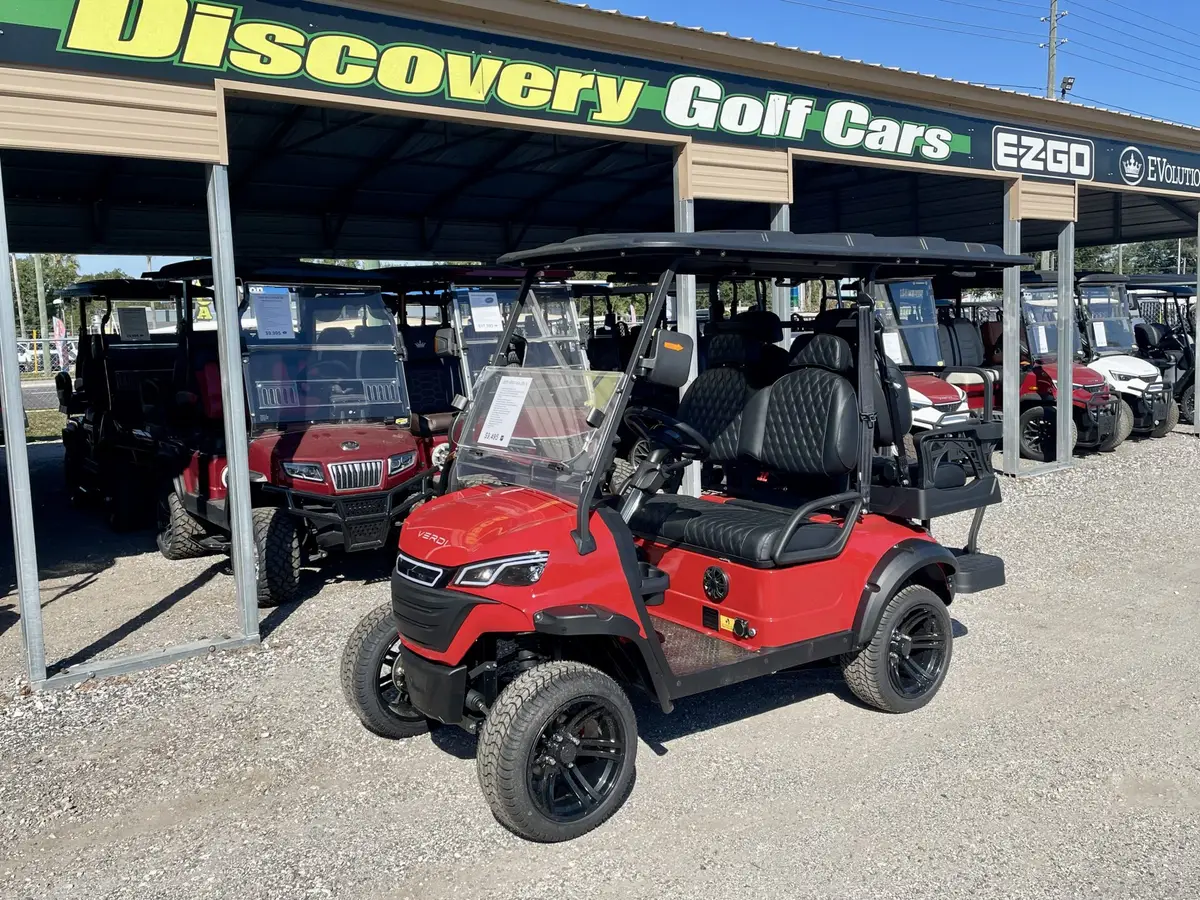
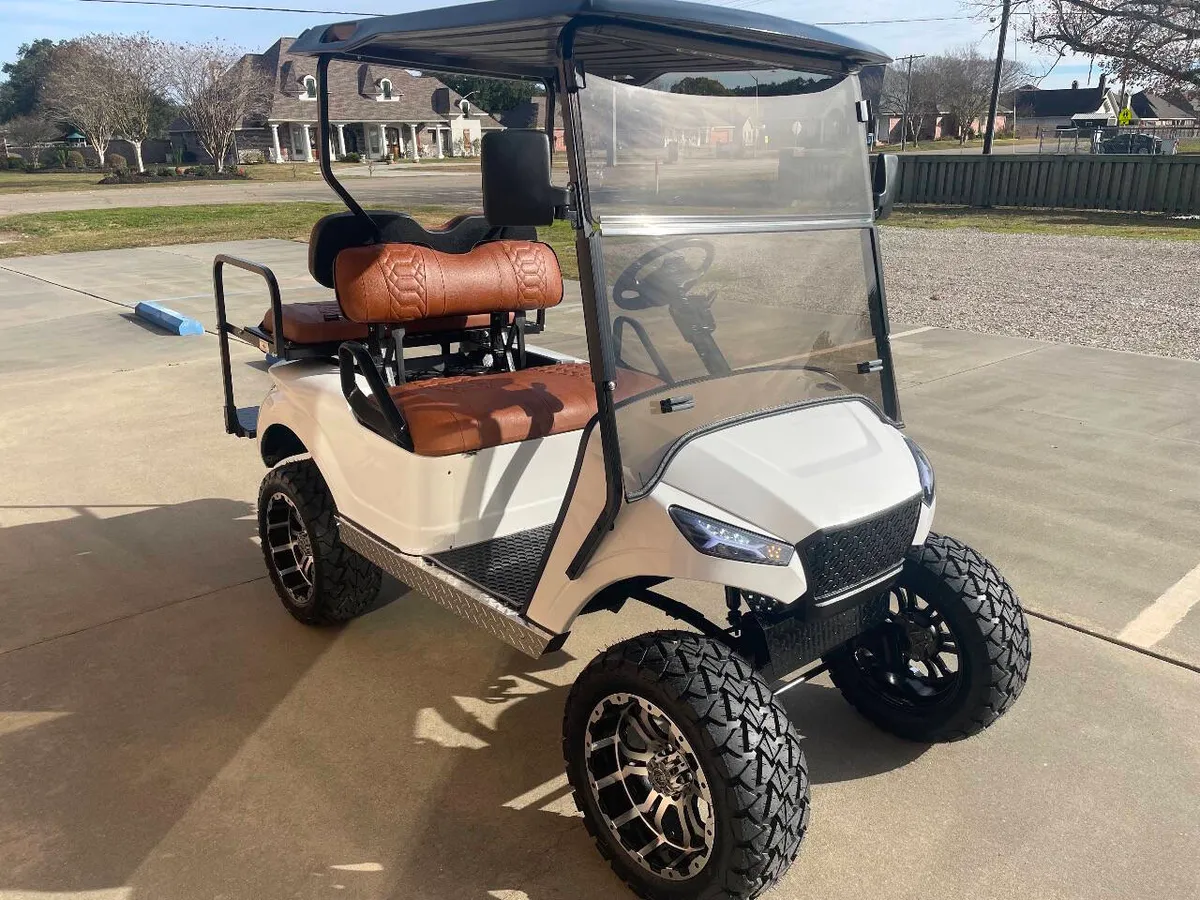
The entry-level Falcon 2+2 is priced at $9,995 and seats up to four passengers using a flip-down rear bench. It's the most affordable way into the DACH lineup and includes the full 72V lithium battery platform, a 25 mph top speed, and the brand's automotive-inspired interior features. Two-tone color combinations and a choice of black or silver wheels are available.
Falcon Ultra
At $11,880, the Falcon Ultra upgrades to a 73.8V battery and adds a solar canopy that DACH claims can extend range by up to 20%. This is the only model in the lineup with solar charging, making it a standout option for buyers in sunny climates who want to reduce how often they plug in. That said, the solar claim deserves realistic expectations: output depends heavily on sunlight conditions and how much direct exposure the canopy receives throughout the day.
Apollo and Apollo Gen2
The Apollo seats four passengers in an all-forward-facing layout, which is a meaningful comfort upgrade over a flip-down rear bench. Priced at $12,995, it shares the same 72V platform as the Falcon. The Apollo Gen2 adds V2D (vehicle-to-device) discharge capability, meaning the cart can power external devices through a 72V outlet. This is useful for job sites, camping, or running tools on a large property.
Apollo Rider
The Apollo Rider is a dealer-specific variant listed at $11,995 MSRP at Hartville Golf Carts. It runs on a 73.6V 105AH LiFePO4 battery (7.728 kWh) and features diamond-stitched upholstery and adjustable armrests. Specs include a 72V AC 6.3KW motor, a 72V 350A AC controller, and a 110V-240V 20A onboard charger. Curb weight is 1,378 to 1,420 lbs depending on configuration.
Apollo Elite
The Apollo Elite is a premium dealer-specific trim priced at $13,980. It adds upgraded materials and finishes over the standard Apollo. Buyers should ask their dealer for a full spec sheet, as the exact Elite upgrades can vary by location.
Apollo 4+2
The Apollo 4+2 is the most expensive model at $14,580 and seats six passengers. It extends the Apollo platform to accommodate families, larger groups, or community and resort use. All core powertrain specs remain consistent with the rest of the Apollo lineup.
Key features worth comparing
DACH differentiates itself from competitors through a combination of automotive-grade technology and a monocoque frame construction that integrates the body and chassis into a single unit. Here's what matters most when evaluating the feature set.
| Feature | Detail |
|---|---|
| Touchscreen | 12.3-inch anti-glare display |
| Smartphone integration | Apple CarPlay and Android Auto |
| Camera | Reverse camera standard |
| Audio | Built-in roof soundbar, Bluetooth dashboard |
| Convenience | Wireless phone charger, cruise control |
| Lighting | Ambient LED throughout cabin |
| Steering wheel | Multifunction with audio controls |
| Frame construction | Monocoque (body and frame integrated) |
| Corrosion resistance | Electroplated and powder-coated chassis |
| Solar option | Available on Falcon Ultra only |
The 12.3-inch touchscreen with CarPlay and Android Auto is a genuine differentiator in this price range. Most golf carts, even premium ones, don't offer smartphone mirroring as standard. The monocoque frame construction also improves structural rigidity and reduces the number of joints that can loosen over time.
Monocoque construction means the body and frame are built as one unit, rather than a body bolted onto a separate frame. This is the same approach used in modern passenger cars and generally results in a stiffer, quieter ride.
DACH vs. TEKO: head-to-head comparison
TEKO is the most frequently cross-shopped competitor to DACH among buyers considering newer electric cart brands. DACH holds clear advantages in speed, technology, and range, while TEKO's main draw is a lower entry price.
| Spec | DACH (Apollo) | TEKO |
|---|---|---|
| Entry price | $9,995 | ~$8,495 |
| Battery | 72V LiFePO4 | 51.2V LiFePO4 |
| Range | ~50 miles | ~40 miles |
| Top speed | 25 mph | 19 mph |
| Touchscreen size | 12.3 inches | 10.1 inches |
| Solar canopy option | Yes (Falcon Ultra) | No |
| V2D discharge | Yes (Apollo Gen2) | No |
The 25 mph top speed on DACH carts is significant for buyers in neighborhoods or communities where a faster cart is practical or required to keep up with traffic. TEKO's 19 mph cap limits its usability on certain roads and paths. If speed, range, and tech features matter more than upfront price, DACH is the stronger choice at this tier.
Charging and real-world range
DACH carts use a 110V-240V 20A onboard charger, meaning you can plug into a standard household outlet or a dedicated 240V circuit. Charging from a standard 110V outlet will be slower, typically overnight or longer from empty. A dedicated 240V circuit will cut that time significantly and is worth considering if you plan to charge daily.
The claimed 50-mile range is based on a 7.728 kWh battery pack (on the Apollo Rider). Real-world range depends on terrain, passenger load, speed, and climate. Hilly neighborhoods or frequent full-speed driving will reduce range noticeably. The Falcon Ultra's solar canopy claims up to a 20% range boost, but actual output depends on how much direct sunlight the canopy receives. Expect meaningful benefit on full, sunny days and minimal benefit on overcast ones.
If you're a first-time electric golf cart owner, consider having a licensed electrician install a dedicated 240V 20A outlet in your garage. It's a modest investment that makes daily charging faster and more reliable.
Street-legal and LSV considerations
At 25 mph, DACH carts sit at or above the low-speed vehicle (LSV) threshold in many U.S. states. LSVs are federally defined as electric vehicles with a top speed of 20 to 25 mph and can legally operate on roads posted at 35 mph or below, provided they meet safety equipment requirements.
Whether your DACH cart qualifies as street-legal depends on your state and local municipality. Requirements typically include:
- Headlights, taillights, and turn signals
- Mirrors (side and rearview)
- Seat belts for all passengers
- A vehicle identification number (VIN) and registration
- Proof of insurance in some states
Before purchasing, ask your dealer whether the specific model is DOT-compliant and what's required in your state for road use. This is especially important for buyers in planned communities, beach towns, or retirement neighborhoods where cart use on public roads is common.
Dealer network, financing, and warranty
DACH has over 150 dealer locations across most U.S. regions, with Botero Carts operating in more than 20 locations nationally and offering nationwide shipping. Hartville Golf Carts is another active dealer with detailed listings and financing options.
| Purchasing option | Detail |
|---|---|
| Dealer purchase | Available at 150+ locations across the U.S. |
| Financing | Available through Botero Carts, Hartville, and other dealers |
| Rent-to-own | Available through select dealers |
| Warranty | Manufacturer warranty included; terms vary by model and dealer |
| Nationwide shipping | Available through Botero Carts |
Financing terms and monthly payment estimates vary by dealer and your credit profile. For a cart priced between $10,000 and $15,000, ask your dealer for the APR, loan term options, and any required down payment before signing. Rent-to-own arrangements are worth exploring if you want to assess the cart before committing to a full purchase.
Warranty terms are not standardized across the lineup. Ask specifically what's covered (battery, motor, frame, electronics), how long coverage lasts, and which service center handles warranty claims in your area. Proximity to a service-capable dealer matters more with DACH than with legacy brands that have established national service infrastructure.
DACH's dealer network is growing but not as deeply established as Club Car, E-Z-GO, or Yamaha. Before buying, confirm that a service location can handle warranty repairs within a reasonable distance from your home.
Which DACH model fits your situation
Choosing the right DACH cart comes down to seating needs, where you'll use it, and which features justify the price step-up. The table below matches common buyer situations to the most appropriate model.
| Buyer situation | Recommended model | Starting price |
|---|---|---|
| Solo or couple, budget-conscious | Falcon 2+2 | $9,995 |
| Sunny climate, want reduced charging frequency | Falcon Ultra | $11,880 |
| Family of four, all forward-facing seating | Apollo / Apollo Rider | $11,995 – $12,995 |
| Outdoor work, tools, or job site use | Apollo Gen2 (V2D discharge) | $12,995 |
| Premium finishes and dealer-specific upgrades | Apollo Elite | $13,980 |
| Large family, resort, or community transport | Apollo 4+2 | $14,580 |
| Coastal or humid environment | Any model (powder-coated chassis standard) | $9,995+ |
The Apollo Gen2's V2D capability is worth highlighting for buyers who use their cart on large properties or worksites. The cart can output power to external devices through a 72V outlet, functioning like a mobile power station. It's a practical feature that most competitors, including TEKO, don't offer at any price point.
Frequently asked questions
How fast do DACH golf carts go?
All DACH models top out at 25 mph. This places them at the upper boundary of the low-speed vehicle category and makes them faster than many competing brands, including TEKO at 19 mph.
How far can a DACH golf cart travel on one charge?
DACH claims approximately 50 miles of range on a full charge across most models. The Falcon Ultra's solar canopy can extend that by up to 20% under ideal sunlight conditions. Real-world range will be lower on hilly terrain or at consistent top speed.
Where are DACH golf carts made?
Final assembly and quality control take place in Orlando, Florida. Components including frames and chassis are sourced from the parent company, Shanghai Dachi Auto Power Co., Ltd., based in China.
What is the difference between the Apollo and the Apollo 4+2?
The Apollo seats four passengers in a forward-facing layout. The Apollo 4+2 adds a rear-facing bench that accommodates two additional passengers, bringing total capacity to six. The 4+2 costs $1,585 more than the base Apollo.
What does V2D mean on the Apollo Gen2?
V2D stands for vehicle-to-device. The Apollo Gen2 includes a 72V outlet that allows the cart to discharge power to external devices such as power tools, electronics, or small appliances, effectively turning the cart into a mobile power station.
Can I finance a DACH golf cart?
Yes. Financing is available through multiple dealers including Botero Carts and Hartville Golf Carts. Rent-to-own options are also offered through select dealers. Ask for the APR, term length, and any down payment requirements before signing.
Are DACH golf carts street legal?
At 25 mph, DACH carts may qualify as low-speed vehicles (LSVs) in many states, which can allow road use on streets posted at 35 mph or below. Street-legal status depends on local regulations and whether the cart meets required safety equipment standards. Confirm requirements with your state DMV and dealer before purchasing for road use.
How long does it take to charge a DACH golf cart?
Charge time depends on your power source. The onboard charger supports 110V-240V at 20A. A standard 110V household outlet will require more time, typically overnight from a low charge. A dedicated 240V circuit cuts charge time considerably and is recommended for daily drivers.
Is the solar canopy on the Falcon Ultra worth it?
The solar canopy is exclusive to the Falcon Ultra and adds approximately $1,885 over the base Falcon price. Whether it's worth it depends on your climate and usage pattern. Buyers in consistently sunny regions who park outdoors will see the most benefit, while buyers in cloudy climates or who park in garages will see minimal return on that investment.