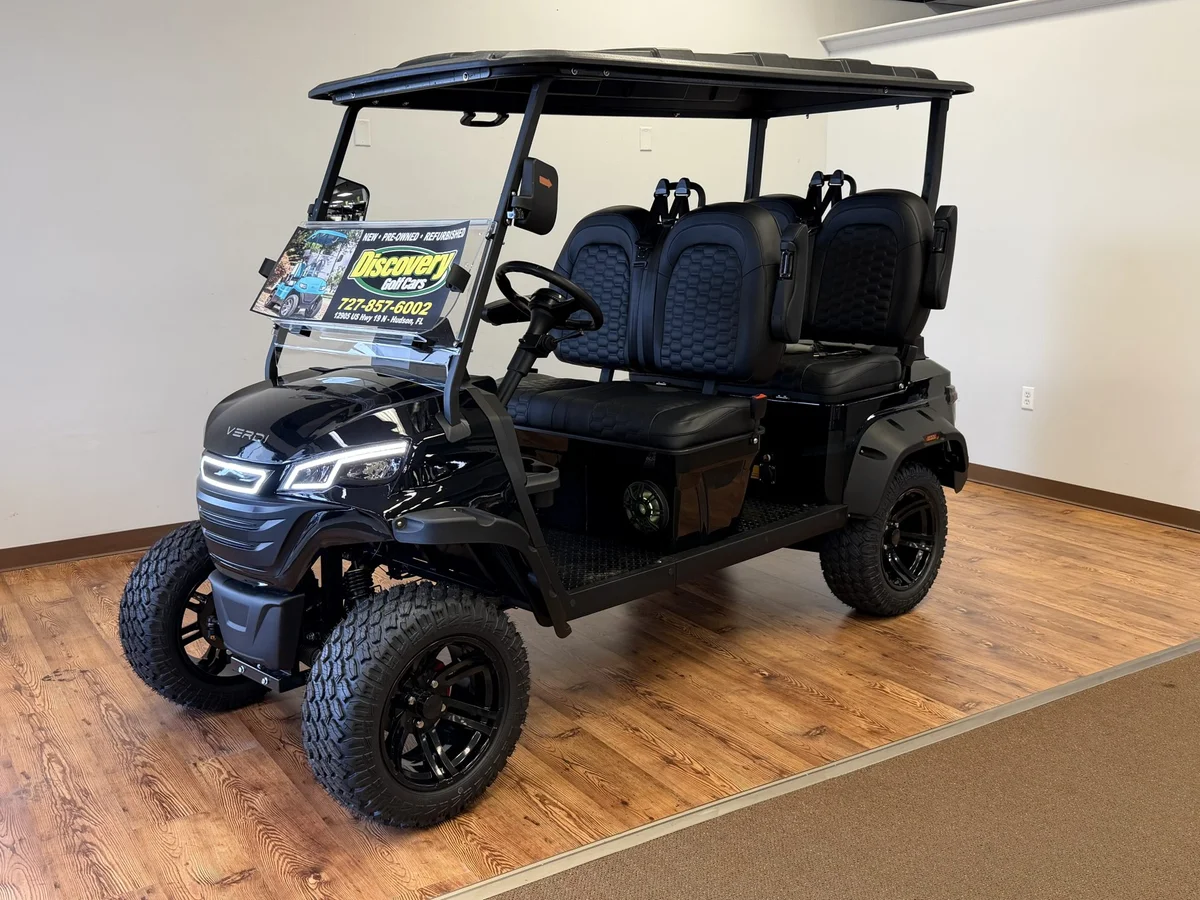
Your first 30 days as a golf cart owner
Owning a golf cart is straightforward once you know what to watch for. Most problems that sideline carts early, such as dead batteries, worn brakes, and flat tires, come down to skipped maintenance rather than bad luck. This checklist gives you a clear, time-based schedule so you always know what to do and when to do it, whether you're driving a gas cart or an electric one.
Start here if your cart is brand new or new to you. These first-month tasks build the foundation for everything else.
- Read your owner's manual cover to cover, especially the maintenance intervals section
- Identify your cart type: electric (battery-powered) or gas (combustion engine)
- If electric, identify your battery type: lead-acid or lithium
- Check tire pressure and inflate to the manufacturer's recommended PSI
- Inspect battery terminals for corrosion (electric carts)
- Check oil level and condition (gas carts)
- Test all lights, signals, and safety features
- Charge the battery fully before first use (electric carts)
- Note any existing wear, damage, or unusual sounds before driving
- Set up a simple maintenance log; a notebook or phone app works fine
Keep a maintenance log from day one. Record every service date, what was checked, what was replaced, and any unusual findings. This record is invaluable when diagnosing problems and adds resale value when you sell.
What you'll need: basic tools and supplies
Before getting into the schedule, make sure you have these items on hand. Most are inexpensive and available at any auto or hardware store.
| Item | Used for | Notes |
|---|---|---|
| Tire pressure gauge | Weekly tire checks | Digital or analog both work |
| Distilled water | Lead-acid battery top-off | Never use tap water |
| Baking soda | Cleaning battery terminals | Mix with water to neutralize corrosion |
| Dielectric grease | Protecting electrical connections | Prevents corrosion and moisture damage |
| Battery hydrometer | Testing lead-acid battery health | Not needed for lithium batteries |
| Correct engine oil | Gas cart oil changes | Check owner's manual for grade and viscosity |
| Wrench and socket set | Tightening connections and bolts | A basic set covers most tasks |
| Mild car wash soap | Body cleaning | Avoid ammonia-based cleaners on windshields |
| Automotive wax | Protecting paint and body | Apply a few times per year |
| Grease gun with lubricant | Steering and suspension fittings | Check owner's manual for grease type |
The golf cart maintenance schedule
This time-based schedule covers both electric and gas carts. Use it as your master reference throughout the year. Tasks marked E apply to electric carts, G to gas carts, and unmarked tasks apply to both.
Daily and after every ride
| Task | Cart type | Notes |
|---|---|---|
| Plug in and charge the battery | E | Charge after every use; never let it fully deplete |
| Listen for unusual sounds while driving | Both | Squeaking, grinding, or rattling are early warning signs |
| Do a quick visual inspection before driving | Both | Check for flat tires, loose parts, or fluid spots on the ground |
Weekly
| Task | Cart type | Notes |
|---|---|---|
| Check tire pressure | Both | Inflate to manufacturer-recommended PSI |
| Inspect tires for visible wear or damage | Both | Look for cracks, bulges, or uneven wear patterns |
| Inspect battery terminals for corrosion | E | White or blue buildup means corrosion is starting |
| Check for fluid spots under the cart | G | Oil spots on the ground indicate a leak |
| Test lights and safety features | Both | Especially important on street-legal carts |
Monthly
| Task | Cart type | Notes |
|---|---|---|
| Check battery water levels | E (lead-acid only) | Fill with distilled water to 1/2 inch above lead plates |
| Clean battery terminals | E | Use a baking soda and water solution; apply dielectric grease after |
| Inspect brake pads for wear | Both | Replace if worn thin or squeaking during stops |
| Inspect all wiring for fraying or loose connections | Both | Pay attention to connections near the battery and motor |
| Check oil level | G | Top off if low; look for discoloration as a sign of contamination |
| Wash and wax the body | Both | Use mild soap and water; avoid harsh chemicals |
Every 6 months
| Task | Cart type | Notes |
|---|---|---|
| Rotate tires | Both | Distributes wear and extends tire life |
| Lubricate steering and suspension components | Both | Use grease compatible with your cart; consult owner's manual |
| Inspect brake cables, drums, and fluid | Both | Look for fraying cables and low fluid levels |
| Check wheel alignment | Both | Inspect if the cart pulls to one side or tires wear unevenly |
| Inspect and clean air filter | G | Replace if dirty or clogged |
| Check fuel system for leaks or blockages | G | Inspect fuel lines and connections visually |
| Test battery charger functionality | E | A faulty charger can damage batteries silently |
Annually
| Task | Cart type | Notes |
|---|---|---|
| Change engine oil and oil filter | G | Every 100 hours of use or once per year, whichever comes first |
| Replace fuel filter | G | Annual replacement is standard practice |
| Inspect and replace spark plugs | G | Worn plugs reduce performance and fuel efficiency |
| Full brake system inspection | Both | Include pads, drums, cables, and fluid |
| Full electrical system inspection | Both | Check fuses, wiring, connections, and controller |
| Professional service inspection | Both | Catches issues a visual check will miss |
| Assess battery health | E | Use a hydrometer (lead-acid) or consult a technician; replace the pack if performance drops |
| Inspect seat belts, mirrors, and grab bars | Both | Critical for street-legal carts |
Battery maintenance: electric carts
The battery is the most important and most expensive component on an electric golf cart. How you maintain it directly determines how long it lasts and how well your cart performs. Understanding your options is key — our guide to golf cart batteries, types, care, and replacement covers the full picture in detail.
| Battery type | Typical lifespan | Maintenance level | Estimated replacement cost |
|---|---|---|---|
| Lead-acid (flooded) | Up to 5 years | High — regular watering and cleaning required | $800 – $1,500 per pack |
| Lithium | 8 – 12 years | Low — mostly charging and connection checks | $1,500 – $3,000+ per pack |
Lead-acid batteries require the most hands-on care. Check water levels monthly and top off with distilled water only, filling to about 1/2 inch above the lead plates. Never use tap water, as minerals in tap water damage the cells over time.
Lithium batteries are largely maintenance-free. They still need regular charging and clean connections, but there is no watering, no hydrometer testing, and no risk of acid spills. Their longer lifespan and lower ongoing maintenance often offset the higher upfront cost.
Never mix old and new batteries in the same pack. If one battery in your set fails, replace the entire pack. Mixing batteries of different ages causes uneven charging and dramatically shortens the life of the new batteries.
Engine and fuel system: gas carts
Gas carts follow a maintenance rhythm similar to a small lawn tractor or utility vehicle. The most important interval to track is engine hours, since time-based intervals can be misleading if you use your cart heavily or infrequently.
| Task | Interval | Estimated cost (DIY) |
|---|---|---|
| Oil and filter change | Annually or every 100 hours | $20 – $50 |
| Air filter replacement | Every 6 – 12 months | $10 – $25 |
| Fuel filter replacement | Annually | $10 – $20 |
| Spark plug replacement | Annually | $5 – $20 |
When changing oil, drain it while the engine is warm. Warm oil flows more freely and carries more contaminants out with it, giving you a cleaner result than draining a cold engine. Always use the oil type and grade specified in your owner's manual.
Tires and brakes
These two systems directly affect safety and should never be deferred. Tire and brake maintenance is among the easiest to DIY and among the most consequential to skip.
Tire care
| Task | Frequency | Estimated cost |
|---|---|---|
| Tire pressure check | Weekly | Free |
| Visual inspection for wear or damage | Weekly | Free |
| Tire rotation | Every 6 months | Free (DIY) |
| Tire replacement (per tire) | As needed | $30 – $80 per tire |
Uneven tire wear is usually a sign of alignment problems rather than normal use. If you notice one tire wearing faster than the others, check alignment before replacing the tire. Putting a new tire on a misaligned cart will simply repeat the problem.
Brake care
| Task | Frequency | Estimated cost |
|---|---|---|
| Brake pad inspection | Every 2 – 3 months | Free |
| Full brake system inspection | Annually | $50 – $100 (professional) |
| Brake pad replacement | As needed | $40 – $100 per axle |
Squeaking when you brake usually means worn pads. Grinding sounds indicate metal-on-metal contact, which is more serious and can damage drums or rotors. Don't wait for grinding; replace pads at the first sign of consistent squealing.
Seasonal care
Golf carts stored for winter or used heavily in summer heat need specific attention at each seasonal transition. Skipping seasonal prep is one of the most common reasons carts underperform at the start of a new season.
Winterizing (before storage)
- Charge the battery fully before putting the cart away
- For lead-acid batteries, disconnect and use a trickle charger, or check the charge monthly during storage
- Fill the gas tank and add fuel stabilizer to prevent varnish buildup (gas carts)
- Inflate tires slightly above normal to prevent flat spots during prolonged storage
- Clean the entire cart thoroughly before storing to prevent rust and surface damage
- Store in a covered, dry location out of direct weather
- Cover the cart to keep out dust, insects, and moisture
Spring startup (before the season begins)
- Check tire pressure and inflate to the correct PSI
- Inspect and charge the battery; test it under load before relying on it
- Check oil level and quality (gas carts); change if due
- Inspect all brake components after the off-season
- Test all lights, signals, and safety features
- Lubricate steering and suspension components
- Run the cart at low speed briefly and listen for any new sounds before normal use
Summer heat accelerates battery fluid loss in lead-acid batteries. Check water levels more frequently during hot months, every two to three weeks instead of monthly, to prevent cells from drying out.
Warning signs and what they mean
Preventive maintenance catches most problems before they become expensive. When something does go wrong between scheduled checkups, these symptoms can help you identify the likely cause quickly.
| Symptom | Likely cause | What to do |
|---|---|---|
| Cart pulls to one side | Wheel misalignment or uneven tire pressure | Check pressure first; have alignment inspected if the issue persists |
| Squeaking brakes | Worn brake pads | Inspect pads and replace if thin |
| Grinding brakes | Metal-on-metal contact; pads fully worn | Stop driving and replace pads immediately |
| Battery not holding charge | Aging or sulfated lead-acid cells | Test battery health; replace pack if more than 4 – 5 years old |
| Reduced range or sluggish performance | Weak battery pack or corroded connections | Clean terminals; test battery; check charger functionality |
| Oil spots on the ground | Engine oil leak (gas carts) | Identify the source and repair before continuing use |
| Engine runs rough or misfires | Worn spark plugs or clogged air/fuel filter | Inspect and replace plugs and filters |
| Lights not working | Blown fuse or faulty connection | Check and replace fuses; inspect wiring connections |
| Uneven tire wear | Misalignment or improper inflation | Check pressure and have alignment inspected |
| Steering feels stiff or loose | Dry steering components or worn rack and pinion | Lubricate steering assembly; inspect for wear |
Estimated maintenance costs
Here is a realistic breakdown of what routine golf cart maintenance actually costs, so you can budget appropriately from day one. If you're still evaluating which type of cart to buy, our golf cart buying guide covers prices, value, and what to inspect before purchasing.
| Maintenance task | Cart type | Estimated cost |
|---|---|---|
| Annual professional service inspection | Both | $100 – $200 |
| Oil change (parts and labor) | Gas | $40 – $80 |
| Air filter replacement | Gas | $10 – $25 |
| Spark plug replacement | Gas | $5 – $20 |
| Fuel filter replacement | Gas | $10 – $20 |
| Tire replacement (per tire) | Both | $30 – $80 |
| Brake pad replacement (per axle) | Both | $40 – $100 |
| Lead-acid battery pack replacement | Electric | $800 – $1,500 |
| Lithium battery pack replacement | Electric | $1,500 – $3,000+ |
| Wheel alignment | Both | $50 – $150 |
Annual upkeep on a well-maintained electric cart with lead-acid batteries runs roughly $200 to $400 per year under normal conditions, excluding battery replacement. Gas carts typically cost $150 to $350 per year for consumables like oil, filters, and spark plugs, plus professional service. Major expenses like battery pack replacement are infrequent but significant, so it pays to budget for them in advance.
When to call a professional
Most routine maintenance tasks are genuinely DIY-friendly, but some work requires a trained technician. Attempting certain repairs without the right knowledge or tools can make problems worse and create safety risks.
Handle these yourself:
- Battery watering and terminal cleaning
- Tire pressure checks and inflation
- Routine washing and waxing
- Oil level checks and top-offs
- Replacing fuses
- Visual inspections of brakes, wiring, and tires
Leave these to a professional:
- Motor or controller diagnostics and repair
- Wheel alignment
- Full brake system rebuild
- Electrical system faults beyond fuse replacement
- Battery pack replacement (especially lithium)
- Fuel system repairs on gas carts
- Annual comprehensive inspection
Schedule at least one professional inspection per year, even if your cart feels fine. Technicians can spot developing issues inside the motor, controller, and drivetrain that aren't visible from the outside. Catching these problems early is almost always cheaper than repairing the damage caused by ignoring them.
Frequently asked questions
How often should I charge my golf cart battery?
Charge after every use, regardless of how much battery you used. Letting a lead-acid battery sit in a partially discharged state accelerates plate sulfation and shortens its lifespan significantly. Lithium batteries are more forgiving but still benefit from regular charging.
What kind of water do I add to golf cart batteries?
Distilled water only. Tap water contains minerals that deposit on the battery plates over time, reducing capacity and eventually causing cell failure. Fill to approximately 1/2 inch above the lead plates, but no higher.
Should I replace just one battery or the whole pack?
Replace the entire pack at once. Mixing one new battery with a set of older ones causes the new battery to work harder, overcharge, and fail prematurely. It's a false economy; you'll end up replacing batteries twice instead of once.
How do I know if my wheels are misaligned?
The most common signs are the cart drifting or pulling to one side while driving on a flat surface, or noticing that one or two tires are wearing faster than the others. Both issues point to alignment problems and warrant a professional check.
How long do golf cart batteries last?
Lead-acid batteries typically last up to 5 years with proper maintenance. Lithium batteries last 8 to 12 years and require much less upkeep. How long either type actually lasts depends heavily on how consistently you charge, water (for lead-acid), and care for them.
When should I get a professional service?
At minimum, once per year. More frequent professional visits make sense if you use your cart daily, notice performance changes, or hear sounds you cannot diagnose yourself. An annual inspection typically costs $100 to $200 and pays for itself by catching problems early.