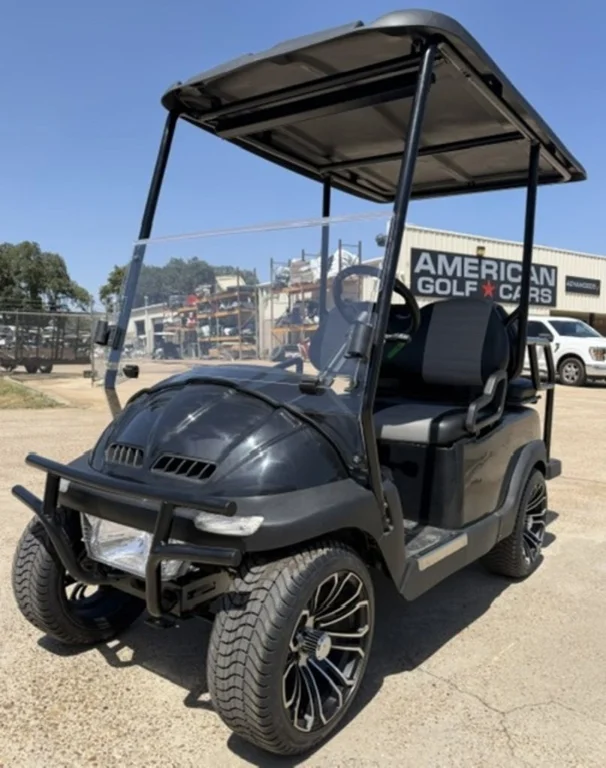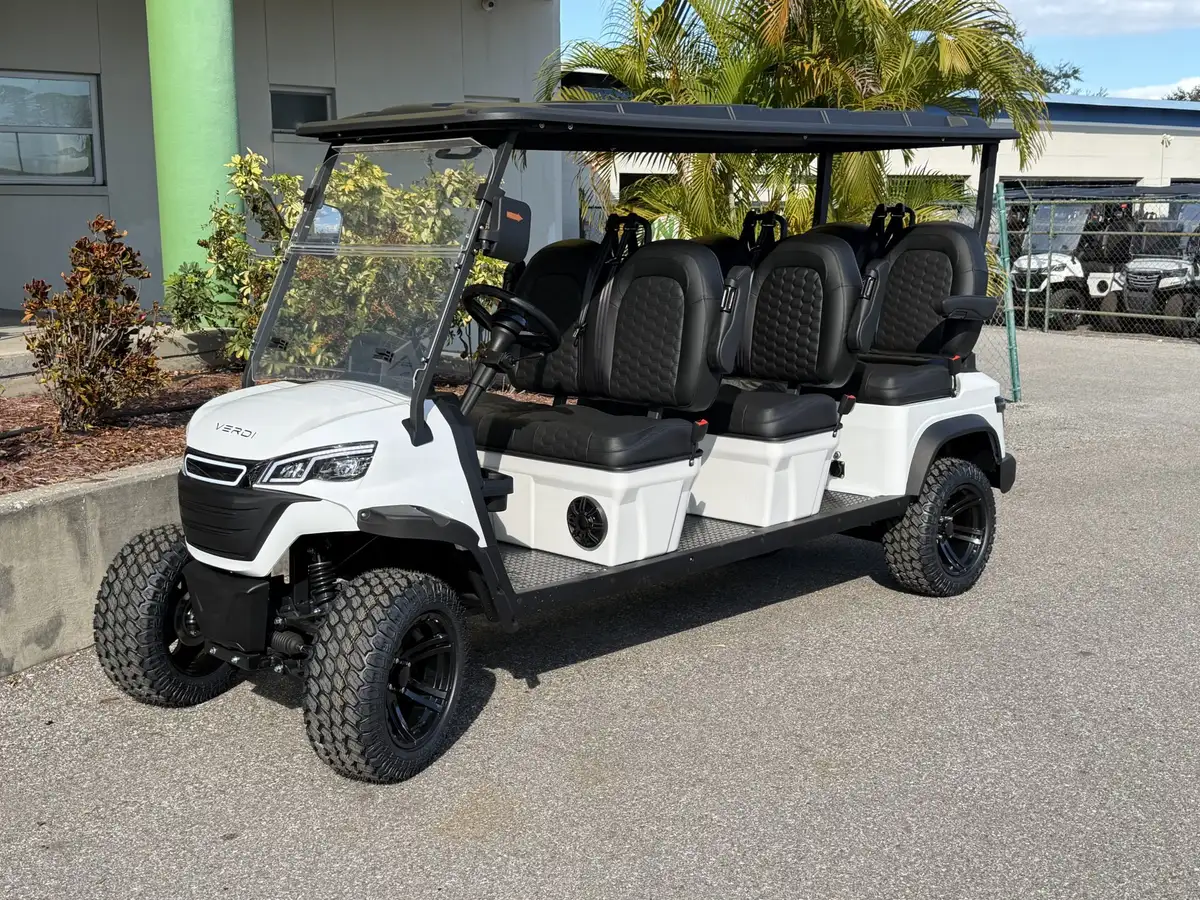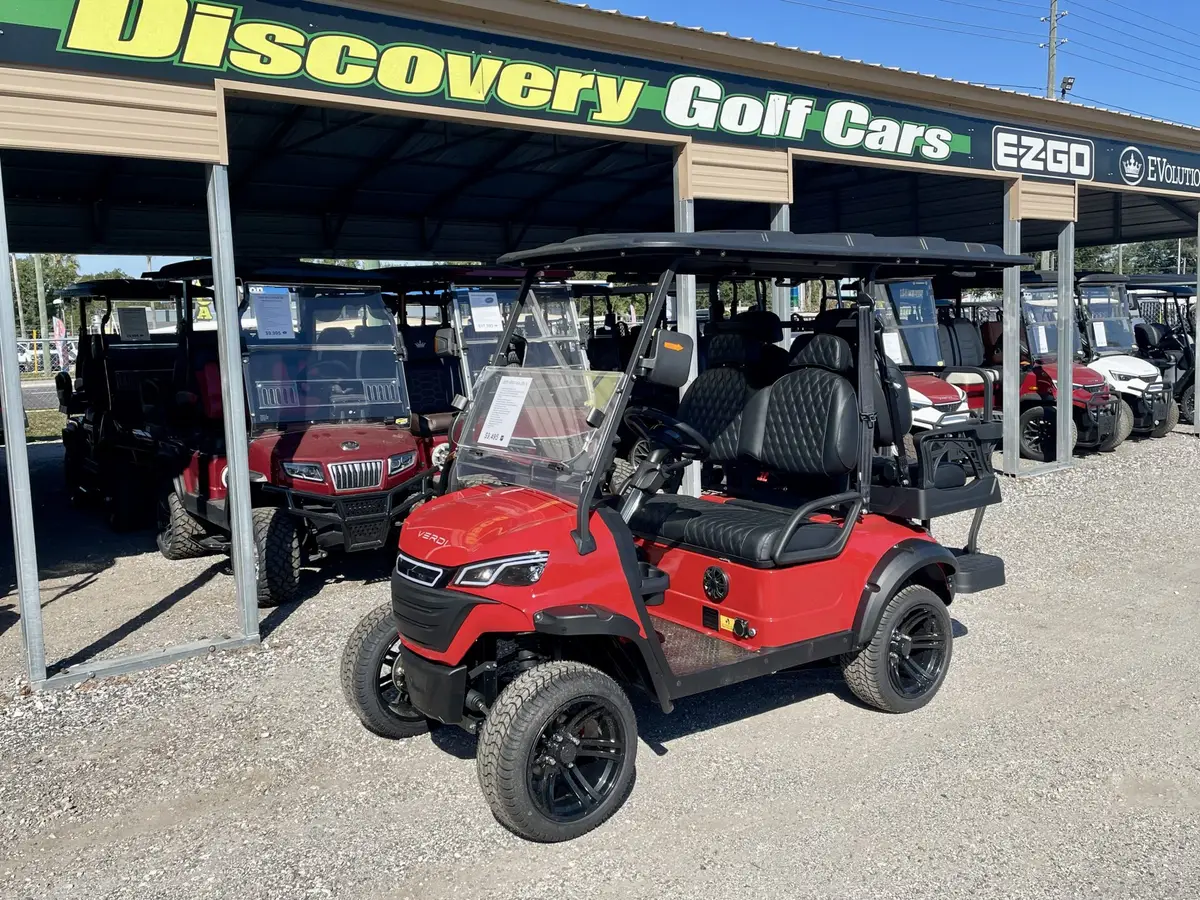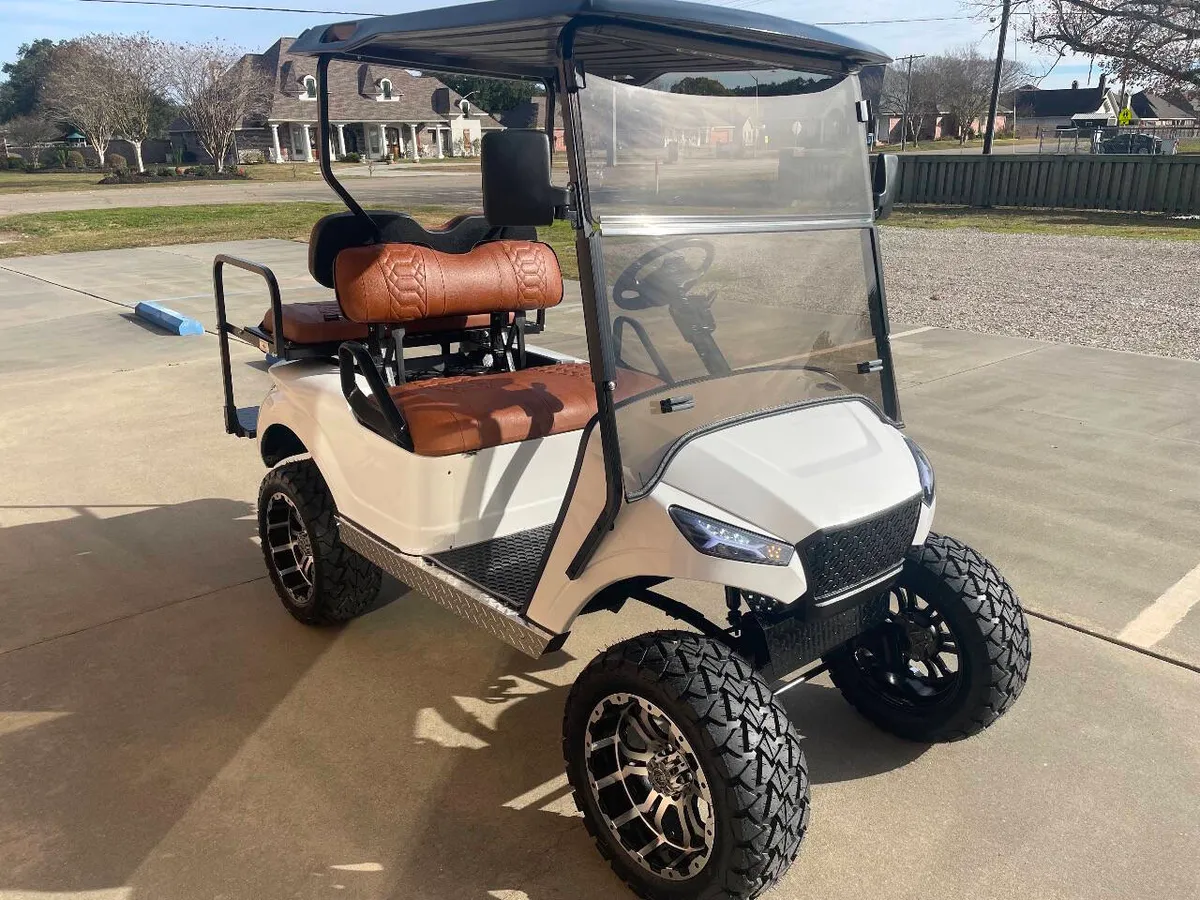
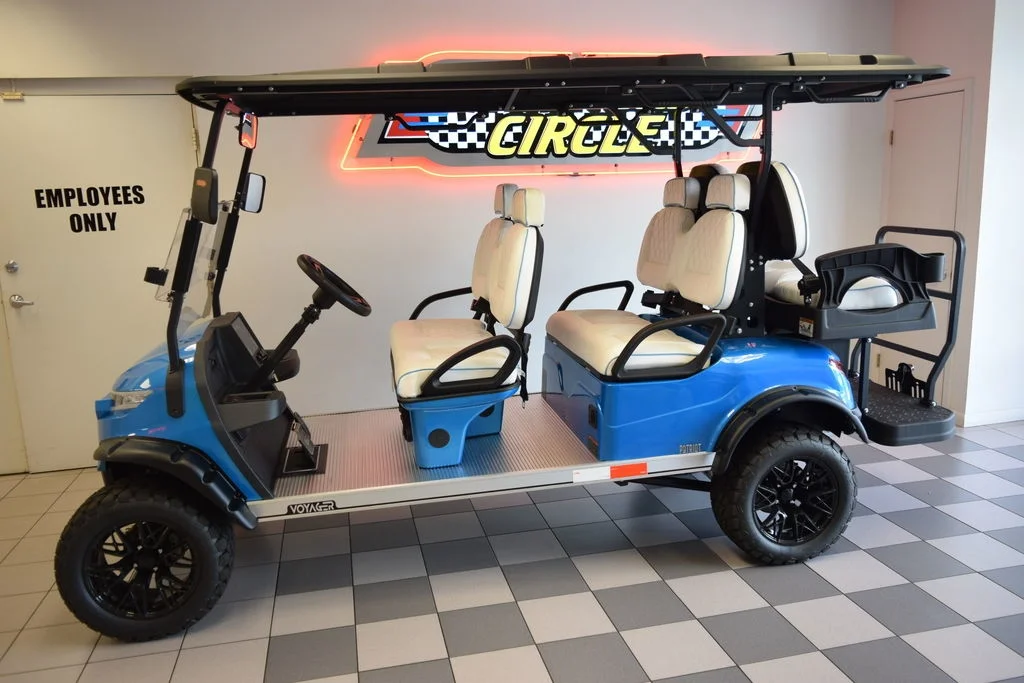
Gas vs. electric golf carts at a glance
Neither gas nor electric golf carts are universally better. The right choice depends on where you drive, how far, and how often. Electric carts win on operating cost, noise, and low maintenance. Gas carts win on raw range and refueling speed. Lithium battery technology has significantly closed the gap between the two in recent years, making electric a stronger choice than it was even five years ago.
| Factor | Gas | Electric |
|---|---|---|
| Purchase price (entry-level) | $4,000 – $8,000 | $4,000 – $8,000 |
| Operating cost per mile | $0.10 – $0.15 | $0.02 – $0.04 |
| Annual maintenance | $200 – $500 | $50 – $150 |
| Range per charge or tank | 100 – 120 miles | 15 – 60 miles (varies by battery) |
| Refuel or recharge time | 2 – 3 minutes | 4 – 8 hours |
| Top speed | 18 – 20 mph | 20 – 25 mph |
| Engine or motor lifespan | 20 – 30 years | 20 – 30 years (motor); batteries replaced separately |
| Noise level | Moderate to loud | Near-silent |
| Environmental impact | Emissions present | Zero direct emissions |
Purchase price comparison
Gas and electric golf carts are priced comparably at every tier. Entry-level models for both types start at $4,000 to $8,000. Mid-range models run $8,000 to $12,000, and premium or luxury builds reach $20,000 and above. For a deeper look at what drives pricing across brands and configurations, see our guide on how much a golf cart costs.
For reference, the 2026 EZGO Valor is available in both gas and electric versions starting at $8,374. The EZGO Liberty LSV, an electric-only street-legal model, starts at $15,799. Yamaha's lineup spans $9,481 to $20,995 depending on configuration.
One important nuance: if you buy an electric cart and want lithium batteries instead of standard lead-acid, expect to add $2,500 to $3,500 to the sticker price. That premium is often worth it, but it shifts the upfront cost calculation meaningfully.
| Price tier | Typical price range | Example models |
|---|---|---|
| Entry-level | $4,000 – $8,000 | Basic 2-seat gas or electric |
| Mid-range | $8,000 – $12,000 | EZGO Valor, Yamaha base models |
| Premium/luxury | $20,000+ | EZGO Liberty LSV, Yamaha top configs |
| Lithium upgrade (add-on) | $2,500 – $3,500 | EZGO, Club Car factory lithium option |
Operating costs and 5-year total cost of ownership
Electric carts are significantly cheaper to operate. At $0.02 to $0.04 per mile, electric running costs are a fraction of gas, which runs $0.10 to $0.15 per mile based on $3.00 to $4.00 per gallon and roughly 30 miles per gallon. A full charge on a 48V lithium system costs approximately $0.50 to $1.00.
At 5,000 miles per year, that translates to an annual fuel saving of $400 to $550 by going electric. Over five years, the operating cost gap grows large enough to offset much of any upfront price difference.
The table below models a 5-year total cost of ownership using the following assumptions: 5,000 miles per year, $3.50 per gallon for gas, $0.13 per kWh for electricity, one lead-acid battery replacement at year 3, and one lithium battery pack lasting the full period.
| Cost category | Gas (5 years) | Electric – lead-acid (5 years) | Electric – lithium (5 years) |
|---|---|---|---|
| Purchase price (mid-range) | $10,000 | $10,000 | $12,500 (with lithium upgrade) |
| Fuel or electricity (5 years) | $2,917 – $3,750 | $500 – $1,000 | $500 – $1,000 |
| Maintenance (5 years) | $1,000 – $2,500 | $250 – $750 | $100 – $300 |
| Battery replacement | N/A | $800 – $1,600 (year 3) | Not needed within 5 years |
| Estimated 5-year total | ~$13,900 – $16,250 | ~$11,550 – $13,350 | ~$13,100 – $13,800 |
Lead-acid electric comes out cheapest over five years when you factor in the battery swap. Lithium electric costs more upfront but delivers lower maintenance, better performance, and a battery that won't need replacing until year 8 to 10. Gas is the most expensive to operate in virtually every scenario.
Insurance runs $100 to $300 per year for both gas and electric carts, according to State Farm. Factor this into your total cost of ownership regardless of which type you choose.
Electric battery types: lead-acid, AGM, and lithium
Not all electric golf carts are created equal. The battery type you choose has a bigger impact on range, maintenance, and long-term cost than almost any other single factor. Treating all electric carts as equivalent is outdated, especially now that lithium iron phosphate (LiFePO4) packs are widely available. For a full breakdown of types, care requirements, and brand options, see our guide to golf cart batteries.
| Battery type | Range per charge | Lifespan | Replacement cost (set) | Maintenance |
|---|---|---|---|---|
| Lead-acid (flooded) | 15 – 25 miles | 2 – 4 years | $800 – $1,600 | Regular watering, terminal cleaning |
| AGM (sealed lead-acid) | 20 – 30 miles | 3 – 5 years | $1,200 – $2,000 | Low; no watering required |
| Lithium (LiFePO4) | 25 – 60 miles | 8 – 10 years | $2,500 – $3,500 | Near-zero routine maintenance |
Lead-acid batteries require the most hands-on attention. Flooded cells need regular water topping and terminal cleaning to prevent corrosion and sulfation. Neglecting this shortens their already limited lifespan.
Lithium packs require almost no routine care. They also charge faster, hold a charge better during storage, and provide more consistent power output throughout the discharge cycle. The higher upfront cost pays for itself over 8 to 10 years when you avoid two or three lead-acid replacement cycles.
Considering an older electric cart? Check whether it can be upgraded from lead-acid to lithium. Many 48V and 72V systems can accept a lithium retrofit pack, often for $2,500 to $3,500 installed. This can be cheaper than buying a new cart and dramatically extends the useful life of an otherwise sound vehicle.
Performance: speed, power, and terrain
Electric carts accelerate faster than gas due to instant peak torque at zero RPM. Even though electric motors produce only 3 to 5 horsepower compared to 10 to 12 horsepower in gas engines, the torque delivery is immediate, which makes electric feel quicker off the line in everyday driving.
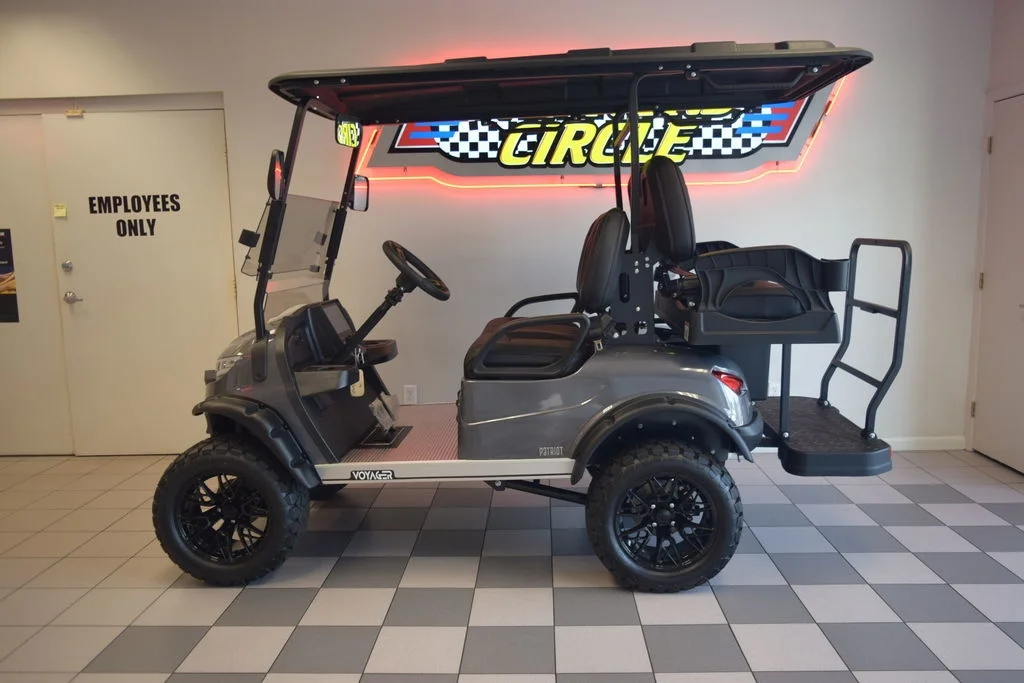
Top speed slightly favors electric at 20 to 25 mph versus gas at 18 to 20 mph. For most applications, both types fall within the same practical speed range. If you want to understand the full range of speeds possible across different models and configurations, our article on how fast golf carts go covers the topic in detail.
| Performance metric | Gas | Electric |
|---|---|---|
| Top speed | 18 – 20 mph | 20 – 25 mph |
| Engine or motor output | 10 – 12 hp | 3 – 5 hp (instant torque) |
| Hill climbing | Strong; sustained power | Good (lead-acid weakens on hills); strong (lithium) |
| Towing or hauling | Better for heavy continuous loads | Competitive with lithium packs |
| Performance in cold weather | Minor impact | Reduced range in cold (especially lead-acid) |
On hilly terrain, gas has traditionally held an edge because the internal combustion engine delivers sustained power without depleting a battery. Modern high-voltage lithium electric systems are closing that gap considerably. Lead-acid electric carts still struggle on steep grades, particularly near the end of a charge cycle when voltage sags.
For farms, ranches, or properties with sustained elevation changes and heavy loads, gas or lithium electric both perform well. Standard lead-acid electric is the weakest option for demanding terrain.
Maintenance requirements
Gas carts require more regular, hands-on maintenance than electric. The gas engine has many moving parts that wear on a schedule, while electric drivetrains have far fewer serviceable components.
| Maintenance task | Gas | Electric (lead-acid) | Electric (lithium) |
|---|---|---|---|
| Oil changes | Every 125 hours or annually | N/A | N/A |
| Spark plugs | Every 1 – 2 years | N/A | N/A |
| Air and fuel filters | Annually | N/A | N/A |
| Drive belts | Inspect annually | N/A | N/A |
| Battery watering | N/A | Monthly (flooded cells) | None |
| Terminal cleaning | N/A | Periodically | Minimal |
| Brake and tire service | As needed | As needed | As needed |
| Annual maintenance cost | $200 – $500 | $50 – $150 | $50 – $150 (lower end) |
If you prefer a cart you can largely ignore between uses, lithium electric is the clear winner. If you enjoy working on small engines and want a cart that runs indefinitely without a battery replacement cycle, a well-maintained gas cart can last 20 to 30 years.
Range and refueling
Gas carts win on raw range. A 4 to 6 gallon tank delivers 100 to 120 miles per fill-up, and refueling takes 2 to 3 minutes anywhere gas is available. This makes gas a strong choice for large properties, extended rural routes, or anywhere charging infrastructure is inconvenient.
Electric range depends entirely on battery type. Lead-acid packs deliver 15 to 25 miles per charge, which is sufficient for golf course use or neighborhood errands but limiting for all-day work on a large ranch. Lithium packs extend that to 25 to 60 miles per charge, enough for most daily-use applications.
Recharging takes 4 to 8 hours on a standard charger. For anyone with overnight charging available at home or in a garage, this is rarely a problem in practice. It only becomes a real constraint when the cart needs to be used continuously across multiple long days without a charging window.
If range is your main concern and you're considering electric, choose lithium. The jump from 25 miles (lead-acid) to 60 miles (lithium) addresses the most common criticism of electric golf carts for working property use.
Which is right for your use case?
The best way to decide between gas and electric is to match the cart to your specific situation. Below is a practical breakdown by common use case.
| Use case | Recommended type | Reason |
|---|---|---|
| HOA or neighborhood community | Electric | Quiet operation, home charging, often required by HOA rules |
| Golf course (casual use) | Electric | Quiet, low emissions, most courses charge overnight |
| Golf course (fleet operator) | Electric or gas | Depends on charging infrastructure; gas simplifies fueling logistics at scale |
| Farm or large rural property | Gas or lithium electric | Long range, sustained hauling; lithium electric if charging is available |
| Campground or RV park | Electric | Quiet for campground etiquette; easy to charge from shore power |
| Off-road or rough terrain | Gas or lithium electric | Gas for sustained power; lithium electric for instant torque and no range anxiety on shorter loops |
| Occasional recreational use | Electric (lithium) | Low maintenance, stores well, always ready to go |
| Daily driver in retirement community | Electric | Quiet, low-cost to run, most communities restrict or favor electric |
Neighborhood and HOA communities
Electric is the right choice for neighborhoods and HOA communities. Noise restrictions, emission-free operation, and the convenience of plugging in at home overnight make electric carts a natural fit. Many HOAs and retirement communities already restrict or outright ban gas-powered carts.
Farms, ranches, and large rural properties
Gas carts have traditionally dominated working properties because of their range and instant refueling. That calculus is shifting as lithium electric systems push range past 50 miles per charge. If your property has access to power and your routes stay within 40 to 50 miles per day, lithium electric is worth serious consideration. For longer routes or when hauling heavy loads across steep grades without a charging option, gas remains the practical default. If you're focused on work and hauling applications specifically, our roundup of the best utility golf carts covers purpose-built options worth considering.
Golf course fleet operators
Fleet buyers have different priorities than individual owners. Real-world data from golf course operators shows that gas carts average roughly 5 to 5.5 rounds per gallon on hilly courses, translating to about 25 rounds per tank. Electric fleet carts plug in overnight, avoiding fuel costs, but require sufficient charging stations and a disciplined charging rotation. Electric fleets also benefit from emerging geofencing technology, which is not available on gas carts. For courses evaluating the switch, the decision often comes down to charging infrastructure investment versus ongoing fuel and maintenance costs at scale.
Campgrounds and RV parks
Electric carts are the clear choice for campground use. Quiet operation is essential in these settings, and shore power connections make overnight charging straightforward. Gas carts are rarely appropriate in campground environments due to noise and fume concerns near occupied sites.
Noise, emissions, and regulations
Regulations increasingly favor electric. HOA communities, retirement developments, and resort properties frequently restrict or prohibit gas carts. Golf courses at resorts and private clubs are also trending toward electric-only fleets for guest experience and environmental branding reasons.
At the state and municipal level, emissions regulations in some regions are beginning to limit or phase out small gas-powered engines, including those used in golf carts. This trend is most visible in California but is spreading to other states with strict air quality standards. For a state-by-state overview of road use rules and restrictions, see our guide to golf cart laws by state.
Before buying a gas cart, check your HOA rules, local ordinances, and any restrictions at the primary locations where you plan to use it. A gas cart that isn't allowed in your neighborhood or on your local golf course is a poor investment regardless of its performance specs.
Resale value
Used golf carts of both types sell in the $2,000 to $10,000 range depending on age, condition, brand, and battery status. Resale value is trending better for electric, particularly for carts equipped with lithium battery packs.
A well-maintained electric cart with a newer lithium battery retains approximately 50 to 60% of its original value after five years. Gas carts with aging engines and cosmetic wear tend to depreciate more steeply. Electric carts with old or degraded lead-acid battery packs can be difficult to sell without a price concession, since buyers know they're inheriting an imminent battery replacement cost.
If resale is a priority, buy electric with lithium batteries and keep the maintenance records. That combination commands the strongest used prices on the market today.
Storage and seasonal inactivity
Gas carts handle long-term storage straightforwardly. Add fuel stabilizer, run it through the system, and the cart can sit for months without major issues. This makes gas a practical choice for seasonal properties where the cart may sit unused for half the year.
Lithium electric carts also store well. Lithium cells have low self-discharge rates and can hold a charge for months. Storing a lithium cart at roughly 50 to 80% charge in a moderate-temperature environment preserves battery health effectively.
Lead-acid electric carts require more attention during storage. Flooded cells left discharged will sulfate and lose capacity permanently. If you have a lead-acid electric cart and plan to store it for the winter, connect a maintenance charger or trickle charger to keep the batteries from dropping below safe voltage levels.
Frequently asked questions
Which is cheaper to own, gas or electric?
Electric is cheaper to operate at $0.02 to $0.04 per mile versus $0.10 to $0.15 per mile for gas. Purchase prices are comparable. Over five years, electric (especially lithium) typically costs less in total than gas when you account for fuel and maintenance savings.
Which is faster, gas or electric?
Electric carts have a slight top speed advantage at 20 to 25 mph versus 18 to 20 mph for gas. Electric also accelerates faster off the line due to instant torque delivery from the motor.
How long do electric golf cart batteries last?
Lead-acid batteries last 2 to 4 years. AGM batteries last 3 to 5 years. Lithium iron phosphate batteries last 8 to 10 years with proper care. Battery type is the single biggest factor in the long-term cost of owning an electric cart.
Are gas carts better for hills?
Gas has traditionally been the better option on steep or sustained grades. Modern high-voltage lithium electric systems have narrowed this gap considerably. Lead-acid electric carts still struggle on hills, particularly as the battery depletes.
Can I convert a gas cart to electric?
Yes, gas-to-electric conversions are possible and available from several aftermarket suppliers. Costs vary widely by system and motor size. It's often more cost-effective to sell the gas cart and purchase a purpose-built electric model, but conversion is a viable path for buyers attached to a specific chassis or body.
Can I upgrade from lead-acid to lithium batteries?
In most cases, yes. Many 48V and 72V electric carts can accept a lithium retrofit pack, typically costing $2,500 to $3,500 installed. This significantly extends the cart's useful life, improves range and performance, and eliminates the recurring lead-acid replacement cycle.
Which is better for a neighborhood or HOA community?
Electric, without question. HOA communities frequently restrict gas carts due to noise and emissions. Electric carts are quiet, produce no direct emissions, and can be charged overnight in a garage or driveway, making them ideal for neighborhood use.
Which holds its resale value better?
Electric carts with lithium batteries currently hold value better than gas carts. A well-maintained lithium electric cart retains approximately 50 to 60% of its original value after five years. Gas carts and electric carts with aging lead-acid packs tend to depreciate more sharply.