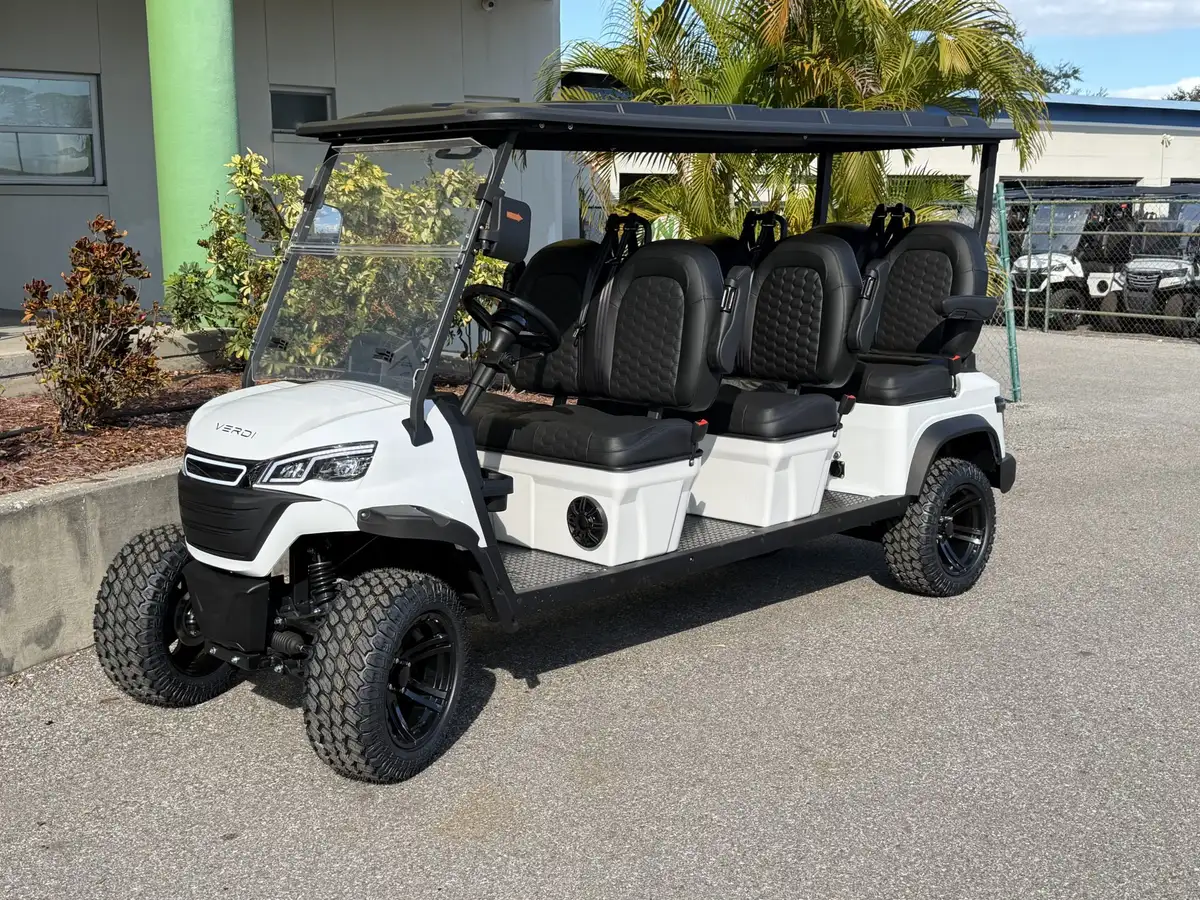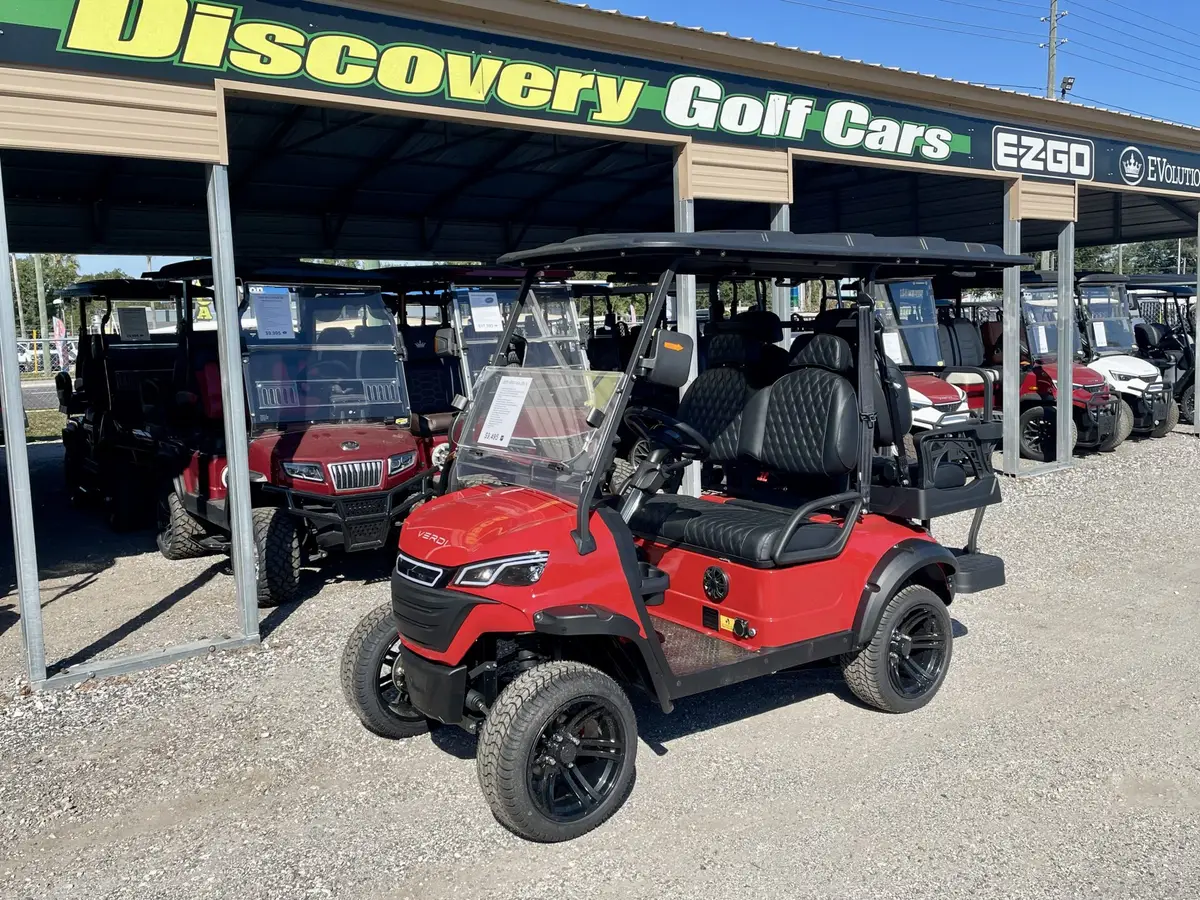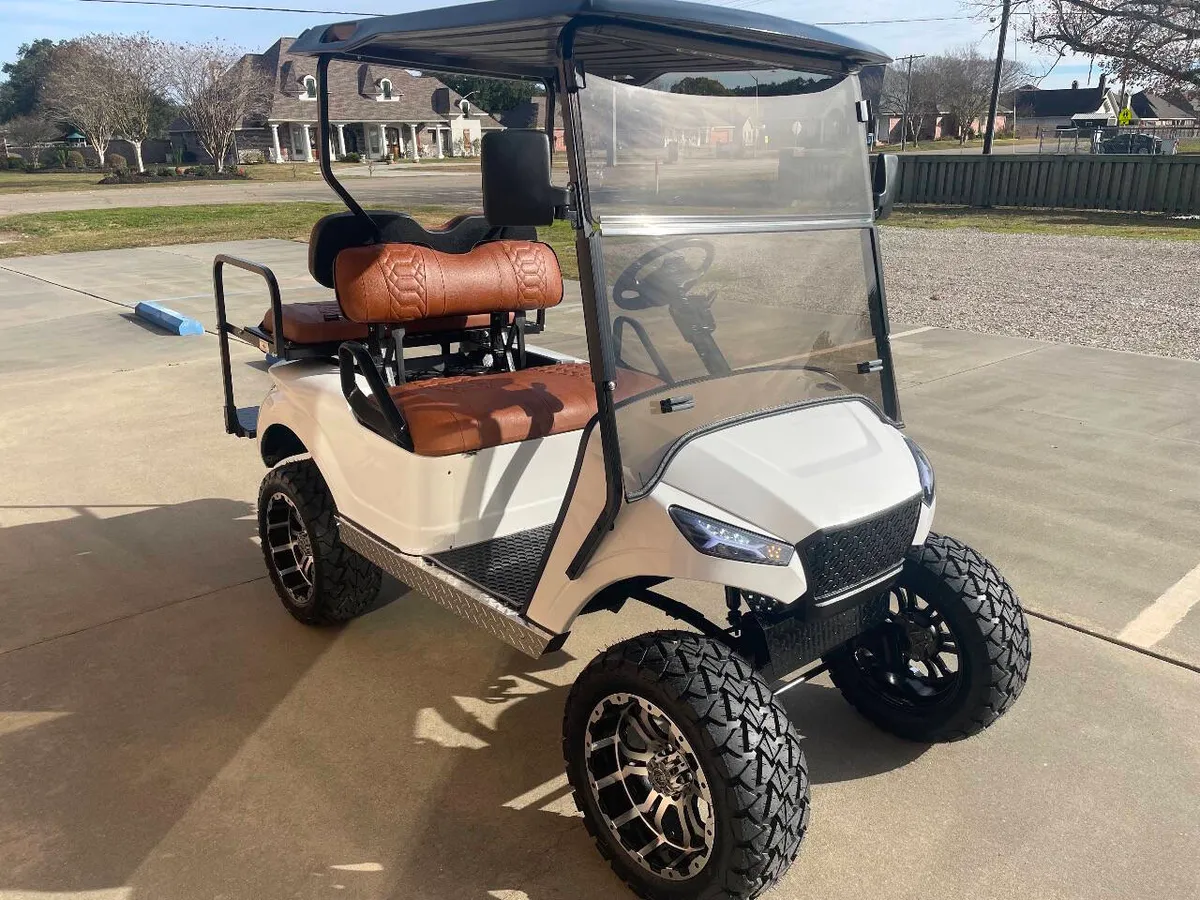
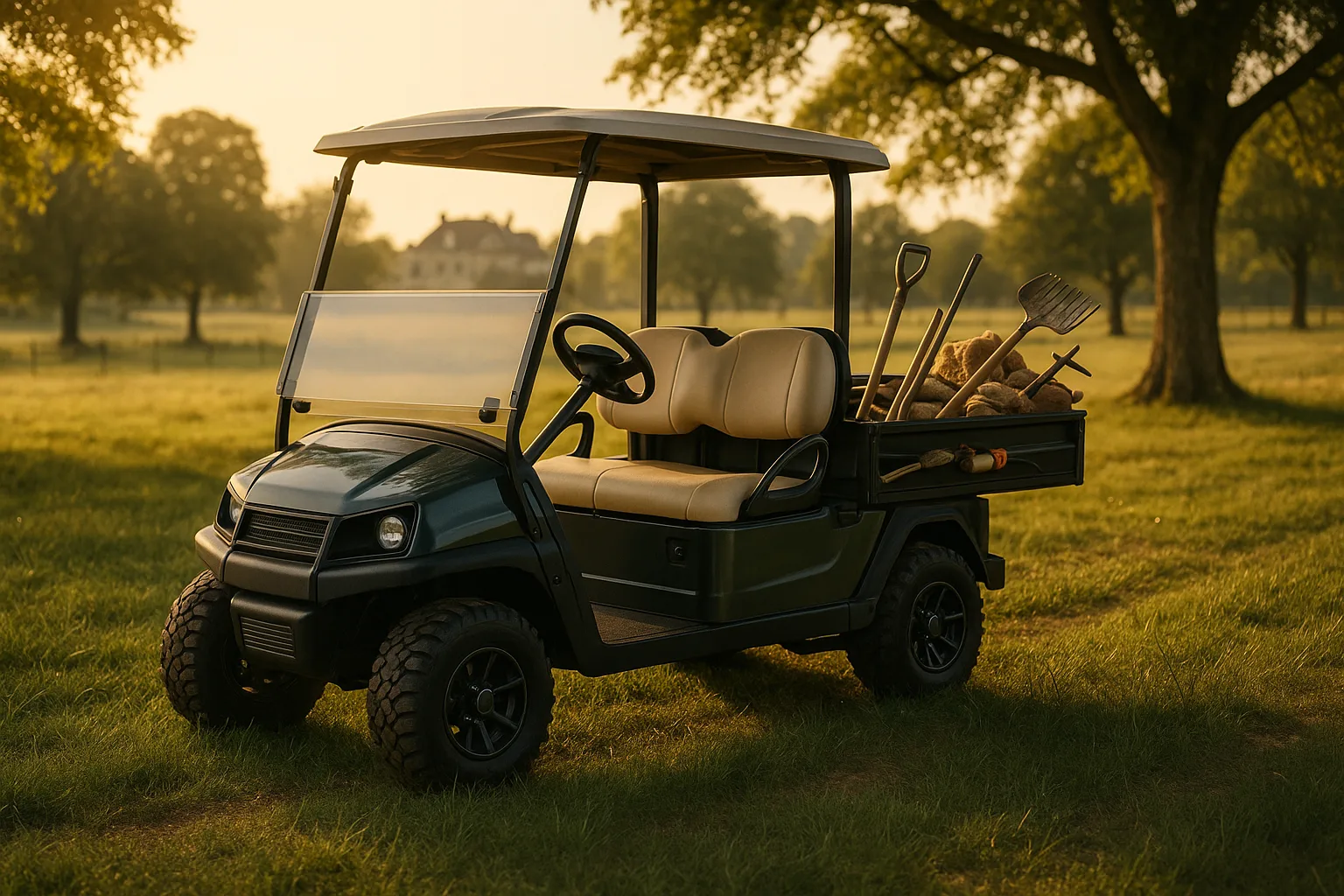
What is a utility golf cart?
A utility golf cart is a purpose-built work vehicle designed for hauling loads, towing equipment, and tackling demanding terrain rather than simply moving passengers around a course. Unlike standard golf carts, utility models feature cargo beds, higher load capacities, more powerful drivetrains, and rugged frames built for daily commercial or property use.
They fill the gap between a standard golf cart and a full-size UTV, offering a compact, maneuverable platform that can handle everything from resort property maintenance to warehouse logistics to farm chores. If you need to move tools, supplies, or materials efficiently across a property or facility, a utility cart is likely the right tool.
Utility golf carts vs. UTVs: utility carts are better suited for manicured grounds, indoor facilities, and urban property use. UTVs offer more raw power and off-road capability but are louder, larger, and not suitable for indoor or paved environments.
How much do utility golf carts cost?
Most utility golf carts cost between $8,000 and $26,000 new, depending on the brand, power source, load capacity, and configuration. Electric models and diesel-powered heavy-duty variants tend to sit at opposite ends of the spectrum. For a broader look at what different cart types cost, see our guide on how much a golf cart costs.
| Brand / Series | Power options | Load capacity | Price range |
|---|---|---|---|
| Club Car Carryall | Electric, gas, diesel, lithium | 800 – 1,900 lbs | $8,396 – $25,607 |
| Cushman Hauler | Electric, gas, lithium | 800 – 1,600 lbs | $11,500 – $18,500 |
| Yamaha UMAX | Electric, gas, lithium | 800 lbs | $12,000 – $15,000 |
| Yamaha Drive2 Super Hauler | Electric, gas | 400 – 800 lbs | ~$15,000 |
Used utility golf carts are widely available through marketplace listings and can cut costs significantly. A well-maintained used Club Car Carryall or Cushman Hauler often sells for 40% to 60% of its original MSRP, making the used market a smart option for budget-conscious buyers or small operations.
Gas vs. electric vs. lithium-ion
Choosing the right power source is one of the most important decisions you will make. Each option has trade-offs in cost, range, maintenance, and application fit.
| Power type | Best for | Key advantage | Key drawback |
|---|---|---|---|
| Gas (4-cycle) | Outdoor heavy-duty use, long shifts | No charge time, high power output | Emissions, louder, more maintenance |
| Lead-acid electric | Budget-conscious buyers, light-duty use | Lower upfront cost | Heavy, limited range, battery replacement cost |
| Lithium-ion | High-cycle commercial use, indoor/outdoor | Longer lifespan, faster charging, consistent power | Higher upfront cost |
| Diesel | Heavy industrial and agricultural hauling | Maximum torque and durability | Not suitable for indoor use |
Gas models are well suited for outdoor properties, farms, and construction sites where long operating hours and high torque matter. They do not require charging infrastructure and can run continuous shifts.
Lead-acid electric models remain the most affordable entry point but carry long-term costs in battery maintenance and replacement. They typically deliver 20 to 40 miles per charge depending on load and terrain.
Lithium-ion is increasingly the preferred choice for commercial fleets. Lithium packs charge faster, hold charge longer, require no watering or equalization, and typically last two to three times longer than lead-acid. The higher upfront cost often pays back within three to five years in reduced maintenance. For a deeper comparison of today's top electric golf carts, including lithium-ion options, that guide covers key specs and trade-offs across brands.
Diesel is limited to a handful of heavy-duty models and is best reserved for demanding agricultural or industrial applications where electric or gas power falls short.
Zero-emission requirement? If your operation involves indoor use in a warehouse, factory, or enclosed facility, electric or lithium-ion is the only compliant option. Gas and diesel models produce exhaust and cannot be used in enclosed spaces.
Best utility golf cart models
The brands below represent the most established and widely available utility golf cart lines on the market. Each offers multiple configurations to match specific load, terrain, and power requirements.
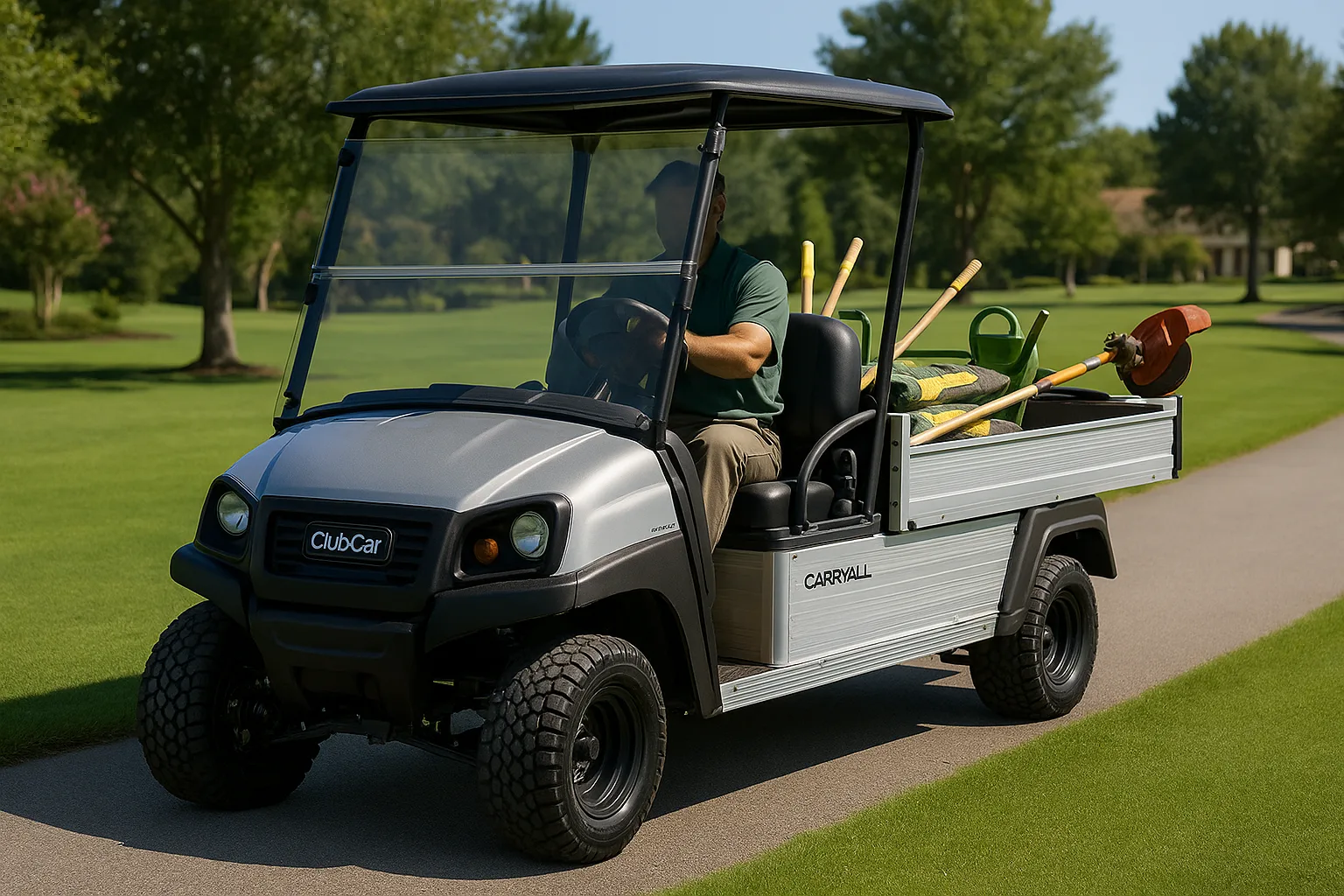
Club Car Carryall series
The Club Car Carryall is one of the most comprehensive utility cart lines available, with models ranging from light-duty to heavy industrial. Prices run from $8,396 to $25,607 MSRP, covering a wider range of applications than any other single series on the market.
| Specification | Range across models |
|---|---|
| Load capacity | 800 – 1,900 lbs |
| Cargo bed size | 8.3 – 23.3 sq ft |
| Top speed | 15 – 25 mph |
| Power options | 48V lead-acid, 48V lithium (Vanguard), Kohler gas (14 hp), Kawasaki gas (20.1 hp), Kubota diesel (20 hp) |
| Frame | Aircraft-grade aluminum (rust-proof) |
The Carryall stands out for its aircraft-grade aluminum frame, which resists rust and corrosion over years of outdoor use. The heavy-duty Carryall 1500 and 1700 are the only models in the lineup available with a Kubota diesel engine, making them the go-to choice for demanding agricultural and industrial hauling.
For buyers who need zero emissions, the Vanguard lithium-ion models deliver strong performance with significantly reduced maintenance compared to the six-battery lead-acid configuration.
Best for: golf courses, resorts, campuses, construction sites, and large-scale property maintenance.
Cushman Hauler series
Cushman's Hauler lineup targets commercial and industrial buyers with a strong focus on electric and lithium-ion options. Estimated prices fall between $11,500 and $18,500, with the Hauler Pro available in electric only.
| Specification | Range across models |
|---|---|
| Load capacity | 800 – 1,600 lbs |
| Top speed | 14.5 – 25 mph |
| Power options | 13.5 hp gas (401cc), 56.7V lithium-ion, 48V ELiTE electric (2.2, 4.2, or 6.2 kWh packs) |
| Street-legal option | Hauler Pro LSV (Low Speed Vehicle certified) |
One of Cushman's key differentiators is the Hauler Pro LSV, a street-legal variant certified as a Low Speed Vehicle. LSV certification means the cart meets federal safety standards including headlights, turn signals, mirrors, and seatbelts, allowing it to be driven on public roads with posted speed limits of 35 mph or less.
The ELiTE battery system with three available pack sizes gives buyers flexibility to match battery capacity to their daily operating demands, avoiding oversized and more expensive configurations for lighter applications.
Best for: warehouses, manufacturing facilities, airports, campuses, and applications requiring street-legal capability.
Yamaha UMAX series
Yamaha's UMAX line covers several specialized task-built variants alongside the core utility hauler. Estimated pricing runs $12,000 to $15,000, with a consistent 800 lb load rating across the series.
| Specification | Details |
|---|---|
| Load capacity | 800 lbs |
| Top speed | 17.5 – 19.5 mph |
| Cargo bed | 41.1 in L x 45.9 in W |
| Power options | 402cc Yamaha EFI gas (OHV, low-emission); 48V AC electric with Trojan T-105 batteries or 51V RoyPow lithium |
| Specialty variants | UMAX Rally, UMAX Bistro, UMAX Range Picker |
The UMAX lineup is notable for its task-specific variants. The UMAX Rally handles crew transport with bench seating. The UMAX Bistro is built for food and beverage service at resorts and events. The UMAX Range Picker handles ball retrieval on driving ranges. These are not cosmetic variations; they are purpose-engineered configurations with different body layouts and mounting systems.
Yamaha's EFI gas engine is designed for low emissions and fuel efficiency, making it one of the cleaner-running gas options available in this class.
Best for: golf courses, resorts, food service operations, and event management.
Yamaha Drive2 Adventurer Super Hauler
The Drive2 Adventurer Super Hauler is Yamaha's largest-bed utility offering, built around a truck-style cargo bed that dwarfs most competitors. Estimated at around $15,000, it targets buyers who need maximum cargo volume in a golf cart-sized footprint.
| Specification | Details |
|---|---|
| Cargo bed | 72 in L x 47 in W (largest in class) |
| Load capacity | 800 lbs (gas) / 400 lbs (electric) |
| Top speed | 19 mph |
| Power options | 402cc EFI gas or 48V AC electric |
The 72-inch cargo bed is the standout feature. It accommodates full-size sheets of plywood, large equipment, or bulk supplies that smaller utility beds simply cannot fit. Note that the electric variant is rated at 400 lbs load capacity, half the gas model's rating, which is worth factoring into your decision if payload is a priority.
Best for: large property owners, landscaping operations, hobby farms, and anywhere maximum bed length is the deciding factor.
How to choose the right utility cart
Before comparing brands and models, work through these core criteria to narrow your options. Buying the wrong cart for your application is a costly mistake that most buyers only make once. Our golf cart buying guide covers additional factors worth reviewing before you finalize a purchase.
Load capacity
Most utility golf carts are rated between 800 and 1,900 lbs. Match your capacity requirement to your heaviest typical load, not your average load. Consistently overloading a cart damages the drivetrain, suspension, and tires and voids most warranties.
- Light to medium loads (under 800 lbs): any model in the Yamaha UMAX, Cushman Hauler, or Club Car Carryall entry lineup
- Heavy loads (800 – 1,200 lbs): Cushman Hauler Pro, Club Car Carryall 550 or 700
- Industrial and agricultural loads (1,200 – 1,900 lbs): Club Car Carryall 1500 or 1700 (diesel or gas)
Terrain and environment
Flat, paved, or well-groomed turf? Almost any utility cart will work. For rough terrain, slopes, or unpaved property roads, prioritize high-torque gas or diesel engines, larger tires, and models with available 4x4 configurations. For indoor use, electric or lithium-ion is required.
Bed size and configuration
Cargo bed area ranges from under 10 square feet on compact utility models to over 23 square feet on the Club Car Carryall 1700, or 6 feet in length on the Yamaha Drive2 Super Hauler. Dump bed configurations are available across most brands as an upgrade, making bulk material unloading significantly easier.
Daily operating range
For electric models, typical ranges run 20 to 40 miles per charge on lead-acid batteries and up to 50 or more miles on lithium-ion, depending on load and terrain. If your operation runs multiple shifts without reliable charging windows, gas may be the more practical choice.
Street-legal requirements
If your operation requires driving across public roads rather than only on private property, you will need a Low Speed Vehicle (LSV)-certified model. LSVs must include headlights, brake lights, turn signals, mirrors, a windshield, and seatbelts, and are limited to roads with posted speed limits of 35 mph or less. The Cushman Hauler Pro LSV is the primary utility-focused option in this category. Check our golf cart laws by state guide to understand the specific registration and equipment rules in your area.
Key accessories and add-ons
Most utility golf carts support a range of accessories that extend their functionality well beyond the base configuration. Popular upgrades include:
- Dump bed kits: hydraulic or manual lift systems for unloading bulk materials without shoveling
- Tow hitches: for pulling trailers, aerators, turf rollers, or small implements
- Ladder racks and cargo rails: for transporting long materials like pipes, lumber, or landscaping tools
- Canopy and cab enclosures: for weather protection during year-round outdoor use
- Lift kits and all-terrain tires: for improved ground clearance on rough or uneven terrain
- Work lights: for early morning or low-light operation
- Spray tanks and spreader mounts: for agricultural or turf care applications
Fleet buyers: most major brands including Club Car, Cushman, and Yamaha offer fleet pricing and custom configurations for orders of five or more units. Contact a local dealer for volume pricing and upfit packages.
Frequently asked questions
What is the difference between a utility golf cart and a standard golf cart?
A standard golf cart is designed to carry two to four passengers and minimal gear. A utility golf cart replaces or supplements the rear passenger area with a cargo bed, higher payload capacity, a more powerful drivetrain, and a more durable frame. They serve fundamentally different purposes.
Can utility golf carts be driven on public roads?
Only models certified as Low Speed Vehicles (LSVs) can legally be driven on public roads. LSV carts must meet federal equipment requirements including lights, mirrors, and seatbelts, and are restricted to roads with posted limits of 35 mph or less. Standard utility carts are for private property use only.
How fast do utility golf carts go?
Most utility golf carts reach top speeds between 14.5 and 25 mph. Speed varies by model and power type. LSV-certified models typically reach 25 mph, while standard utility carts used on-property run closer to 15 to 19 mph.
How far can an electric utility golf cart travel on a charge?
Lead-acid electric models typically deliver 20 to 40 miles per charge under normal load conditions. Lithium-ion models generally extend that range to 40 to 60 miles or more, with more consistent power delivery throughout the charge cycle.
Are utility golf carts good for farm use?
Yes, with the right configuration. For farm use, prioritize gas or diesel power for long operating hours, a high load capacity of 800 lbs or more, and optional tow hitches for pulling implements. Models like the Club Car Carryall 1500 or 1700 with Kubota diesel engines are particularly well suited to demanding agricultural environments.
What is the best utility golf cart for indoor use?
Any electric or lithium-ion model works for indoor use. Gas and diesel carts produce exhaust and cannot be operated in enclosed spaces. The Cushman Hauler Pro electric and Club Car Carryall with lithium Vanguard packs are strong choices for warehouse and facility applications.
Should I buy a new or used utility golf cart?
Used utility carts offer significant savings, often 40% to 60% below original MSRP, and make sense for light-duty or intermittent use. For commercial fleets or heavy daily use, new carts come with manufacturer warranties, current battery technology, and less risk of unexpected downtime. Consider your operating intensity and budget when deciding.