Are golf carts street legal in Oklahoma?
Whether your golf cart is street legal in Oklahoma depends entirely on where you plan to drive it. Oklahoma does not have a single statewide rule that permits or prohibits golf carts on public roads. Instead, Title 47, Section 11-1116 of the Oklahoma Statutes creates a two-track system: cities and towns may pass their own ordinances authorizing golf cart use, and unincorporated areas have a separate provision that applies under specific conditions.
The short answer is that golf carts are not automatically street legal anywhere in Oklahoma. Your location, your vehicle type, and the rules your local government has adopted all determine what you can legally do.
| Vehicle type | Street legal by default? | What's required |
|---|---|---|
| Golf cart (city) | No | City must have passed an explicit ordinance |
| Golf cart (unincorporated area) | Conditionally | Roads posted 25 mph or less; warning signage in place |
| Low-speed vehicle (LSV) | Yes, when registered | Title, registration, proof of insurance required |
| Street-legal utility vehicle | Yes, when registered | County population rules apply; highway access varies |
To find out if your city has a golf cart ordinance, contact your city clerk's office, check your municipality's official website, or call the local police department's non-emergency line.
Golf cart vs. LSV vs. street-legal utility vehicle
Oklahoma law recognizes three distinct vehicle categories that are commonly grouped together but treated very differently under the law. Understanding which category your vehicle falls into is the first step to knowing your rights and obligations on public roads. For a broader look at how these rules compare across the country, see our guide to golf cart laws by state.
| Category | Top speed | Key identifiers | Typical price (new) |
|---|---|---|---|
| Golf cart | Under 20 mph | No 17-digit VIN; built for golf course use; does not meet FMVSS | $5,000 – $15,000 |
| Low-speed vehicle (LSV) | 20 – 25 mph | 17-digit manufacturer VIN; meets 49 CFR 571.500; under 3,000 lbs; can be titled | $8,000 – $20,000 |
| Street-legal utility vehicle | Varies | Distinct Oklahoma classification; highway access tied to county population | Varies by model |
Golf carts
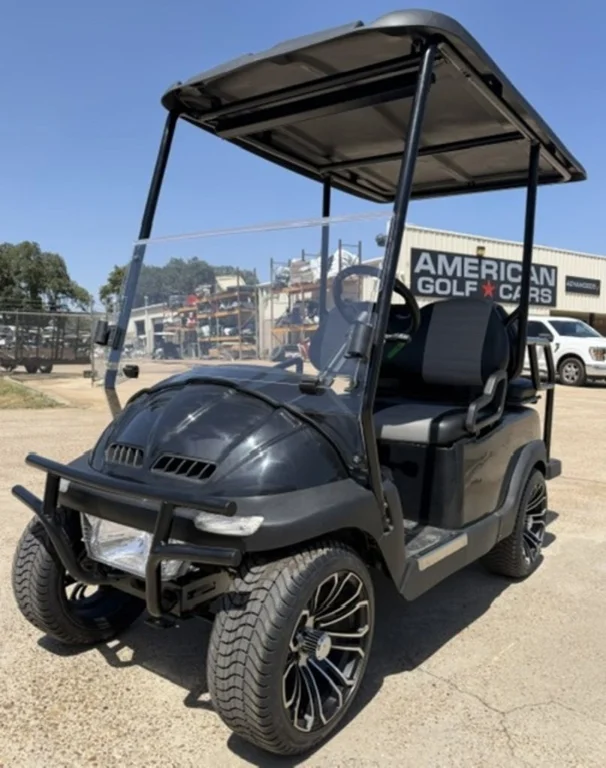
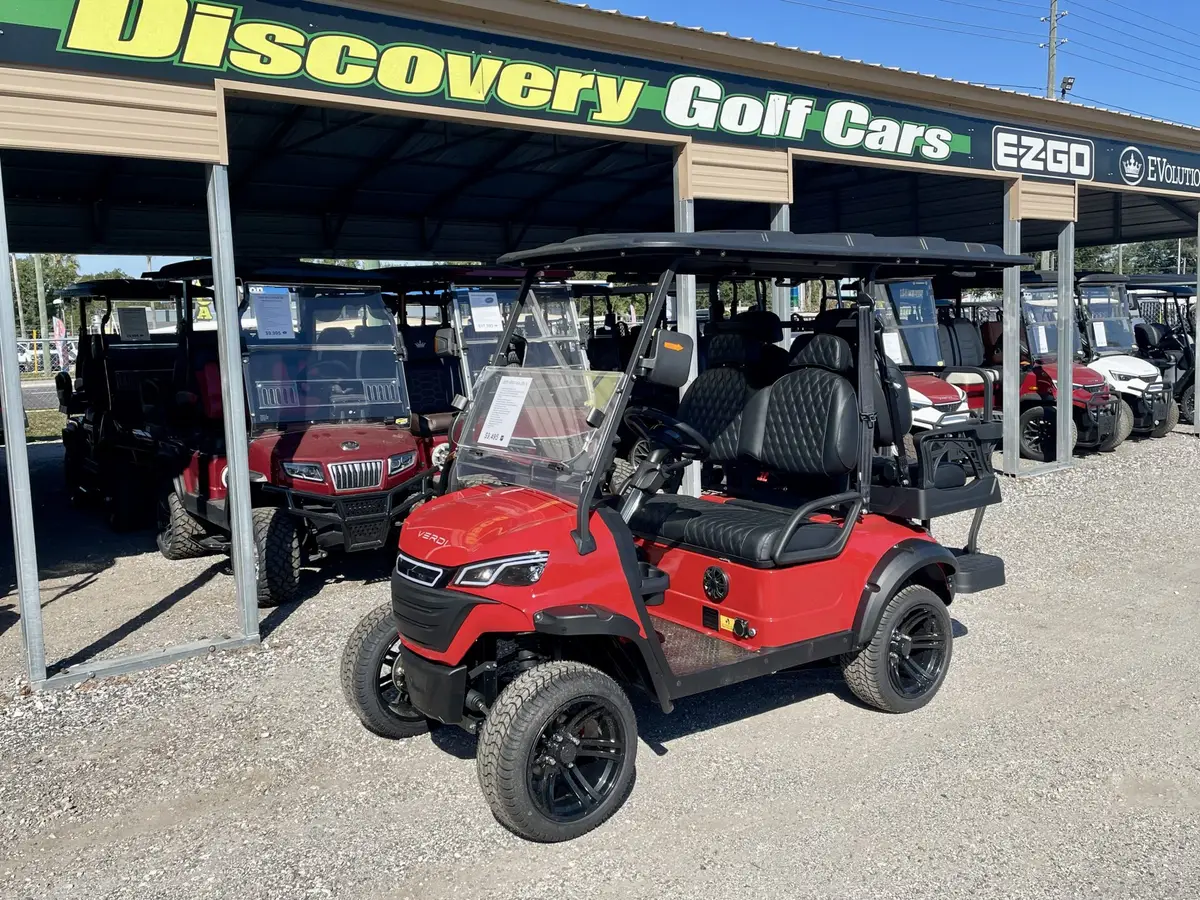
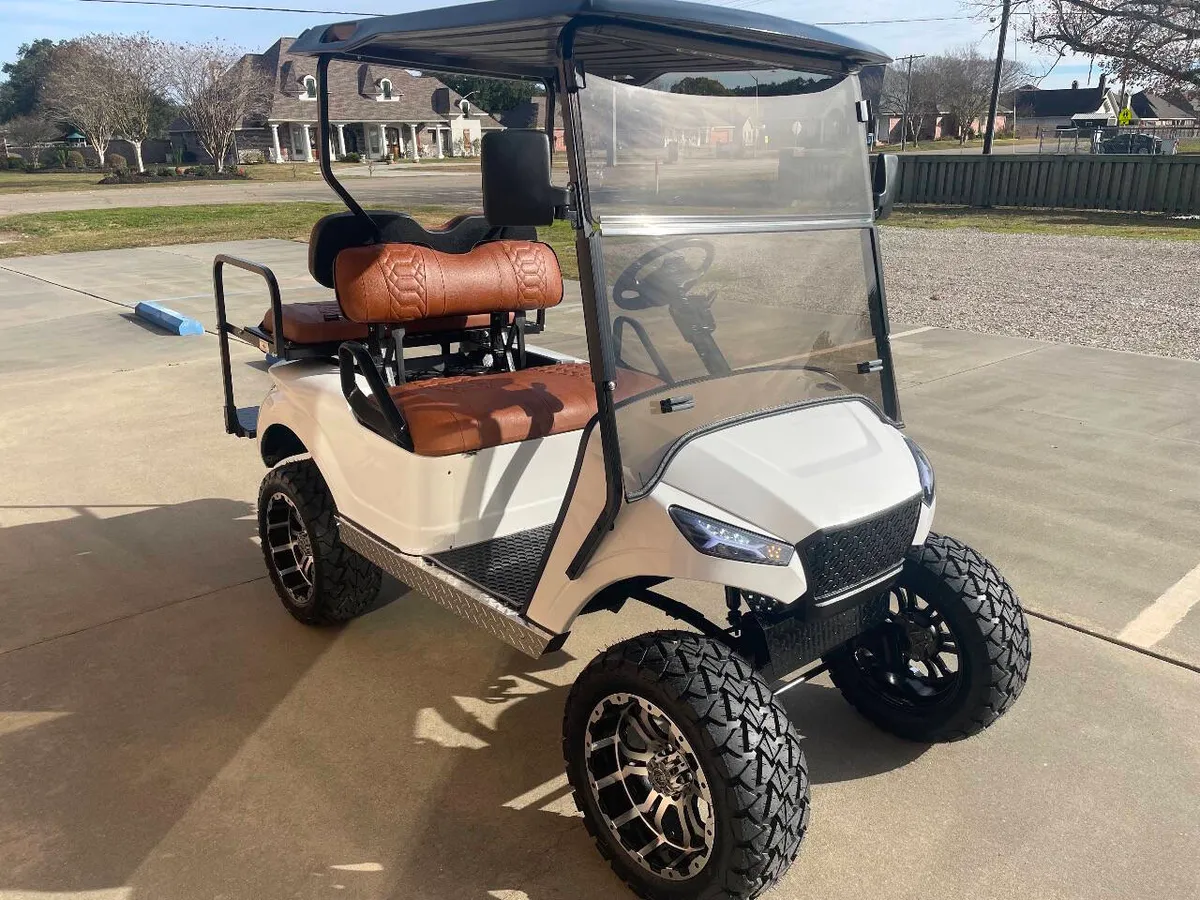
A golf cart is a self-propelled vehicle designed primarily for use on a golf course. Oklahoma law defines them by what they lack: a top speed under 20 mph, no 17-digit Vehicle Identification Number (VIN), and no compliance with Federal Motor Vehicle Safety Standards (FMVSS). Because golf carts have no manufacturer VIN, the Oklahoma Tax Commission cannot title or register them as motor vehicles.
Low-speed vehicles (LSVs)
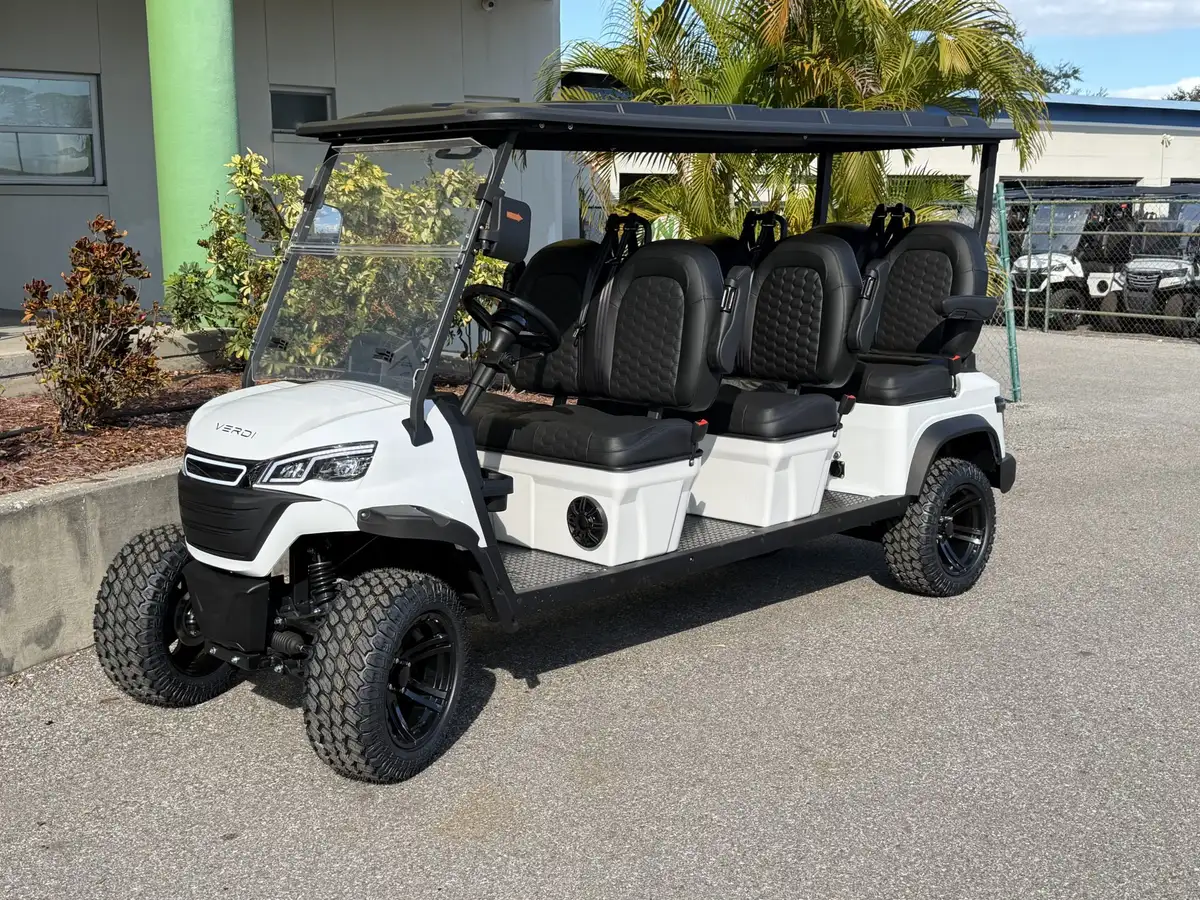
An LSV is a four-wheeled vehicle with a top speed between 20 and 25 mph, a weight under 3,000 lbs, and full compliance with federal standard 49 CFR 571.500. Manufacturers such as Denago, Moke, and GEM produce factory-built LSVs. The critical distinction is the 17-digit VIN stamped by the manufacturer, which is what allows an LSV to be titled, registered, and legally driven on roads posted up to 35 mph.
Street-legal utility vehicles
Oklahoma recognizes a third category that is largely unique to the state. Street-legal utility vehicles can access US highways in counties with a population under 75,000. In counties with more than 75,000 residents, highway access is limited to segments posted at 50 mph or less. This county population rule is a distinctly Oklahoma provision worth knowing if you live in a rural part of the state.
The VIN is the dividing line. A vehicle without a manufacturer-assigned 17-digit VIN cannot be titled, registered, or granted the same road access as an LSV, regardless of how many upgrades you make to it.
Where you can and cannot drive
Road access in Oklahoma is determined by vehicle type and location. The table below summarizes what each vehicle can access legally.
| Vehicle type | Allowed roads | Prohibited roads | Hours |
|---|---|---|---|
| Golf cart (city with ordinance) | Streets authorized by that ordinance; typically 25 mph or less | State highways, US highways, controlled-access roads | Daylight only |
| Golf cart (unincorporated area) | Roads posted 25 mph or less with golf cart warning signage in place | Highways, high-speed county roads | Daylight only |
| LSV (registered) | Roads posted 35 mph or less; may cross higher-speed roads at intersections | Interstate highways, controlled-access roads | No daylight restriction (full lighting required) |
| Street-legal utility vehicle | Streets plus US highways (county population rules apply) | Controlled-access interstates | Varies |
Golf carts operating legally under a city ordinance or the unincorporated area provision are restricted to daylight hours only. LSVs equipped with full lighting are not subject to the same daylight-only restriction because they meet federal lighting standards as part of their FMVSS compliance.
Golf carts on private property
State road laws do not apply on private property. If you are driving your golf cart on your own land, a farm, a ranch, or a private road, Title 47 does not govern that use. Similarly, private roads in gated communities and HOA developments fall outside state traffic law. Your homeowners association's rules or the property owner's policies apply instead.
Retirement communities and lake communities
Oklahoma has a number of planned communities, lake developments, and retirement neighborhoods where golf cart use is common. If the roads within those communities are private, state law does not restrict your operation. However, if those communities connect to public roads, the rules above apply the moment you cross onto a public street. Check with your HOA and your local municipality before taking your cart onto any public road adjacent to your community.
Equipment requirements
What you are required to have on your golf cart or LSV depends on your vehicle type and where you operate it. Requirements vary between municipal ordinances and state law for LSVs, so checking your local ordinance is essential.
| Equipment item | Golf cart (under ordinance) | LSV (state requirement) |
|---|---|---|
| Headlights | Required by most ordinances | Required (FMVSS) |
| Taillights and brake lights | Required by most ordinances | Required (FMVSS) |
| Turn signals | Varies by city | Required (FMVSS) |
| Rearview mirror | Often required | Required (FMVSS) |
| Windshield | Varies by city | Required (FMVSS) |
| Seat belts | Varies by city | Required at every seating position |
| Parking brake | Varies by city | Required (FMVSS) |
| SMV (slow-moving vehicle) emblem | Commonly required in unincorporated areas; confirm locally | Not typically required |
| Safety flag | Some ordinances require it | Not required |
| Reflective devices | Often required | Required (reflex reflectors per FMVSS) |
In unincorporated areas, a slow-moving vehicle (SMV) triangle emblem is commonly required or strongly recommended for any golf cart using public roads. The orange triangular emblem alerts other drivers that a slow-moving vehicle is ahead. Even where not mandated, it is a practical safety measure on Oklahoma's rural roads.
What your city's ordinance specifically requires can differ significantly from what a neighboring city requires. Always review the actual text of your municipality's ordinance or call your city clerk to confirm the exact equipment checklist.
Registration and insurance
Golf carts cannot be titled or registered with the State of Oklahoma. The Oklahoma Tax Commission does not process golf cart titles because these vehicles lack the manufacturer VIN required for the titling process, and no state-issued license plate is available for a golf cart.
| Requirement | Golf cart | LSV |
|---|---|---|
| State title | Not available | Required |
| State registration / plate | Not available | Required |
| Local permit or registration sticker | Required by many municipal ordinances | Not applicable |
| Proof of insurance | Required under most ordinances; recommended everywhere | Required (state minimum liability) |
How to register an LSV in Oklahoma
To register an LSV, visit your local Oklahoma Tax Commission tag agency with the following:
- Manufacturer's Certificate of Origin (for a new LSV) or existing title (for a used one)
- Proof of liability insurance meeting Oklahoma's minimum requirements
- Applicable registration fees
Once registered, your LSV receives a standard license plate and can legally use roads posted at 35 mph or less.
Golf cart insurance
Even where insurance is not legally mandated, carrying liability coverage on a golf cart is strongly recommended. Most standard auto insurance carriers offer golf cart endorsements or standalone policies, and specialty golf cart insurance providers also serve this market. If your city ordinance requires proof of insurance to obtain a local permit, you will need a policy before using public roads.
Age and licensing requirements
A valid Oklahoma driver's license is required to operate a golf cart on any public road where golf carts are legally permitted. The minimum age is 16 years old, consistent with the minimum licensing age in Oklahoma. Municipal ordinances may add additional restrictions but cannot set a lower standard than state law.
| Requirement | Golf cart (public road) | LSV |
|---|---|---|
| Valid driver's license | Yes | Yes |
| Minimum age | 16 | 16 |
| Unlicensed operation on public roads | Not permitted | Not permitted |
There is no provision in Oklahoma law for unlicensed or underage operation on public roads, regardless of vehicle type. On private property, state licensing requirements do not apply, though property owners set their own rules.
DUI laws and golf carts
Oklahoma's DUI statutes apply to golf cart operation on public roads where golf carts are legally permitted. Oklahoma courts have broadly interpreted "motor vehicle" to include legally operating golf carts, which means impaired driving laws follow you onto a cart as soon as you access a public road.
LSV operators carry automatic DUI liability as registered motor vehicle drivers. The practical takeaway is straightforward: any motorized vehicle operating on a public road in Oklahoma is subject to impaired driving laws. The same blood alcohol limits and penalties that apply to a car apply to your golf cart or LSV.
You can receive a DUI on a golf cart in Oklahoma. If your golf cart is legally operating on a public road under a city ordinance or the unincorporated area provision, impaired driving laws fully apply.
Can you convert a golf cart to street legal?
There is no conversion pathway in Oklahoma that turns a standard golf cart into a street-legal vehicle with full road access. The barrier is the VIN. An LSV's 17-digit VIN must be assigned by the manufacturer and accompanied by federal certification at the time of production. Oklahoma has no mechanism to retroactively assign a VIN to a vehicle that did not receive one from the factory.
Adding headlights, a windshield, seat belts, or other equipment to a golf cart does not reclassify it as an LSV under Oklahoma law. If you want full road access beyond what a local golf cart ordinance allows, the only path is purchasing a factory-built LSV from a manufacturer such as Denago, Moke, or GEM. Before making that investment, reviewing a comprehensive golf cart buying guide can help you compare vehicle types and evaluate what suits your needs.
Golf cart ordinances in Oklahoma cities
A growing number of Oklahoma municipalities have adopted golf cart ordinances. While no comprehensive statewide list exists, cities and communities across the state have established local rules governing where and how golf carts may be used on public streets.
| Area type | Examples | Where to confirm current rules |
|---|---|---|
| Suburban municipalities | Broken Arrow, Edmond, Norman | City clerk or municipal code website |
| Lake and resort communities | Grand Lake area, Lake Eufaula area | City or county clerk; local ordinance text |
| Smaller towns and planned communities | Various Tulsa-area suburbs | Police department non-emergency line |
Ordinance terms vary widely. One city may permit golf carts on all residential streets, while a neighboring city may limit them to specific mapped routes. Common ordinance provisions include:
- A local permit or registration sticker requirement
- A specific equipment checklist (headlights, mirrors, brakes)
- Designated streets where golf carts are allowed
- Daylight-hours-only operation
- Proof of liability insurance at the time of permitting
- Driver's license verification
To confirm whether your city has an ordinance and exactly what it requires, contact your city clerk's office directly or search your municipality's official code of ordinances online. If you are also researching how neighboring states handle similar questions, see our overviews of Texas golf cart laws and Kansas golf cart laws for comparison.
Frequently asked questions
Do I need a driver's license to drive a golf cart in Oklahoma?
Yes. A valid Oklahoma driver's license is required to operate a golf cart on any public road. The minimum age is 16, and there is no exception for short distances or low-speed roads.
Can I register a golf cart with the state of Oklahoma?
No. The Oklahoma Tax Commission does not issue titles or registration plates for golf carts. Golf carts have no manufacturer VIN, which is a prerequisite for state titling. Some cities issue local permits instead.
Do I need insurance for my golf cart?
Most municipal ordinances require proof of liability insurance as a condition of obtaining a local golf cart permit. Even where not legally required, carrying coverage is strongly recommended. Standard auto insurers and specialty golf cart insurers both offer policies.
Can I drive a golf cart on a US highway in Oklahoma?
Golf carts cannot use US highways. Street-legal utility vehicles registered in qualifying counties may access US highways under the county population rules described above, but standard golf carts are excluded from highway use regardless of local ordinances.
What happens if I operate a golf cart illegally in Oklahoma?
Operating a golf cart on public roads without the required ordinance permission, or outside permitted conditions, can result in traffic citations and potential impoundment. The specific penalties vary by municipality and circumstance, but law enforcement has the authority to stop and cite unlawful golf cart operators on public roads.
Can I get a DUI on a golf cart in Oklahoma?
Yes. Oklahoma DUI statutes apply to golf cart operation on public roads where carts are legally permitted. Impaired driving carries the same legal consequences regardless of whether you are operating a car or a golf cart.
Is there a difference between electric and gas golf carts under Oklahoma law?
Oklahoma's golf cart statutes do not distinguish between electric and gas-powered carts. Both are subject to the same legal framework based on top speed, the absence of a VIN, and FMVSS non-compliance. The power source does not change your vehicle's legal classification.
What is the difference between an LSV and a street-legal utility vehicle in Oklahoma?
An LSV meets federal standard 49 CFR 571.500, has a manufacturer-assigned 17-digit VIN, and can be titled and registered for use on roads posted at 35 mph or less. A street-legal utility vehicle is a distinct Oklahoma classification that provides broader highway access in lower-population counties, including certain US highway segments.
Can I drive a golf cart on my own land in Oklahoma?
Yes. State road laws apply only to public roads. Operating a golf cart on private property, including farmland, ranch land, or private driveways, is not regulated by Title 47. The property owner's own rules and any applicable local land-use regulations govern private property use.
Where can I find the official Oklahoma golf cart statute?
The governing statute is Title 47, Section 11-1116 of the Oklahoma Statutes. You can also find information through the Oklahoma Tax Commission for LSV registration questions and your local municipality for ordinance details.