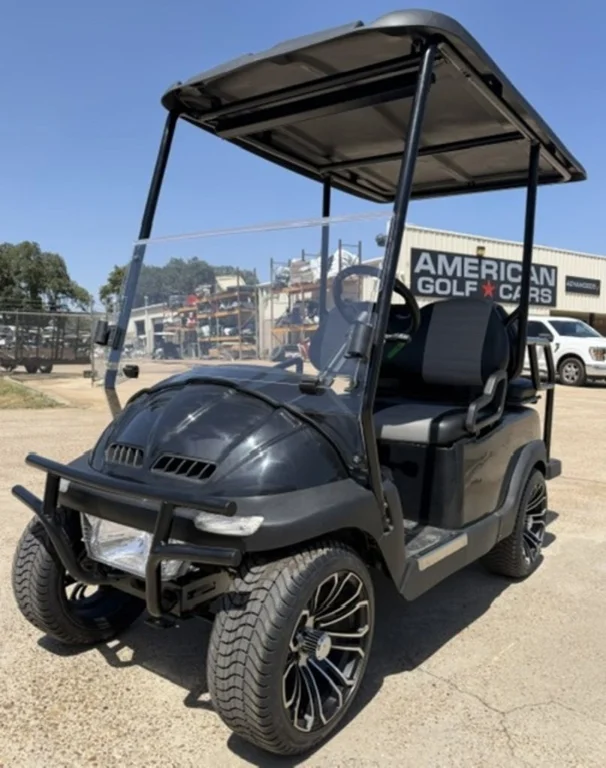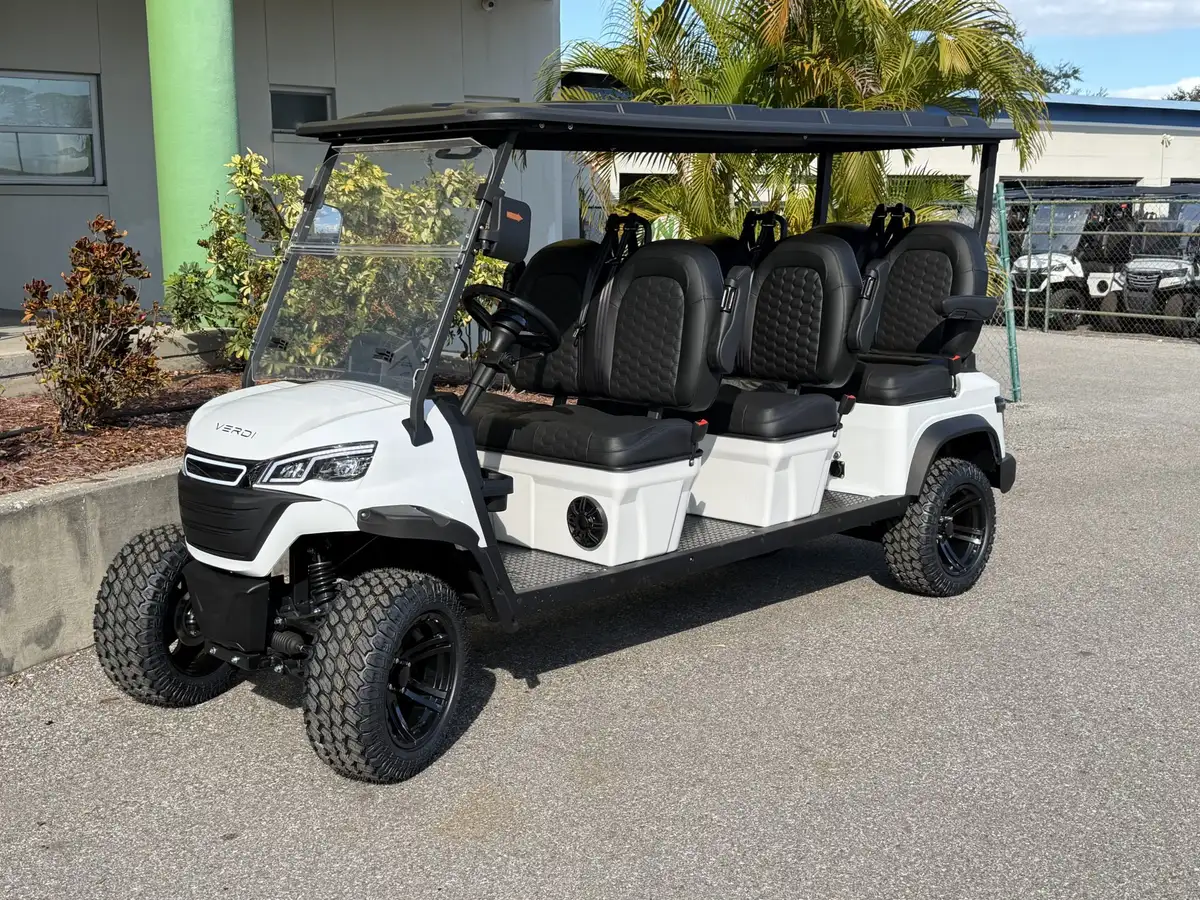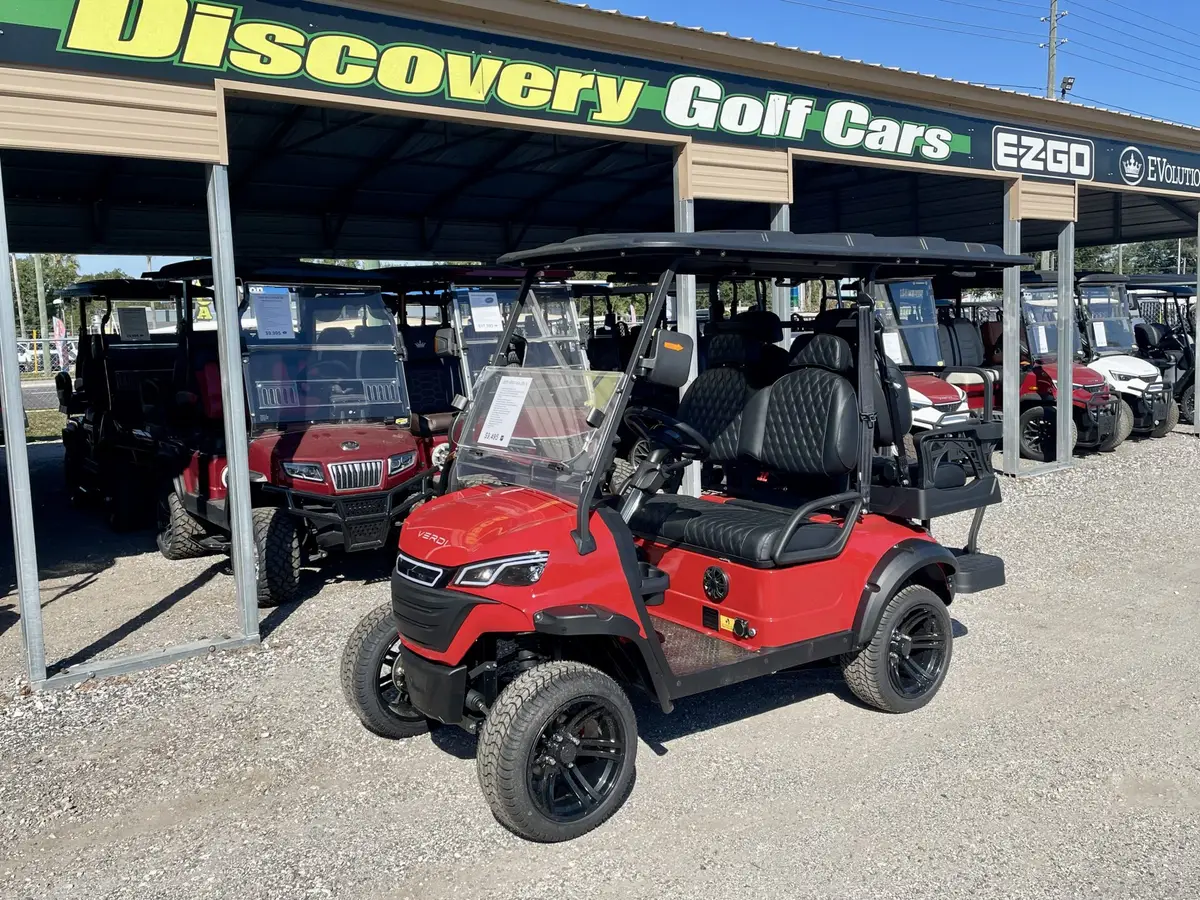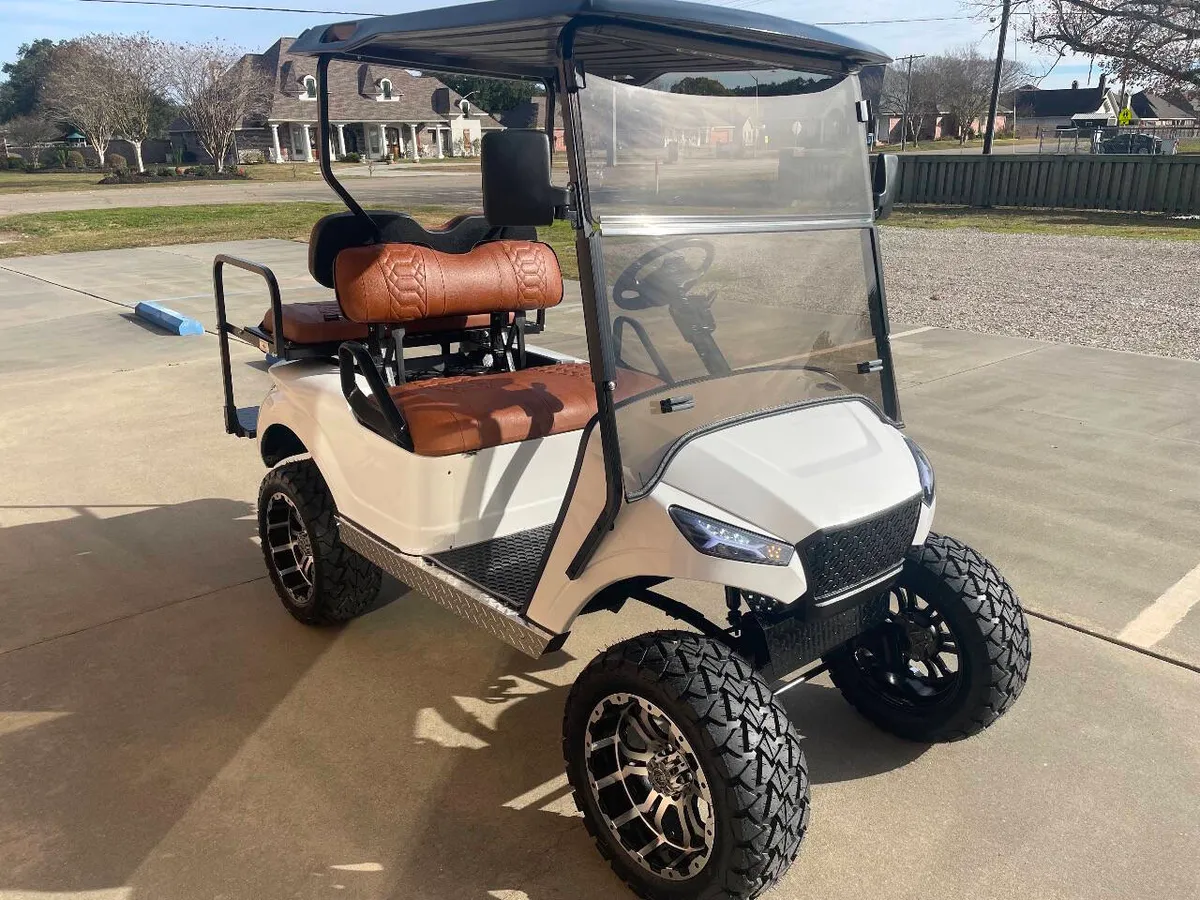
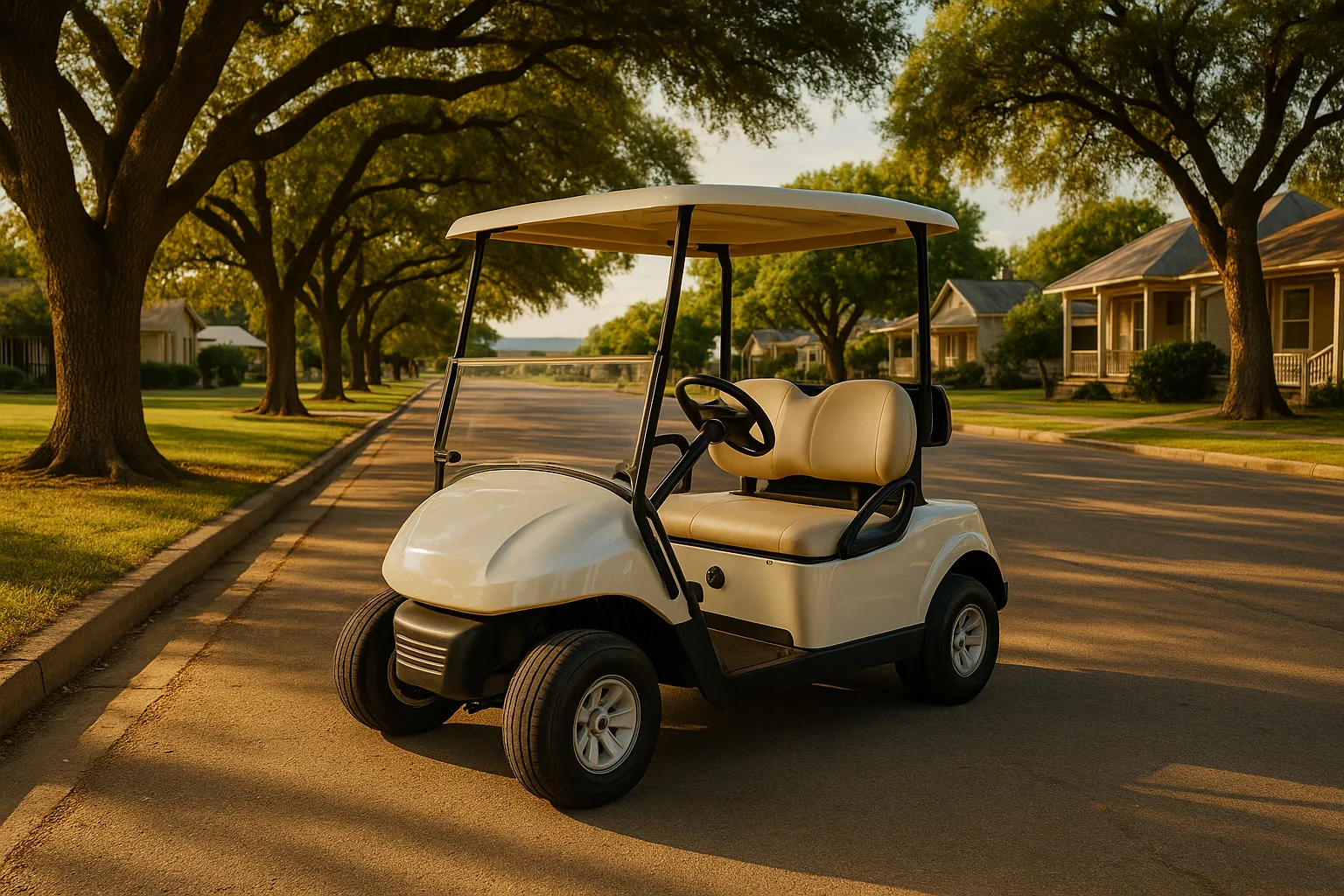
Golf cart, LSV, and NEV: why the distinction matters in Texas
Before diving into road rules, you need to know which type of vehicle you actually own. Texas law treats golf carts, Low-Speed Vehicles (LSVs), and Neighborhood Electric Vehicles (NEVs) very differently, and the category your cart falls into determines your registration requirements, road access, and insurance obligations.
| Vehicle type | Top speed | Federal standard | Registration |
|---|---|---|---|
| Golf cart | Under 25 mph | None required | Golf cart license plate only |
| Low-Speed Vehicle (LSV) | 20–25 mph | 49 CFR 571.500 | Full TxDMV title and registration |
| Neighborhood Electric Vehicle (NEV) | Up to 35 mph | Full equipment suite | Title and registration via county tax assessor-collector |
Under Texas Transportation Code Section 551.401, a golf cart is a motor vehicle designed primarily for use on a golf course, typically capable of less than 25 mph, and not built to federal motor vehicle safety standards.
An LSV, by contrast, is a four-wheeled vehicle with a top speed between 20 and 25 mph that meets federal safety standard 49 CFR 571.500 and carries a 17-digit Vehicle Identification Number (VIN). A NEV is similar but can reach up to 35 mph and comes equipped with a full suite of safety equipment. Both LSVs and NEVs go through full vehicle registration processes; a standard golf cart does not.
Important: adding lights and mirrors to a golf cart does not convert it into an LSV. TxDMV classifies modified carts as unique vehicles and will not issue a standard title without factory-assigned federal VIN documentation and safety certification.
Are golf carts street legal in Texas?
Yes, golf carts are street legal in Texas under specific conditions defined in Texas Transportation Code Chapter 551, Subchapter F. The most important threshold is the posted speed limit of the road you want to use. For a broader look at how these rules compare nationwide, see our guide to golf cart laws by state.
| Road type | Golf cart allowed? | Conditions |
|---|---|---|
| Roads posted at 35 mph or under | Yes | License plate, equipment requirements, valid driver's license |
| Crossing roads above 35 mph | Yes (crossing only) | At designated intersections only |
| Highways and interstates | No | Prohibited at all times |
| Controlled-access roads | No | Prohibited at all times |
| Sidewalks and hike-and-bike trails | No | Prohibited under most local ordinances |
| Public beaches | Sometimes | Where local ordinances permit |
The core rule under Section 551.403 is straightforward: a golf cart may be operated on a public road with a posted speed limit of 35 mph or less. You can cross a higher-speed road at a designated intersection, but you cannot travel along it.
Highways, interstates, and controlled-access roads are off-limits entirely. Sidewalks and hike-and-bike trails are also prohibited under most local ordinances, including in cities like McKinney.
The two-mile rule for golf course travel
If you are driving your golf cart to or from a golf course, Texas law allows travel within a two-mile radius of the course's usual parking area, even if that route takes you onto roads that would otherwise be restricted. This is a daytime-only exception, and standard equipment requirements still apply.
Public beach access
Golf cart use on public beaches is permitted where local ordinances specifically allow it. Coastal communities like Galveston, Port Aransas, and South Padre Island have active golf cart cultures and maintain their own local rules. Check with the specific municipality before assuming beach access is permitted, as rules vary significantly from one coastal city to another.
The master-planned community exception
One of the most significant provisions in Texas golf cart law applies to residents of master-planned communities. If you live in a qualifying development, you may be able to skip the license plate requirement entirely on roads within your community.
| Situation | License plate required? | Insurance required (state level)? |
|---|---|---|
| Master-planned community, roads at 35 mph or under | No | No |
| Master-planned community, roads above 35 mph | Yes | No (state level); check local ordinance |
| Public roads outside community | Yes | No (state level); check local ordinance |
A qualifying master-planned community is a development established under a uniform set of restrictive covenants with a plat approved by a county or municipality. These are the large HOA-governed neighborhoods, retirement communities, and planned developments common throughout the DFW suburbs, Greater Houston, and the Texas Hill Country.
Within a qualifying community, you do not need a golf cart license plate to operate on roads posted at 35 mph or under, and the state does not require insurance. However, if any road inside the community has a posted speed limit above 35 mph, a license plate is required for that stretch. Your HOA may also have its own rules that go beyond state minimums.
Even if your community qualifies for the master-planned exception, carrying liability insurance is strongly recommended. A single accident involving injury or property damage can create significant personal financial exposure without coverage.
Golf cart license plates and registration
Texas golf carts are not titled or registered through TxDMV the same way a standard vehicle is. Instead, golf cart owners obtain a golf cart license plate, governed by Section 551.402 of the Transportation Code.
| Vehicle type | Where to register | Form required | Plate type |
|---|---|---|---|
| Golf cart | County tax assessor-collector's office | Form 130-U | Golf cart license plate |
| LSV | TxDMV (standard process) | Standard registration documents plus MCO or title | Standard Texas license plate |
| NEV | County tax assessor-collector's office | Proof of insurance plus title documents | Standard Texas license plate |
To get a golf cart license plate, visit your county tax assessor-collector's office and submit Form 130-U (Application for Texas Title and/or Registration). The plate is specific to golf carts and is not interchangeable with standard vehicle registration.
LSVs go through the full TxDMV registration process, require a Manufacturer's Certificate of Origin for new vehicles or an existing title for used ones, and receive standard Texas license plates. The 17-digit VIN is mandatory for LSV classification and cannot be established through field modifications.
Equipment requirements for road use
The minimum state equipment requirements for a golf cart operating on public roads are more modest than those for LSVs, but local ordinances frequently add to them. Always check your city's specific rules before operating on public roads.
| Equipment | Golf cart (state minimum) | LSV (federal standard) | NEV |
|---|---|---|---|
| Headlamps | Required | Required | Required |
| Tail lamps | Required | Required | Required |
| Reflectors | Required | Required | Required |
| Parking brake | Required | Required | Required |
| Mirrors | Required | Required | Required (rear-view) |
| Slow-moving vehicle emblem | Required (when operating at 25 mph or less) | Not required | Not required |
| Windshield | Not required (state level) | Required | Required |
| Seat belts | Not required (state level) | Required at every seating position | Required |
| Turn signals | Not required (state level; hand signals allowed) | Required | Required |
| Stop lamps | Not required (state level) | Required | Required |
At the state level, golf carts must have headlamps, tail lamps, reflectors, a parking brake, and mirrors. If the cart operates at 25 mph or less, a slow-moving vehicle emblem is also required.
Many cities go further. McKinney's ordinance, for example, specifies nighttime lighting of one white front lamp plus two rear red lamps, or one rear red lamp and two red reflectors. Cities like Roanoke and Montgomery have their own additional requirements. When in doubt, contact your local municipality directly.
Insurance requirements
Under Section 551.403 of the Texas Transportation Code, golf carts are explicitly exempt from Texas financial responsibility (insurance) requirements at the state level. However, this exemption has important limits.
| Situation | State insurance requirement | Local insurance requirement |
|---|---|---|
| Golf cart on public roads | None | Varies by city (Roanoke, Montgomery, and Clear Lake Shores require it) |
| Golf cart in master-planned community | None | Check HOA and local ordinance |
| LSV on public roads | $30,000 per person / $60,000 per accident / $25,000 property damage | State minimums apply |
| NEV on public roads | Proof of insurance required | State minimums apply |
Multiple Texas cities, including Roanoke, Montgomery, and Clear Lake Shores, have passed local ordinances requiring liability insurance for golf cart operation on public roads within their limits. Always verify your city's current requirements before heading out.
Even where insurance is not legally required, carrying a standalone golf cart policy or a homeowner's endorsement is highly advisable. If you cause injury or property damage while operating an uninsured cart, you are personally liable for the full cost.
Age and driver's license requirements
Operating a golf cart on a Texas public road requires a valid Texas driver's license under Section 521.021 of the Transportation Code. This effectively sets the minimum operating age at 16, which is the standard Texas licensing age.
| Operator type | Allowed on public roads? | Conditions |
|---|---|---|
| Licensed driver (age 16+) | Yes | Valid Texas driver's license required |
| Learner's permit holder | Yes | Licensed adult age 18 or older must be in the front seat |
| Unlicensed minor | No | Not permitted on public roads |
| Any operator on private property | N/A | Public road licensing rules do not apply on private property |
A learner's permit holder may operate a golf cart on public roads only if a licensed driver who is 18 years of age or older is seated in the front seat with them. Private property, including golf courses and gated community private roads, is not subject to public road licensing requirements. Local ordinances may set different or stricter age thresholds.
Traffic law compliance
Golf cart operators on public roads are subject to all standard Texas traffic laws. There are no special exemptions for slow-moving vehicles.
- Obey all stop signs, yield signs, and traffic control devices
- Use turn signals or hand signals when turning
- Yield to emergency vehicles
- Stay off sidewalks, sidewalk areas, and hike-and-bike trails
- Operate within posted speed limits
Standard traffic citations apply to golf cart operators just as they do to any other driver. Enforcement is handled by local police departments. If you have questions about enforcement in your city, contact your local non-emergency police line.
City-specific rules across Texas
State law sets a baseline, but Texas municipalities have broad authority to expand or restrict golf cart access beyond that baseline. Rules vary significantly from city to city, and what is permitted in one community may be prohibited in the next.
| City / area | Notable rules |
|---|---|
| McKinney | Specific nighttime lighting requirements; prohibits use on sidewalks and trails; enforces state equipment standards strictly |
| Roanoke | Local ordinance requires liability insurance |
| Montgomery | Local ordinance requires liability insurance |
| Clear Lake Shores | Local ordinance requires liability insurance; active golf cart community |
| Galveston / Port Aransas / South Padre Island | Beach access permitted under local ordinances; specific rules vary by city |
| Houston / Austin / Dallas | Rules vary; check municipal code directly; large city ordinances often add equipment and insurance requirements |
If you live in or plan to operate in a specific Texas city, contacting local city hall or reviewing the municipal code directly is the most reliable way to confirm what is required. State law provides the floor; local ordinances can raise it considerably.
County-level rules also apply in unincorporated areas of Texas. If you live outside city limits, check with your county government for any applicable regulations on golf cart use on county roads.
Buying a golf cart for road use in Texas
If you are purchasing a cart specifically for street use in Texas, the vehicle's equipment and classification should be top of mind before you buy. Our golf cart buying guide covers prices, value, and what to inspect before committing to a purchase.
- Check the speed rating. If you want LSV-level road access, you need a factory-built LSV with a 17-digit VIN, not a modified golf cart. Factory LSV options include brands like Kandi America, Arcimoto, and Cruise Car.
- Match equipment to your local rules. Carts sold with windshields, seat belts, turn signals, and brake lights are better positioned to meet stricter local ordinances without additional modifications.
- Confirm master-planned community status. If you live in a qualifying community, a standard golf cart with basic state equipment may be all you need for everyday neighborhood use.
- Ask about insurance options at purchase. Standalone golf cart policies, homeowner's endorsements, and golf cart riders from specialty insurers are all worth comparing before you finalize a purchase.
Keep in mind that field modifications, such as adding lights, mirrors, or a windshield to a standard cart, do not change its legal classification. A modified golf cart remains a golf cart under Texas law and cannot receive an LSV title without a factory-assigned federal VIN and safety certification. If you are weighing electric golf cart options that come factory-equipped with road-ready features, comparing top models side by side can help narrow your choice before visiting a dealer.
Frequently asked questions
Do I need a license plate for my golf cart in Texas?
Yes, in most cases. If you operate a golf cart on public roads, you need a golf cart license plate obtained from your county tax assessor-collector's office using Form 130-U. The exception applies in qualifying master-planned communities on roads posted at 35 mph or under, where the plate requirement is waived at the state level.
Can I convert my golf cart into a street-legal LSV?
No. Adding lights, mirrors, or other equipment to a golf cart does not convert it into an LSV. A true LSV must be factory-built to meet federal standard 49 CFR 571.500 and carry a manufacturer-assigned 17-digit VIN. TxDMV will not issue an LSV title based on field modifications alone.
Can a teenager drive a golf cart on public roads in Texas?
Only with a valid driver's license or a learner's permit. A permit holder must be accompanied in the front seat by a licensed driver who is 18 or older. Unlicensed minors may not operate golf carts on public roads, though private property rules are separate and not governed by the same requirement.
Is insurance required for a golf cart in Texas?
Not at the state level. Texas Transportation Code Section 551.403 exempts golf carts from financial responsibility requirements. However, several cities, including Roanoke, Montgomery, and Clear Lake Shores, require insurance under local ordinances. Carrying coverage is strongly recommended regardless of legal obligation.
Can I drive my golf cart on the beach in Texas?
It depends on the local ordinance. Coastal communities like Galveston, Port Aransas, and South Padre Island permit golf cart use on public beaches under city-specific rules. Confirm current regulations with the local municipality before operating on any beach.
What happens if I violate golf cart laws in Texas?
Standard traffic citations apply to golf cart operators. Operating without a required license plate, driving on prohibited roads, or failing to meet equipment requirements can all result in citations. In the event of an accident without insurance, you are personally liable for damages, which can be significant if injuries are involved.