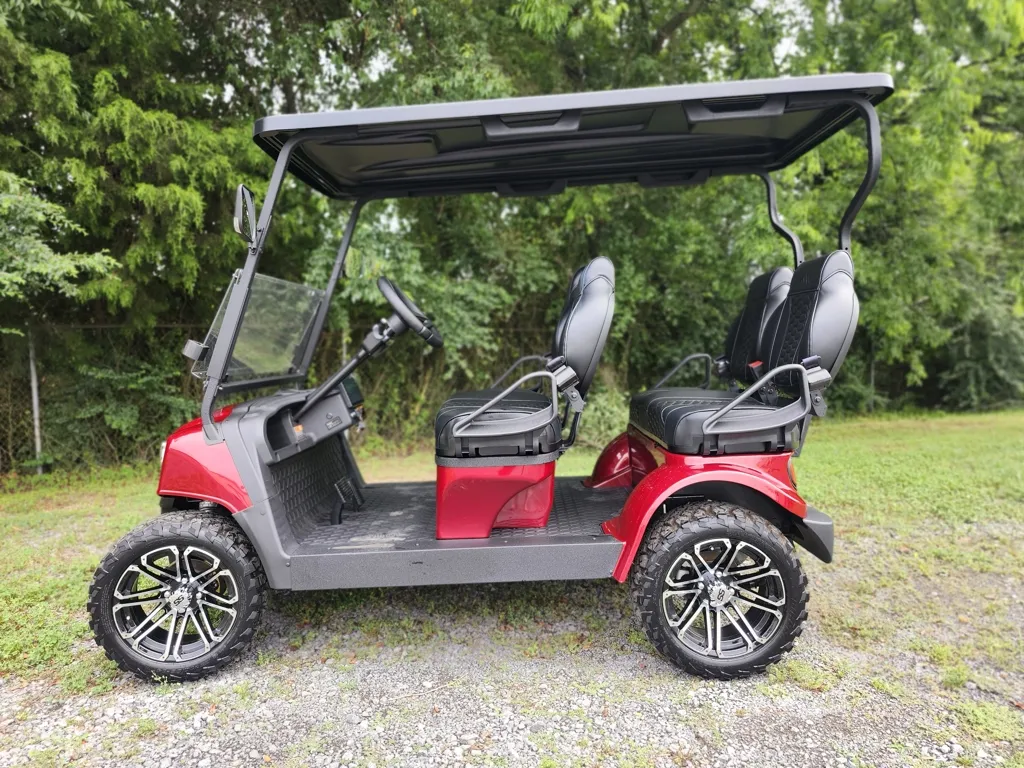
Golf cart trailer hitch types
Golf cart trailer hitches come in several configurations, each suited to different towing needs and cart models. The right type depends on your load, your cart's frame design, and how often you plan to tow. Here is a breakdown of every hitch type you'll encounter when shopping.
| Hitch type | Best for | Notes |
|---|---|---|
| Receiver hitch | Versatile everyday towing | Accepts ball mounts, cargo carriers, and inserts; 2-inch is standard |
| Ball hitch | General trailer use | Classic ball-and-socket design; easy attach and detach |
| Pin or clevis hitch | Light-duty yard and dump carts | Simple, no-frills connection for low-stress loads |
| Pintle hitch | Heavy-duty or larger loads | More secure engagement; handles rougher terrain |
| Drop hitch / drop ball hitch | Height-mismatched couplers | Lowers the ball to level the trailer |
| Angle hitch | E-Z-GO OEM applications | Factory-style variant; available as a kit or standalone |
| Front receiver hitch | Winch mounting, pushing attachments | Available for E-Z-GO RXV and Club Car Precedent |
| Grab bar + hitch combo | Rear-seat carts needing dual function | Combines passenger grab bar with a tow hitch in one unit |
Receiver hitch
The receiver hitch is the most versatile option and the most popular choice for aftermarket installs. A square receiver tube bolts to the rear frame and accepts standard ball mounts, cargo carrier inserts, and other accessories. Most golf cart receiver hitches use a 2-inch opening, which is compatible with a wide range of standard trailer balls and carriers.
Ball hitch
A ball hitch uses a classic ball-and-socket coupler. The ball mounts directly to the hitch body, and your trailer coupler snaps over it. This style is simple and reliable for everyday towing of small trailers and utility carts.
Pin or clevis hitch
Pin and clevis hitches are the simplest design available. A looped or forked receiver connects via a pin and clip. These are best for light-duty yard work with dump carts or leaf trailers where precise coupling matters less than easy hookup.
Pintle hitch
Pintle hitches use a hook-and-ring connection that handles heavier loads and rougher terrain better than a standard ball. If you regularly haul on uneven property or farmland, a pintle setup offers a more secure connection under stress.
Drop hitch and angle hitch
A drop hitch compensates when your cart's receiver sits higher than the trailer coupler. The angled body positions the ball lower to keep the trailer level during towing. E-Z-GO's official parts catalog includes an angle hitch and drop ball hitch as standalone OEM accessories.
Front receiver hitch
Front hitches are less common but are available for the E-Z-GO RXV and Club Car Precedent. They are used primarily for mounting a winch, pushing loader attachments, or connecting a tow bar when flat-towing the golf cart behind an RV.
Grab bar and hitch combos
Combo units combine a rear passenger grab bar with a built-in trailer hitch. These are among the best-selling hitch products, with some models accumulating over 170 reviews on Amazon. If your cart has a rear seat kit, a combo unit lets you add towing capability without removing or replacing the grab bar. The towing function is not compromised by the grab bar integration as long as the unit is rated for your intended load.
Fitment: universal vs. model-specific hitches
Getting the fitment right is the most important step in buying a golf cart trailer hitch. A hitch that doesn't match your frame won't install cleanly, and in some cases won't install at all. You have two main paths: universal kits or model-specific hitches.
| Fitment type | Pros | Cons |
|---|---|---|
| Universal kit | Works across many makes and models; lower price | May require adjustment; won't fit plastic rear footrests |
| Model-specific hitch | Bolt-on fit; cleaner install; better structural integrity | Higher cost; only fits listed model and year range |
Plastic footrest warning: Many universal hitch kits mount under the rear footrest and require a steel tube footrest to clamp onto. If your cart has a plastic rear footrest, a universal under-seat kit will not fit. Check your footrest material before purchasing.
Universal kits
Universal kits use an adjustable bracket that clamps under the rear footrest or attaches to the rear frame. They are designed to fit Club Car, E-Z-GO, and Yamaha carts broadly. Entry-level universal hitches start at around $33 to $46, making them the most affordable option.
The trade-off is fitment precision. Universal brackets may require minor adjustment and don't always sit flush. They are a solid choice for occasional light towing, but if you plan to haul frequently or at higher loads, a model-specific hitch is worth the extra cost.
Model-specific hitches
Model-specific hitches bolt directly to your cart's existing frame holes. Installation is cleaner, the fit is tighter, and the structural connection is more reliable. These hitches are available for all major cart families with year-range coverage:
- E-Z-GO TXT (1994/1995–2013+)
- E-Z-GO RXV (2008–2023+)
- Club Car DS (1981/1982 and up)
- Club Car Precedent / Tempo (2004 and up)
- Yamaha G14, G22, G29 Drive (2007–2016)
- Yamaha Drive2 (2017 and up)
- Yamaha G1–G18 range
Model-specific hitches from brands like 10L0L typically range from $57 to $97 depending on the cart model. Madjax units for the same models run $125 to $165. OEM E-Z-GO hitches from the official store are priced at $111 to $208 for kits.
Golf cart hitch prices by type and brand
Golf cart trailer hitch prices range from under $35 for basic universal kits to over $478 for OEM tow bar assemblies. The biggest price drivers are fitment type (universal vs. model-specific), brand (aftermarket vs. OEM), and whether the unit includes additional hardware such as a grab bar or complete kit.
| Product / category | Brand | Price range |
|---|---|---|
| Universal under-seat hitch kit | 10L0L | $34 – $46 |
| Model-specific hitch (Club Car DS, EZGO TXT) | 10L0L | $57 – $60 |
| Model-specific hitch (Yamaha Drive, Club Car Precedent) | 10L0L | $59 – $97 |
| Grab bar + trailer hitch combo | 10L0L / Golf Cart King | $92 – $142 |
| Universal hitch (MSRP $173) | GTW | $88 |
| Front receiver hitch | GTW | $150 – $166 |
| Model-specific hitch (Club Car, EZGO, Yamaha) | Madjax | $125 – $165 |
| Rear seat hitch with grab bar | RHOX | $242 |
| OEM 2-inch receiver hitch | E-Z-GO | $127 |
| OEM angle hitch kit | E-Z-GO | $208 |
| OEM clevis hitch field kit | E-Z-GO | $267 |
| OEM casual tow bar | E-Z-GO | $428 |
| OEM front tow bar assembly | E-Z-GO | $479 |
Hitch accessories
Beyond the hitch itself, you may need a few additional items to complete your setup:
| Accessory | Price |
|---|---|
| Trailer hitch ball (2-inch) | $44 |
| Universal hitch pin and clip (5/8-inch) | $45 |
| Ratchet tie-down strap | $33 |
| Slow-moving vehicle (SMV) emblem | $53 |
Towing capacity and tongue weight
Most golf carts have a towing capacity of 500 to 1,000 lbs, with a tongue weight limit of approximately 150 lbs. Always verify your specific cart manufacturer's recommended towing specification before loading up, as these numbers vary by model, motor size, and drivetrain.
| Spec | Typical limit |
|---|---|
| Maximum towing capacity | 500 – 1,000 lbs |
| Tongue weight limit (hitch) | ~150 lbs |
What happens when you exceed the limit
Overloading a golf cart's hitch puts stress on multiple systems at once. Expect accelerated wear on the motor, suspension components, and brake system. Frame stress can also lead to cracking at mounting points over time, especially if the hitch isn't installed with proper hardware torque.
Electric vs. gas carts
Electric golf carts face an additional consideration that gas carts don't: battery drain. Towing a heavy load at full capacity draws significantly more current from the battery pack, reducing your range per charge. If you want to understand how battery type and capacity affect towing range, our guide to golf cart batteries covers types, care, and what to expect from different chemistries. Electric carts also lack the engine braking effect that gas models provide on downhill grades, so stopping distances increase more sharply under load. If you regularly tow near the top of your cart's capacity, a gas-powered cart may be more practical for demanding property or terrain work.
Installation overview
Most golf cart trailer hitches are designed as bolt-on kits that an average owner can install with basic hand tools in under an hour. Hardware including brackets, pins, clips, and bolts is typically included in the package.
General installation steps
- Confirm fitment. Verify the hitch is compatible with your cart's make, model, year, and footrest material (steel tube vs. plastic) before starting.
- Gather your tools. You'll need a socket wrench set, combination wrenches, and in some cases a torque wrench. A power drill may be needed if your frame lacks pre-drilled mounting holes.
- Position the bracket. Slide the hitch bracket into position under the rear frame or footrest mounting area as directed by the product instructions.
- Align and bolt. Align the bracket with the frame holes and thread in the included bolts. Hand-tighten first to ensure alignment, then torque to spec.
- Attach the receiver insert. Slide the ball mount or receiver insert into the hitch tube and secure with the hitch pin and clip.
- Test before towing. Tug the hitch firmly by hand to confirm it's seated. Attach a trailer coupler and check for any play before loading.
Drilling note: Some universal kits and certain model-specific hitches require drilling into the frame if factory mounting holes aren't present. If you're not comfortable with this step, a local golf cart dealer or small equipment shop can complete the install quickly.
What you can tow with a golf cart hitch
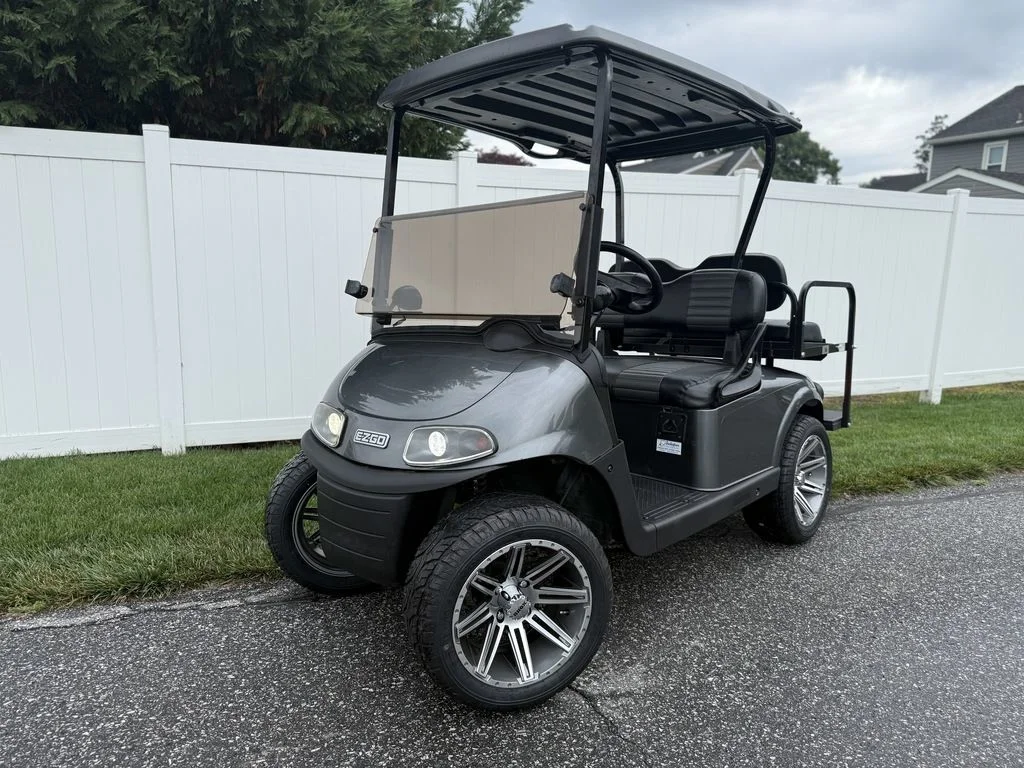
A properly installed golf cart trailer hitch opens up a wide range of practical uses for property owners, campground visitors, and anyone using their cart for more than just transportation. If you're specifically looking for carts built around hauling and work tasks, see our roundup of the best utility golf carts for work, property, and hauling.
| Use case | Typical load type |
|---|---|
| Yard and lawn work | Leaf carts, lawn trailers, small dump carts |
| Cargo hauling | Cooler carriers, gear carts, supply trailers |
| Camping and RV use | Small utility trailers at campgrounds |
| Hunting and property work | Game haulers, equipment sleds, feed trailers |
| RV flat towing (front hitch) | Tow bar attachment from cart to tow vehicle |
For flat-towing a golf cart behind an RV, a front hitch or tow bar assembly is the correct connection point. This setup requires additional equipment including a compatible tow bar, safety chains, and in most states a lighting adapter for brake and turn signal compliance. Requirements vary by state, so check local regulations before heading out on the highway. For a full overview of rules across the country, our golf cart laws by state guide covers street-legal requirements and registration rules.
Safe towing practices
Staying within towing capacity is the starting point for safe golf cart towing, but it's not the complete picture. A few additional practices make a meaningful difference in preventing accidents and equipment damage.
- Display a slow-moving vehicle (SMV) emblem on the rear of your trailer when traveling on or near roadways. In many jurisdictions this is a legal requirement, and it significantly improves visibility to other drivers.
- Account for increased stopping distance. A loaded trailer adds momentum that your golf cart's brakes weren't originally sized for. Leave more space ahead of you, especially on downhill grades.
- Avoid steep or wet terrain when towing near capacity. Loss of traction on a slope with a heavy trailer can quickly become unmanageable. Reduce your load or choose a lower-rated, more controllable route.
- Check trailer lighting connections if your trailer has brake lights or turn signals. A lighting adapter may be required, and loose wiring is a common roadside problem.
- Inspect the hitch before every use. Check for loose bolts, corrosion at the bracket mounting points, and wear on the hitch pin and clip. Powder-coated steel resists rust but isn't immune to it, especially at bare metal contact points.
Maintenance tip: After each season or any extended exposure to rain and mud, inspect your hitch for surface rust, especially around bolt heads and bracket edges. A light coat of rust-inhibiting spray on exposed metal extends the life of even powder-coated units significantly.
Aftermarket brand comparison
No single aftermarket brand dominates every category. The right choice depends on your budget, how often you tow, and whether you prioritize price, fitment precision, or build quality. If you're still deciding which cart to buy and want to factor hitch compatibility into the decision, our golf cart buying guide walks through prices, value, and what to inspect before purchasing.
| Brand | Price range | Best for | Notes |
|---|---|---|---|
| 10L0L | $34 – $97 | Budget-conscious buyers; wide model coverage | High review counts; good value for occasional towing |
| GTW | $88 – $166 | Mid-range buyers; front hitch applications | Often discounted from MSRP; solid construction |
| Madjax | $125 – $165 | Quality-focused buyers with model-specific needs | Model-specific fit; heavier gauge steel on some units |
| RHOX | $242 | Combo unit buyers; premium finish preference | Grab bar + hitch in one; higher price point |
| Jake's / Golf Cart King | $106 – $142 | Combo unit buyers; retail convenience | Available through Golf Cart King storefront |
| E-Z-GO OEM | $111 – $479 | OEM purists; warranty-conscious buyers | Factory fit; significantly higher cost than aftermarket |
For most buyers, a model-specific hitch from 10L0L or Madjax offers the best combination of fit quality and value. OEM E-Z-GO hitches make sense if your cart is still under warranty and you want to avoid any compatibility questions. GTW is a strong pick for front hitch applications where fewer aftermarket options exist.
Frequently asked questions
What size receiver do golf carts use?
The 2-inch receiver is the standard for the vast majority of golf cart hitches. A 1.25-inch receiver exists for smaller carts and lighter-duty applications. A 2-inch receiver is compatible with standard trailer balls, cargo carrier inserts, and most aftermarket accessories.
Can you put a hitch on any golf cart?
Yes, for the most part. Universal kits fit a broad range of Club Car, E-Z-GO, and Yamaha models. Some installations require drilling into the frame if pre-drilled mounting holes aren't present. The main exception is carts with plastic rear footrests, which are incompatible with under-seat universal mounting brackets.
How much can a golf cart tow?
Most golf carts can tow between 500 and 1,000 lbs, with a tongue weight limit around 150 lbs. Check your cart manufacturer's specification to confirm the exact limit for your model. Electric carts may experience reduced range when towing near their capacity.
Is a golf cart hitch a DIY install?
Generally yes. Most bolt-on hitch kits require only basic hand tools and can be installed in under an hour. If your frame requires drilling or you're not comfortable working around structural components, a golf cart dealer or small equipment shop can complete the job quickly.
Do hitches work with rear seat kits?
Yes. Grab bar and trailer hitch combo units are specifically designed for carts with rear seat kits. These units mount in the same location as a standard grab bar and add a tow receiver below the seat. They are one of the most popular hitch product categories available.
Is a universal or model-specific hitch better?
Model-specific hitches provide a cleaner install and better structural integrity because they bolt directly to the frame. Universal kits are more affordable and versatile, but require careful attention to footrest compatibility and may need minor adjustment during installation. For regular or heavier towing, a model-specific hitch is the better investment.